
A group tour runs on someone else’s clock. A personal safari Rwanda itinerary runs on yours: you choose when to leave, where to linger and which detours are worth it. This guide shows how to design your own route with a rental car, from pacing and vehicle choice to a sample week.
What Makes a Personal Safari Rwanda Trip Different
On a shared tour, the schedule is fixed weeks in advance. In contrast, a private trip lets you shape each day around what you love. Bird lovers can stop for a sunbird on the roadside. Photographers can wait an extra hour for evening light in Akagera.
Rwanda suits this style well, because distances are short and the main roads are good. Most highlights sit within a day’s drive of Kigali. As a result, you can build a rich trip without spending every day in the car.
Who it suits best
- Couples and families who want privacy and flexible meal and rest times.
- Photographers who need time at sightings.
- Repeat visitors who want to skip the standard stops.
- Researchers and NGO staff mixing work with weekend park visits.
Planning a Personal Safari Rwanda Route Around the Parks
Start with the anchors, then fill the gaps. Most personal safaris combine three or four of these areas.
| Destination | Drive from Kigali | Highlights |
|---|---|---|
| Volcanoes National Park | 2–2.5 hours | Gorillas, golden monkeys, volcano hikes |
| Akagera National Park | About 2.5 hours to the gate | Big game, boat trips on Lake Ihema |
| Lake Kivu (Rubavu) | 3–3.5 hours | Beaches, boat cruises, rest days |
| Nyungwe National Park | 5–6 hours | Chimpanzees, canopy walk, rainforest trails |
A loop works best: for example, Kigali to Akagera, back through Kigali to Musanze, then along Lake Kivu to Nyungwe. This avoids repeating long stretches. Read more on Volcanoes National Park and Akagera National Park before you decide how many nights each needs.
Book permits first
Gorilla permits are the main fixed point. The Rwanda permit costs US$1,500, and numbers are limited, so book through RDB early. Then build your driving days around that date. Chimp trekking and other activity fees are also set by RDB and change, so check current rates.
A Sample Seven-Day Personal Safari
Use this as a starting point and stretch it to suit your pace.
- Day 1 – Kigali: collect your car, visit the Genocide Memorial and settle in.
- Day 2 – Akagera: leave at dawn, game drive in the afternoon, sleep near the park.
- Day 3 – Akagera: morning drive north for plains game, then a sunset boat trip on Lake Ihema.
- Day 4 – To Musanze: a longer day back via Kigali to the volcanoes.
- Day 5 – Gorilla trekking: early start at park headquarters in Kinigi.
- Day 6 – Lake Kivu: a short drive to Rubavu for a beach and rest day.
- Day 7 – Back to Kigali: return the car or continue south to Nyungwe.
Alternatively, if you prefer a shorter trip, our 5 days Rwanda gorilla safari shows a tighter version.
Choosing the Right Car for Your Own Safari
Your vehicle is your viewing platform, luggage room and sometimes your bedroom. So, match it to your route and season.
Land Cruiser with pop-up roof
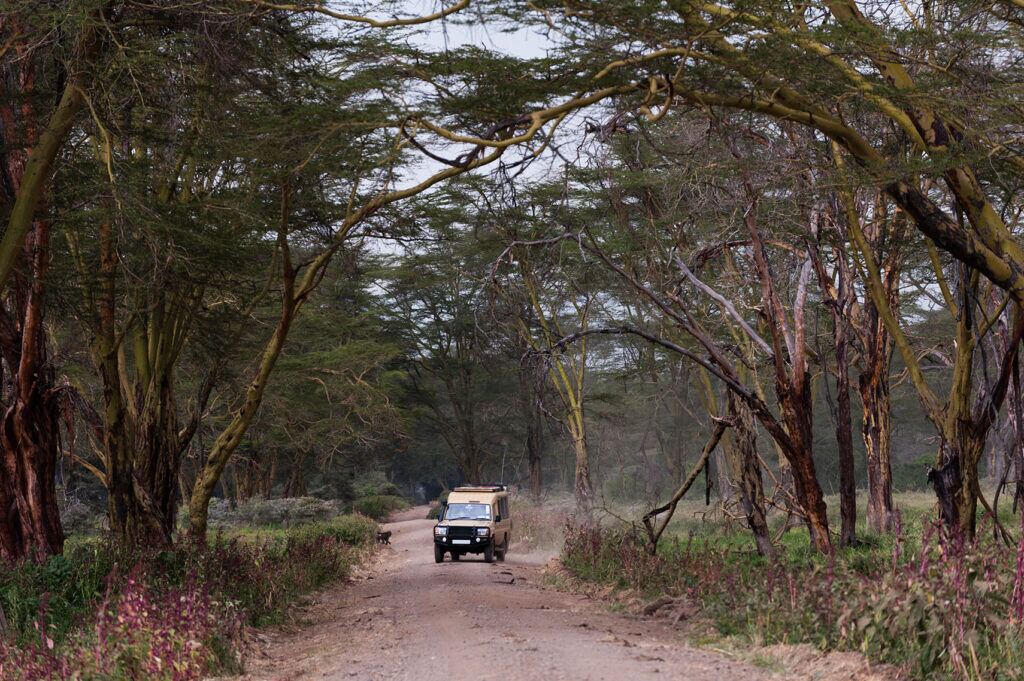
This is the classic game-drive vehicle. You can stand up and watch animals through the open roof, which makes Akagera far more rewarding. It also handles rough tracks near the volcanoes in the rainy months.
Rooftop tent setup
If you like camping, a 4×4 with a rooftop tent lets you sleep at campsites in or near parks. It cuts lodging costs and puts you close to dawn wildlife. See our car rental with camping gear for what comes in the kit.
Smaller SUV
For a dry-season trip focused on Kigali, Lake Kivu and paved routes, a compact SUV is cheaper on fuel. However, it gives a lower view on game drives.
Self-Drive or a Private Driver-Guide?
Both options keep the trip private. The difference is who handles the wheel and the navigation.
- Self-drive: total freedom and privacy, plus lower cost. You manage maps, fuel and road rules. Rwanda drives on the right.
- Driver-guide: local knowledge, wildlife spotting and no navigation stress. You still set the pace.
Many travellers mix the two. For instance, they hire a driver for the gorilla days and self-drive the lakeside leg. Our self-drive Rwanda page explains the requirements for driving yourself.
Pacing Tips That Make the Trip Better
- Keep most driving days under five hours, so you arrive with daylight to spare.
- Leave early on park days, because wildlife is most active at dawn.
- Build in one rest day per week, ideally on Lake Kivu.
- Avoid the morning of the last Saturday of the month, when Umuganda restricts traffic.
- Fill up the fuel tank in towns before heading into parks.
Budget for the extras
Beyond the car, set money aside for fuel, park entry, activity fees and tips for rangers and trackers. Park fees are set by RDB and change, so check them when you book. Also, carry some cash for small purchases in rural areas, where card machines are rare.
Finally, do not overpack the itinerary. The joy of a private trip is time to stop, look and enjoy.
Frequently Asked Questions
How many days do I need for a self-planned safari?
Five to seven days covers gorillas, Akagera and Lake Kivu comfortably. Add two or three days for Nyungwe.
Can I drive myself inside Akagera?
Yes, self-drive game drives are allowed. You can also hire a park guide to ride with you for better sightings.
Do I need a guide for gorilla trekking if I self-drive?
Park rangers lead every trek, so you just drive to headquarters on time. Check the road to your trailhead the evening before.
Is camping safe for a family trip?
Yes, at established campsites with staff and facilities. Choose sites recommended by the park or by us.
Start Planning Your Personal Safari
Share your dates, interests and group size, and we will suggest a route and vehicle. WhatsApp or call +250 725 074659, or email info@4x4carrentalrwanda.com.