
Moving to Rwanda for work, a posting or a research project? Getting reliable transport is one of the first things to sort out. This guide covers expat car hire Rwanda options for people living here for months or years: monthly rentals versus buying, which vehicles suit daily life, and how to keep a car running smoothly through both rainy seasons.
Expat Car Hire Rwanda: Renting vs Buying
Many new arrivals assume they should buy a car. However, buying in Rwanda involves import duties, registration, insurance, servicing and resale when you leave. For postings of a few months to two or three years, a long-term rental is often simpler.
| Long-term rental | Buying a car | |
|---|---|---|
| Upfront cost | Deposit only | Full purchase price plus duties |
| Insurance and servicing | Usually arranged by the rental company | Your responsibility |
| Breakdowns | Replacement or roadside help | You find a garage |
| Leaving Rwanda | Hand the keys back | Sell the car, often at short notice |
| Flexibility | Swap vehicles as needs change | Stuck with one car |
If you’ll stay for many years, buying may work out cheaper. For most contracts, though, renting removes a lot of admin. Read more on long and short term car hire.
Choosing a Vehicle for Daily Life in Rwanda
Think about your actual week, not your holiday plans. Where do you live, where do you work, and how often do you leave Kigali?
Mostly Kigali
If you commute in the city and drive to the shops at weekends, a Toyota RAV4 is ideal. It’s economical, easy to park and handles Kigali’s steep side streets. Many residential areas have unpaved access roads, so the extra clearance helps.
Regular field trips
NGO, health and research staff often visit provincial sites on murram roads. In that case, a Land Cruiser Prado or a Hilux Double Cab is the safer choice. The Hilux’s load bed is handy for equipment and supplies.
Families
For school runs and weekend trips with children, a full-size Land Cruiser gives space and comfort. Ask for child seats when you book.
Driving Through the Year: A Seasonal Guide
As a resident, you’ll drive through every season, not just the dry months tourists prefer.
Long rains (March–May)
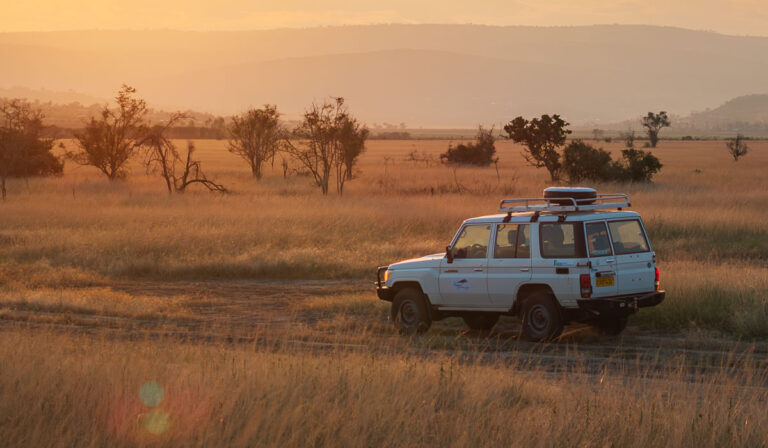
Heavy afternoon storms are common. City roads drain fairly well, but unpaved roads turn slippery and rutted. Plan field trips for the morning, and use 4WD on wet murram.
Long dry season (June–September)
This is the easiest time to drive. Roads are dusty, so keep windows closed on gravel and replace air filters more often.
Short rains (October–December)
Showers return but are usually shorter. Watch for mud on rural roads and reduced visibility in the hills.
Short dry season (December–February)
A good window for weekend trips to the parks before the rains return.
Paperwork and Rules for Resident Drivers
Rules can change, so check current requirements with the authorities. In general, keep these points in mind:
- Licence: a foreign licence and International Driving Permit work for visitors. If you’re settling long-term, ask about converting to a Rwandan licence.
- Documents in the car: carry your licence, the rental agreement and insurance papers at all times.
- Traffic rules: Rwanda drives on the right. Speed cameras are widespread, and fines can be paid by mobile money.
- Umuganda: on the last Saturday morning of each month, many roads close for community work until about midday.
Setting Up Your First Weeks
The first month is when transport matters most. You’ll be house-hunting, opening a bank account and finding schools, often across different neighbourhoods. A short rental with a driver can cover those weeks while you learn the city. Then, once you know your routine, you can move to a monthly self-drive car.
Neighbourhood notes
- Kiyovu and Kacyiru are central, with paved roads and short commutes.
- Kimihurura and Nyarutarama are popular with families, but some side roads are steep or unpaved.
- Kibagabaga and Rebero offer more space, though rush-hour drives into town take longer.
Before signing a lease, drive the commute at peak time. It can change your choice of both house and vehicle.
Keeping Your Long-Term Rental in Good Shape
With a monthly rental, servicing is usually arranged for you. Still, a few habits prevent breakdowns and disputes:
- Check tyre pressure and the spare every two weeks.
- Report warning lights or odd noises straight away.
- Keep a log of mileage and fuel for your employer.
- Park in guarded compounds overnight; most residential areas have them.
- Book the scheduled service on time, even if the car feels fine.
If something goes wrong, call us first rather than going to a random garage. That keeps the warranty and insurance intact.
Weekends and Travel Beyond Rwanda
One of the joys of living here is how close the parks are. Akagera is about 2.5 hours from Kigali, Musanze 2–2.5 hours, and Rubavu on Lake Kivu 3–3.5 hours. A long-term car makes spontaneous weekends easy.
Many expats also drive to Uganda for holidays. The Katuna border is about 1.5 hours away, and you’ll need a cross-border permit and COMESA insurance. Remember that Uganda drives on the left. See cross-border car hire for details.
Driver or no driver?
Some expats hire a car with a full-time driver, especially in their first months. A driver helps you learn the city and handles errands while you work. Later, many switch to self-drive. Explore car hire with driver if that suits you.
Expat Car Hire Rwanda FAQ
What’s the shortest long-term rental?
Monthly rentals usually start at one month. Longer terms generally attract better rates, so ask for a quote for your full contract period.
Can my employer be billed directly?
Yes. Many organisations hold the contract and receive monthly invoices, while staff simply use the car.
What happens if the car needs servicing?
We schedule it with you and, where possible, arrange a replacement so you aren’t left without transport.
Can I change vehicles mid-contract?
Often, yes. If your family grows or your work changes, talk to us about switching models.
Arrange Your Long-Term Car
Tell us your start date, contract length and how you’ll use the car. We’ll suggest the right vehicle and terms. Message us on WhatsApp at +250 725 074659 or email info@4x4carrentalrwanda.com.