
Rwanda’s eco-lodges sit in some of its most beautiful corners: forest edges, volcano slopes and quiet lake shores. Reaching them is half the adventure, and a 4WD makes it easy. This guide to eco-lodge self drive Rwanda trips covers the routes, the last tricky kilometres and how to travel lightly on the land.
Why Eco-Lodges and Self-Drive Go Together
Eco-lodges are often small and tucked away, sometimes at the end of a dirt road. Transfers can be costly and fixed to set times. With your own 4×4, by contrast, you arrive when you like and explore the area around the lodge.
Driving yourself also lets you spend locally. You can stop at roadside fruit stalls, village cooperatives and craft centres. Much of that money goes straight into the communities around the parks.
The Last Kilometres: Why You Need 4WD
Main roads between Rwanda’s towns are paved and well kept. However, many eco-lodges are reached by short stretches of gravel, volcanic rock or red earth. After rain, those can be steep, rutted and slippery.
What a 4WD gives you
- Grip on muddy, steep lodge driveways
- Ground clearance over ruts and stone tracks
- Low range for slow, controlled descents
- Peace of mind when the weather turns
A compact Toyota RAV4 handles most lodge roads in dry weather. For rainy months or rougher tracks, a Land Cruiser Prado is the safer bet.
Eco-Lodge Regions and How to Drive There
Volcanoes and the Musanze area
The drive from Kigali takes 2–2.5 hours on a good paved road. Lodges around Kinigi sit on volcanic slopes with rocky access roads. Several are linked to community and conservation projects, so ask about village visits when you book. Trekking permits are issued by RDB; the gorilla permit is US$1,500.
Akagera National Park
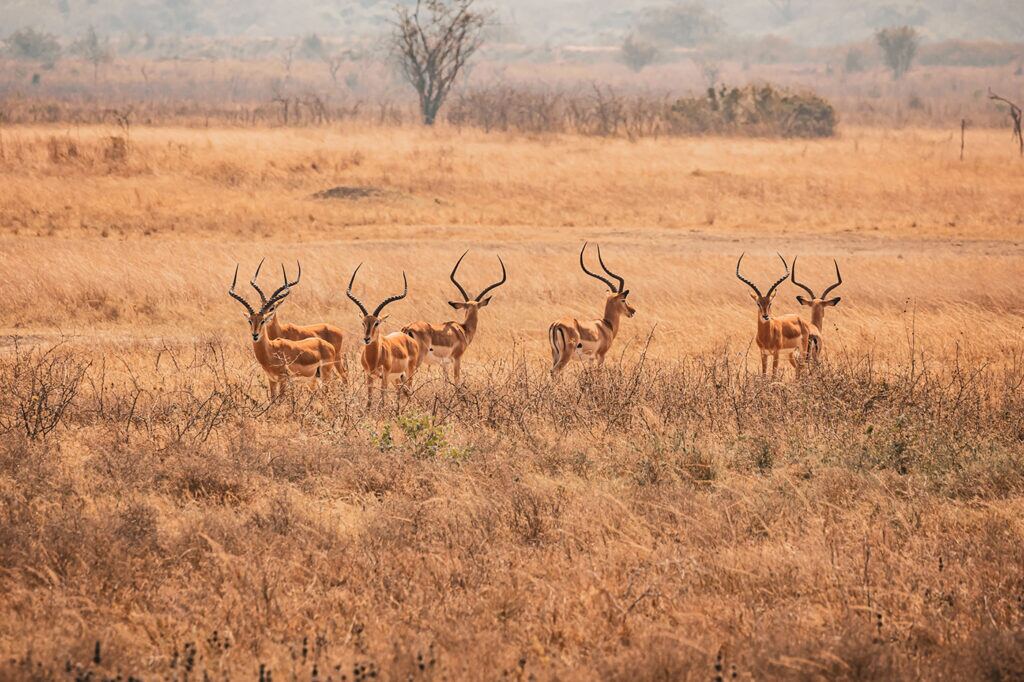
Akagera’s gate is about 2.5 hours from Kigali. Inside the park, lodges and tented camps are reached on gravel tracks shared with wildlife. Drive slowly, stay on marked routes and arrive at your camp before dark.
Nyungwe Forest
Allow 5–6 hours from Kigali. Eco-lodges and guesthouses cluster near the forest edges and tea estates, including the Kitabi area on the eastern side. Driveways can be slippery, since Nyungwe is often wet.
Lake Kivu shore
Rubavu is 3–3.5 hours from Kigali. South of it, small lakeside lodges dot the winding shore road towards Karongi and Rusizi. Some are reached on narrow, steep lanes, so drive carefully.
A Sample Eco-Lodge Self Drive Rwanda Loop
This seven-day route links four regions while keeping each drive manageable.
- Days 1–2: Kigali to Akagera. Game drives and a boat trip on Lake Ihema.
- Days 3–4: Back via Kigali to the Volcanoes area. Trek, then visit a community project.
- Day 5: Drive to Rubavu and continue to a lakeside lodge on Kivu.
- Days 6–7: South along the lake to Nyungwe for forest walks, then return to Kigali.
Shorter on time? Our Rwanda road trip ideas include two- to five-day options.
Driving Lightly: Low-Impact Travel Tips
Staying at eco-lodges is a choice to reduce your footprint. Your driving can support that goal too.
- Stay on tracks: don’t drive off-road in parks or across farmland.
- Drive smoothly: steady speeds save fuel and reduce dust in villages.
- Refill, don’t buy: carry refillable bottles, and fill them at lodges.
- Pack out rubbish: Rwanda bans plastic bags, so bring reusable shopping bags.
- Turn off the engine: avoid idling while you wait or watch wildlife.
- Share the car: a full vehicle means fewer emissions per person.
Also, respect local customs. Ask before photographing people, and slow right down in villages, where children and livestock use the road.
Practical Tips for Lodge-to-Lodge Driving
Ask the lodge for directions
Map apps don’t always know the final turn. Ask each lodge for a pin and written directions, and download offline maps before you leave Kigali.
Plan fuel stops
Fill up in Kigali, Musanze, Rubavu, Huye or Rusizi. Remote lodges rarely have fuel nearby.
Check in before dark
Lodge roads are unlit and can be confusing at night. Therefore, aim to arrive by mid-afternoon.
Road rules
Rwanda drives on the right, and speed limits are enforced with cameras. Read our self-drive Rwanda guide before your trip.
Choosing the Season for Your Trip
Rwanda is green all year, but the weather changes how lodge roads feel. The long dry season, from June to September, gives the firmest tracks and the easiest driving. December to February is another good window.
The rainy months, roughly March to May and October to November, have their own appeal. Lodges are quieter, the hills are lush and some offer lower seasonal rates. However, expect slippery driveways and plan shorter driving days. In those months, a Land Cruiser with good tyres is worth the extra cost.
What to Keep in the Car
Eco-lodges keep things simple, and shops between them can be far apart. A small car kit makes life easier.
- Reusable water bottles and a large refill container
- Rain jackets and a change of shoes for muddy walks
- A phone charger that works in the car
- Snacks and some cash in Rwandan francs for village stalls
- Binoculars for birds along forest and lake roads
Keep the boot organised, with the day’s essentials on top. That way, you won’t empty the car at every stop.
Eco-Lodge Driving FAQ
Is it safe to leave luggage in the car at lodges?
Lodge parking is usually guarded. Still, take valuables to your room and keep bags out of sight.
Can I reach every eco-lodge in a normal car?
Not reliably. Some are fine in dry weather, but a 4WD is safer year-round, especially in the rainy months.
Do eco-lodges have parking?
Almost all do, usually secure and free for guests. Confirm space for larger vehicles when you book.
Can I combine eco-lodges with camping?
Yes. Many travellers add a rooftop tent for a night or two in Akagera. See our camping gear rental page.
Plan Your Eco-Lodge Road Trip
Share your lodge list and dates, and we’ll suggest the right 4WD for each road. WhatsApp or call +250 725 074659, or email info@4x4carrentalrwanda.com.