
Waking up above the shoreline of Lake Kivu, with mist lifting off the water, is one of Rwanda’s great travel moments. A rooftop tent 4×4 Lake Kivu trip lets you do exactly that, without booking a lodge for every night. This guide covers the route, the kit, where to camp and how to plan a lakeside road trip that works.
Why a Rooftop Tent 4×4 Lake Kivu Trip Works So Well
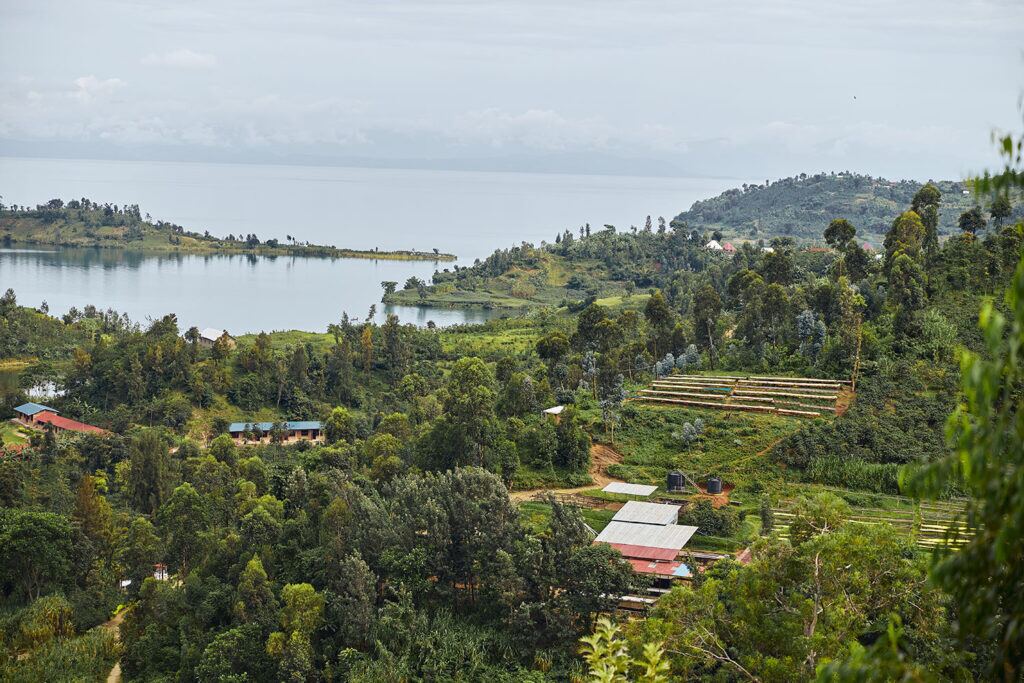
Lake Kivu stretches along Rwanda’s western border for roughly 90 km. Its main towns, Rubavu in the north, Karongi in the middle and Rusizi in the south, are linked by a scenic hill road. So the lake suits slow, multi-day travel, and a camping vehicle fits that rhythm perfectly.
A rooftop tent also keeps you off damp ground, which matters during the rains. Moreover, you can set it up in minutes, so a late arrival is not a problem. Finally, you skip the cost of lodges on nights when a simple pitch is all you need.
What Comes with a Camping-Ready 4×4
Our rooftop tent vehicles are Land Cruisers and Prados fitted with a fold-out tent on the roof rack. The kit is designed so you can arrive, unpack and cook without extra shopping. A typical setup includes:
- Rooftop tent with mattress and ladder
- Sleeping bags and pillows
- A compact kitchen kit: stove, gas, pots, plates and cutlery
- Camping chairs and a folding table
- Cool box for drinks and fresh food
- Spare tyre, jack and basic tool kit
You can see the full list on our car rental with camping gear page. If you need extras, such as a second tent for children, ask when you book.
Which vehicle to choose
For two people, a Prado with a rooftop tent is comfortable and economical. For a family or a longer trip, the Land Cruiser Safari carries more gear and handles rough side tracks better.
Route Plan: Kigali to the Lake and Along the Shore
Most campers follow the lake from north to south, or the reverse. Here is a practical outline.
| Leg | Driving time | Notes |
|---|---|---|
| Kigali to Rubavu | 3–3.5 hours | Paved, with many hill bends via Musanze |
| Rubavu to Karongi | About 3 hours | Winding lakeside road with tea and coffee hills |
| Karongi to Rusizi | About 3–4 hours | Quieter road, steep in places |
| Rusizi to Nyungwe | About 1–1.5 hours | Good link to chimpanzee tracking |
Times vary with weather and stops, so treat them as guides. Because the road twists constantly, average speeds stay low even on tarmac. As a rule, plan no more than one major leg per day. That leaves time to stop at viewpoints, buy fruit from roadside stalls and reach camp in daylight.
Adding Volcanoes or Nyungwe
Rubavu is about an hour from Musanze, so gorilla trekking slots in easily at the northern end. At the southern end, Nyungwe National Park is close to Rusizi. That makes a loop of Kigali, Musanze, the lake and Nyungwe very natural.
Where to Camp Around Lake Kivu
Rwanda does not have a culture of wild camping by the roadside. Instead, plan to stay at places that welcome campers.
- Lodges and guesthouses with grounds: many lakeside properties let campers park on their lawns for a small fee, with access to toilets and showers.
- Church and community guesthouses: often simple, safe and friendly to overlanders.
- Designated campsites: available in some towns and near national parks.
Always ask permission before setting up on private land. Also, arrive before dark so you can check the ground and find facilities.
Tips for Camping on the Lake Kivu Shore
Expect cool nights
The lake sits at about 1,460 metres above sea level. So evenings get chilly, especially in the dry season. Pack a warm layer and a beanie.
Plan for rain
Rain can come quickly, particularly from March to May and October to November. Close the tent flaps when you leave camp, and keep electronics in dry bags.
Mosquitoes and swimming
Use repellent at dusk and sleep with the mesh zipped. Lake Kivu is generally considered free of bilharzia and is popular for swimming. Still, swim near established beaches and ask locals about conditions.
Food and supplies
Stock up in Kigali or Rubavu, where supermarkets are well supplied. Small towns along the lake have markets for fresh fruit, vegetables and fish such as sambaza.
Things to do between camps
Take a boat to the islands near Karongi, cycle part of the Congo-Nile Trail, or visit a coffee washing station. Rubavu also has a lively beach promenade. See our Lake Kivu guide for more ideas.
Packing List for a Rooftop Tent 4×4 Lake Kivu Trip
The vehicle kit covers sleeping and cooking. However, a few personal items make lakeside camping much more comfortable. Bring these from home or buy them in Kigali before you leave:
- A head torch, since campsite lighting is often limited
- Quick-dry towels and flip-flops for shared showers
- A light rain jacket and a warm fleece
- Insect repellent and sunscreen
- Reusable water bottles and a water filter or purification tablets
- A power bank or 12V car charger for phones
- Reusable shopping bags, because Rwanda bans single-use plastic
Also, keep some cash in Rwandan francs. Small guesthouses and markets along the lake may not accept cards.
Frequently Asked Questions
How long does the rooftop tent take to set up?
Usually a few minutes. We show you how to open and close it during the vehicle handover.
Can I camp at the lake during the rainy season?
Yes. The tent keeps you off wet ground, but allow extra driving time as some side roads get slippery.
How many nights should I spend along Lake Kivu?
Three to four nights lets you enjoy Rubavu, Karongi and the southern shore without rushing.
Is a RAV4 suitable for a lake camping trip?
Our rooftop tents are fitted to Land Cruisers and Prados. They carry the kit better and cope with rough campsite access.
Reserve Your Camping 4×4
Tell us your dates and route, and we will prepare a fully equipped rooftop tent vehicle for your lakeside trip. WhatsApp or call +250 725 074659, or email info@4x4carrentalrwanda.com.