
A game drive is only as good as the view from your seat. That’s why so many visitors choose a safari Land Cruiser with a pop-up roof for Akagera, Rwanda’s savannah park. This guide covers how Land Cruiser game drives Rwanda work in practice, from setting up the vehicle to reading the tracks and timing your drive.
Where Game Drives Happen in Rwanda
Rwanda is famous for gorillas and forest primates, but those are trekking experiences on foot. For classic driving safaris, Akagera National Park in the east is the place. It mixes open savannah, wooded hills, papyrus swamps and a chain of lakes.
Akagera is home to lions, elephants, buffalo, leopards and rhinos, along with giraffes, zebras, hippos and many antelope species. Bird life is outstanding, too. The main gate is about 2.5 hours’ drive from Kigali, so you can arrive for an afternoon drive on the same day.
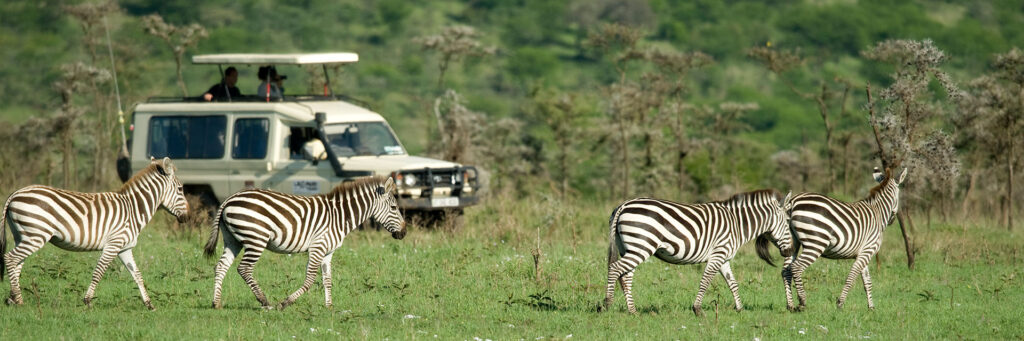
Why the Safari Land Cruiser Suits Akagera
Akagera’s tracks range from smooth gravel to deep sand, rocky climbs and, after rain, sticky black-cotton mud. A safari-spec Land Cruiser handles all of these. It also gives you features that make wildlife viewing better.
- Pop-up roof: stand up for a 360-degree view and steady photos.
- High seating: see over long grass, where lions often rest.
- Low-range 4WD: crawl through mud and up rocky slopes safely.
- Strong suspension: soak up corrugations on long park roads.
- Big fuel range: explore the far north without worrying about stations.
A Toyota RAV4 can manage the southern tracks in dry weather. However, it sits lower and lacks a roof hatch, so viewing is more limited.
Land Cruiser Game Drives Rwanda: Setting Up the Vehicle
A little preparation the night before turns a good drive into a great one. Here’s what we suggest you organise.
Inside the vehicle
- Binoculars for every passenger, so nobody waits their turn.
- A bean bag or folded jacket to rest a long lens on the roof edge.
- A park map and a bird or mammal field guide.
- Plenty of water, snacks and a packed lunch for full-day drives.
- Sunscreen, hats and a light layer for chilly early mornings.
Vehicle checks
Before entering the park, check tyre pressures, fuel and the spare wheel. Also practise opening and closing the pop-up roof. Doing that in front of a herd of elephants is not the moment to learn.
How to Run a Self-Drive Game Drive
Self-driving is allowed in Akagera, and it’s one of the most rewarding ways to see the park. Even so, a few habits help you spot more animals and stay safe.
- Hire a guide at the gate. A local guide rides with you and knows where animals have been seen. This is a great investment on your first drive.
- Drive slowly. Crawling along lets you notice ears in the grass and movement in trees.
- Stop and wait. Turn off the engine at waterholes and lake shores, and let animals come to you.
- Stay on marked tracks. Off-road driving damages the habitat and is not permitted.
- Stay in the vehicle. Only get out at designated points.
- Give animals space. Never block an elephant’s path, and back off if one flaps its ears.
Park entry and activity fees are set by the park authorities and change from time to time. Check current rates before you go.
Photography Tips From the Pop-Up Roof
The roof hatch turns the Land Cruiser into a mobile photo hide. Still, a moving vehicle and a running engine can spoil good shots. These simple habits help.
- Switch off the engine before shooting, because vibration blurs long-lens photos.
- Ask everyone to keep still while someone is taking a picture.
- Position the vehicle with the sun behind you for well-lit subjects.
- Use the side windows for eye-level shots of animals close to the track.
- Keep a cloth handy, since dust settles on lenses quickly in the dry season.
Also be patient. Waiting ten quiet minutes beside a resting lion often gives you the moment it stands, yawns or looks straight at you.
Timing Your Drives for the Best Sightings
Animals are most active in the cool hours. So plan your main drives for early morning and late afternoon.
| Time | What to expect |
|---|---|
| Dawn to 10am | Predators on the move, active antelope, great light |
| Midday | Animals rest in shade; good time for lunch or a boat trip |
| 3pm to sunset | Elephants and buffalo head to water; warm golden light |
Make sure you leave the park or reach your lodge by the gate closing time. Driving inside the park after dark is not allowed for self-drivers. If you want a night experience, ask about the park’s own guided night drives.
Seasons
The dry months, roughly June to September and December to February, offer easier tracks and animals concentrated near water. The rainy months bring green scenery and fewer visitors, but some northern tracks get muddy.
Planning a Route Through the Park
Akagera is long and narrow, running north to south. Most visitors enter at the southern gate and work their way north.
- South: lakes, hippos, crocodiles and birdlife around Lake Ihema. The boat trip here is a highlight.
- Centre: mixed woodland and grassland with giraffes, zebras and elephants.
- North: wide open plains, the best area for big herds and lions.
A full south-to-north traverse takes most of a day. If you have two days, split it and sleep in or near the park. Our 2 days Akagera safari follows this pattern.
Game Drive FAQ
Do I need a pop-up roof for Akagera?
It’s not essential, but it makes viewing and photography much easier, especially for groups.
Can I self-drive in Akagera without a guide?
Yes. However, a guide from the gate greatly improves your chances of finding lions and rhinos.
Can we camp with the Land Cruiser in Akagera?
Yes, at designated campsites. Ask us about rooftop-tent setups.
Is one day enough for game drives?
One day shows you the south and centre. Two days let you reach the northern plains properly.
Book a Safari Land Cruiser
Planning game drives in Akagera? WhatsApp or call +250 725 074659, or email info@4x4carrentalrwanda.com, and we’ll prepare a Land Cruiser for your dates.