
A tent on the roof of your 4×4 turns Rwanda into a country you can explore at your own pace, from savannah to rainforest to lakeshore. This guide covers Rwanda rooftop tent camping across the whole country: where you can camp, a week-long route, how the tent works, and what the rainy seasons mean for campers.
Why Rwanda Rooftop Tent Camping Works So Well
Rwanda is compact, and drive times between highlights are short. As a result, you can camp in several very different landscapes within one week. A rooftop tent opens in a few minutes, so moving camp every day or two is easy.
The raised tent also keeps you off wet ground, which matters in a country with two rainy seasons. In addition, it keeps bedding dry and clean while you drive. That’s a real advantage over carrying a ground tent.
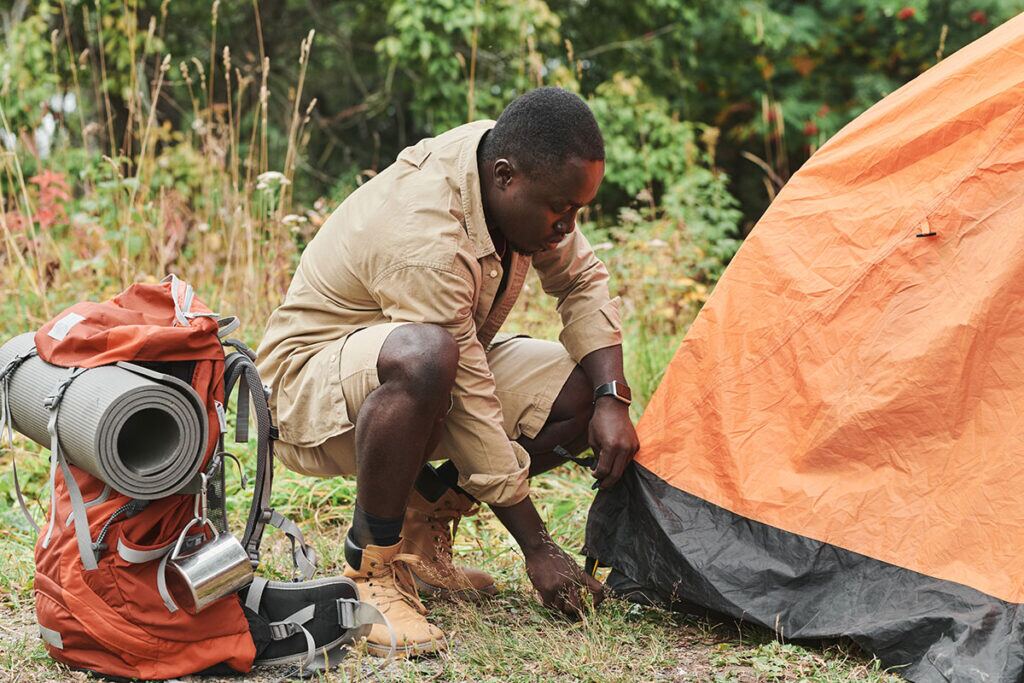
Where You Can Camp Across Rwanda
Wild camping by the roadside is not the norm in Rwanda. Instead, use official campsites, lodges that accept campers, or community sites. Always ask permission and book ahead in busy months.
| Region | Camping style | Highlights nearby |
|---|---|---|
| Akagera (east) | Designated park campsites | Game drives, Lake Ihema boat trips |
| Musanze and Volcanoes (north-west) | Lodges and eco-camps that welcome campers | Gorillas, golden monkeys, crater hikes |
| Lake Kivu shore (west) | Lakeside guesthouses and campsites | Swimming, boat trips, the Congo Nile Trail |
| Nyungwe (south-west) | Campsites near park facilities | Chimps, canopy walk, forest trails |
Park campsite fees are set by the relevant authority and change, so check current rates when booking. For park details, see our Nyungwe National Park guide.
A Seven-Day Rooftop Camping Loop
This loop links four regions with manageable driving days. It returns to Kigali, so you avoid one-way fees.
- Day 1: collect your vehicle in Kigali and stock up on food and water.
- Day 2: drive about 2.5 hours to Akagera, game drive, camp in the park.
- Day 3: dawn game drive, then back through Kigali towards Musanze.
- Day 4: trek in Volcanoes National Park, camp near Kinigi.
- Day 5: drive to Rubavu on Lake Kivu, about 1.5 to 2 hours.
- Day 6: follow the lakeshore south towards Nyungwe and camp near the forest.
- Day 7: canopy walk in the morning, then 5–6 hours back to Kigali.
The Kivu lakeshore road is winding and slow, so start early. If you plan gorilla trekking, remember that permits cost US$1,500 and are set by RDB. Our Rwanda road trip ideas offer more variations.
How the Rooftop Tent and Kit Work
At pickup, the team shows you how to open and close the tent. Most fold out with a ladder in under five minutes. Practise once in Kigali, so you’re not learning in the dark at your first campsite.
Typical camping kit
- Rooftop tent with a built-in mattress for two adults.
- Sleeping bags or bedding, pillows and a groundsheet.
- Gas stove, pots, plates, cutlery and a kettle.
- Camping chairs and a folding table.
- Cool box or fridge and a water container.
- Head torches or a lantern.
Kit varies by vehicle, so confirm the list before you travel. Our car rental with camping gear page shows the usual set-up.
Choosing a Vehicle for Rwanda Rooftop Tent Camping
A rooftop tent adds weight up high. Therefore, you need a strong 4×4 with good suspension. Most campers choose one of two vehicles.
- Land Cruiser: roomy, comfortable on long days, and capable on park tracks.
- Hilux Double Cab: the open load bed carries water, chairs and muddy gear.
Families of four may need a second tent or a larger set-up. Ask about options when you book. Compare models on the Land Cruiser Safari page.
Camping Through Rwanda’s Seasons
Rwanda has two dry and two wet periods. The long dry season runs from June to September, and a shorter dry spell falls from December to February. These months are easiest for camping.
The long rains (March to May) and short rains (October to November) bring heavy afternoon storms. Campsites can turn muddy, and mountain roads become slippery. However, the country is lush and quiet then. If you camp in the wet months, pitch early, keep gear in the car, and avoid driving after dark.
Nights are cool in the highlands, especially around Volcanoes and Nyungwe. So pack a warm layer and a hat, even if Kigali feels hot.
Food, Water and Fuel on the Road
Camping means you cook most meals yourself. Fortunately, Rwanda’s towns have well-stocked markets and supermarkets. Kigali has the widest choice, while Musanze, Rubavu and Huye cover the basics.
- Buy fresh fruit and vegetables at local markets every few days.
- Carry at least two days of drinking water at all times.
- Keep easy meals, like pasta and tinned beans, for late arrivals.
- Refuel in larger towns, since stations are scarce near parks.
On the Akagera leg, fill up in Kayonza. On the Nyungwe leg, refuel in Rusizi or Huye before entering the forest. Gas cartridges for the stove are sold in Kigali, so buy a spare before leaving the city.
Campsite Etiquette and Safety
- Use official sites and pay any community fees.
- Keep food sealed in the vehicle, especially in Akagera.
- Take all rubbish with you; plastic bags are banned in Rwanda.
- Keep noise down after dark and respect nearby villages.
- Park on firm, level ground before opening the tent.
FAQ: Camping on a Rooftop in Rwanda
Can I camp outside national parks?
Yes, at lodges, guesthouses and community sites that allow campers. Always ask first.
Is rooftop camping comfortable in the rain?
Generally, yes. Good tents are waterproof, and the raised floor stays dry. Close all flaps before storms arrive.
Can children camp in a rooftop tent?
Older children can share with adults. For younger kids, a ground tent or a second vehicle is often easier.
How long does it take to pack up?
Usually about five to ten minutes once you’ve done it a few times.
Book Your Camping 4×4
Tell us your route and dates, and we will prepare a rooftop tent vehicle with the right kit. WhatsApp or call +250 725 074659, or email info@4x4carrentalrwanda.com.