
Akagera is Rwanda’s Big Five park, and it’s one of the few in East Africa where self-driving is easy and rewarding. Getting your car hire for Akagera safari right makes the difference between a dusty slog and a relaxed day of game viewing. This guide covers the drive from Kigali, entry logistics, a sample game-drive day, where to sleep and how to stay comfortable.
Getting from Kigali to the Park Gate
The route heads east through Rwamagana to Kayonza, then turns north towards the park’s southern entrance. It is tarmac nearly all the way, with a final stretch of good gravel. Allow about 2.5 hours from central Kigali.
Kayonza is your last reliable stop for fuel, cash and supplies. Top up the tank there, because there are no fuel stations inside the park. In addition, buy water and snacks, since park shops are limited.
When to leave
Animals are most active in the early morning and late afternoon. Leaving Kigali around 5 am puts you at the gate as it opens, ready for the best light. Alternatively, arrive the afternoon before and stay near the gate.
Choosing Car Hire for Akagera Safari
Park tracks are a mix of graded gravel, sandy stretches and black-cotton soil that turns slippery after rain. Some northern loops also have steep, rocky sections. A 4×4 is strongly recommended, and the park may advise against low-clearance cars in wet weather.
| Vehicle | Strengths in Akagera |
|---|---|
| Land Cruiser Safari | Best viewing height, handles every track, pop-up roof option |
| Land Cruiser Prado | Comfortable, capable, good for couples and small families |
| Hilux Double Cab | Rugged and roomy for gear, good for campers |
| Toyota RAV4 | Fine on main southern tracks in the dry season only |
Compare the options on our Land Cruiser Safari and Hilux Double Cab pages.
Entry, Fees and Park Rules
Akagera is managed by African Parks in partnership with RDB. You pay a park entry fee per person plus a vehicle fee. These are set by the park and change, so check current rates before you travel.
Rules for self-drivers
- Stay on marked tracks; off-road driving is not allowed.
- Stay inside your vehicle except at designated spots.
- Exit the park or reach your lodge before the gates close at dusk.
- Keep to the speed limit, typically around 40 km/h.
- Don’t feed or disturb animals.
Hire a park guide
You can pick up a freelance guide at reception to ride in your car. They know where lions and rhinos were last seen and point out birds you’d miss. It’s a great way to boost a self-drive safari without giving up the wheel.
A Sample Akagera Game-Drive Day
- 6:00 am: Enter at the southern gate and head north along the lakeshore.
- Morning: Scan the woodland for elephants, buffalo and giraffes.
- Midday: Picnic at a designated stop or lunch at a lodge.
- Afternoon: Explore the northern plains, where zebra, topi and big cats roam.
- 4:00 pm: Join the Lake Ihema boat trip for hippos, crocodiles and water birds.
- Before dusk: Exit or check in to your lodge.
The boat trip books up, so reserve it at reception on arrival. Read more about the Lake Ihema boat trip on gorillatourrwanda.com.
Day trip or overnight?
A day trip works, yet you’ll spend five hours driving to and from Kigali. One night inside or near the park lets you enjoy two prime game-drive windows. Our 2-day Akagera safari shows how to pace it.
What You Might See and Where
Akagera’s landscape changes as you head north, and so does the wildlife. Knowing the zones helps you plan your route.
The southern lakes
The south is hilly and wooded, with a chain of lakes and papyrus swamps. Here you’ll find hippos, crocodiles, buffalo and many water birds, including the shoebill if you’re very lucky. Elephants often come down to drink in the afternoon.
The central woodlands
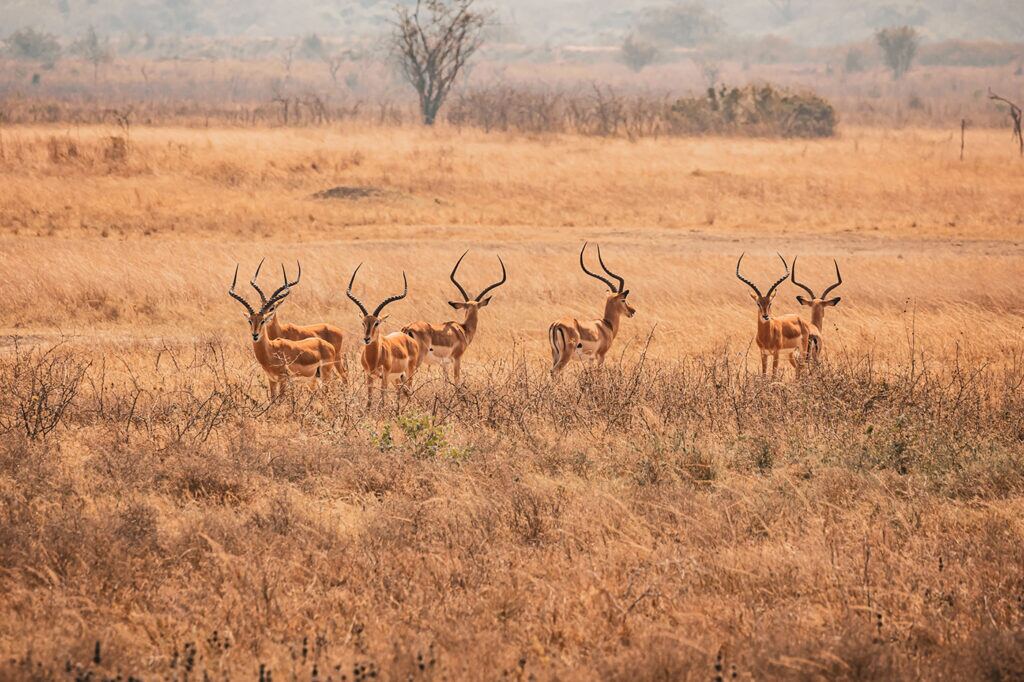
Moving north, the acacia woodland opens up. Giraffes, impala and baboons are common, and leopards hide in the thicker cover.
The northern plains
The open grassland in the north is classic savannah. Look for herds of zebra, topi and eland. Lions and rhinos have been reintroduced, and the plains offer your best chance of spotting them.
Where to Sleep: Lodge or Campsite
Akagera offers lodges, tented camps and campsites inside the park. There are also guesthouses just outside the gate, which can be cheaper.
For campers, a Land Cruiser or Hilux with a rooftop tent is ideal. Campsites have basic facilities, and you’ll fall asleep to hippos grunting by the lake. Ask us about car rental with camping gear, including a fridge, stove and chairs.
Comfort Tips for a Long Safari Day
- Dust: Keep windows closed on busy tracks and bring a cloth for camera lenses.
- Heat: Midday is hot; use the air conditioning and drink often.
- Tsetse flies: They are attracted to dark blue and black, so wear light colours.
- Binoculars: One pair per person avoids arguments.
- Navigation: Grab the park map at reception, as phone signal is patchy.
Best season
The dry months of June–September offer the easiest driving and animals gather near water. December–February is also good. In the rainy months, tracks get muddy, so a proper 4×4 matters even more. Find more seasonal tips in our Akagera National Park guide.
Frequently Asked Questions
Can I self-drive in Akagera without a guide?
Yes. Self-driving is allowed on marked tracks. However, a guide greatly improves your chances of seeing lions and rhinos.
Is a RAV4 good enough for Akagera?
On the southern tracks in the dry season, usually. For the northern plains or after rain, choose a Land Cruiser or Prado.
How much fuel will I use inside the park?
A full day of game drives can add well over 100 km, mostly on gravel. Start with a full tank from Kayonza.
Can I drive straight from Akagera to Volcanoes National Park?
Yes, but it’s a long day. Expect about 2.5 hours back to Kigali, then 2–2.5 hours north to Musanze.
Book Your Akagera Vehicle
Tell us your dates, group size and whether you plan to camp, and we’ll prepare the right safari vehicle. WhatsApp +250 725 074659 or email info@4x4carrentalrwanda.com.