
Driving yourself around Rwanda with kids in the back is very doable, as long as the car is set up properly. A car rental with GPS Rwanda package that also includes child seats removes the two biggest worries families have: getting lost and keeping little ones safe. Here is how these extras work, what to check at pickup, and how to plan family-friendly drives from Kigali.
Why a Car Rental with GPS Rwanda Makes Family Trips Easier
Rwanda’s main highways are paved and well kept. However, many lodges, trailheads and lakeside guesthouses sit at the end of small, unsigned roads. Road signs are also fewer than many visitors expect once you leave Kigali.
A GPS unit solves that. You can follow turn-by-turn directions to your hotel, find the nearest fuel station, and check how far you are from the next town. As a result, the driver can focus on the road while everyone else enjoys the view.
GPS versus your phone
Many travellers ask whether a phone is enough. Phones work well in towns, but signal drops in parts of Nyungwe Forest, around Akagera’s northern plains and on some rural back roads. Also, a phone used for maps drains fast and is the same device the kids want for games.
A dedicated GPS stays mounted, charges from the car and keeps working without data. Our advice is simple: use both. Load offline maps on your phone as a backup and let the GPS do the main navigation.
Child Seats: What to Ask For and How They Are Fitted
Children need the right seat for their age and size, not just any booster. So when you book, tell us each child’s age and rough weight. That way we can prepare the correct seat for every child before you arrive.
The three common seat types
- Rear-facing infant seat – for babies, usually up to about 12–15 months.
- Forward-facing toddler seat – with its own five-point harness, for young children who have outgrown the infant seat.
- Booster seat – for older children who use the car’s own seat belt but are still too small for it to sit correctly.
Checking the fit at pickup
Before you drive off, spend five minutes on the seats. Push the base firmly; it should not shift more than a couple of centimetres. Next, check the harness sits snugly at shoulder height. If anything feels loose, ask our team to refit it on the spot.
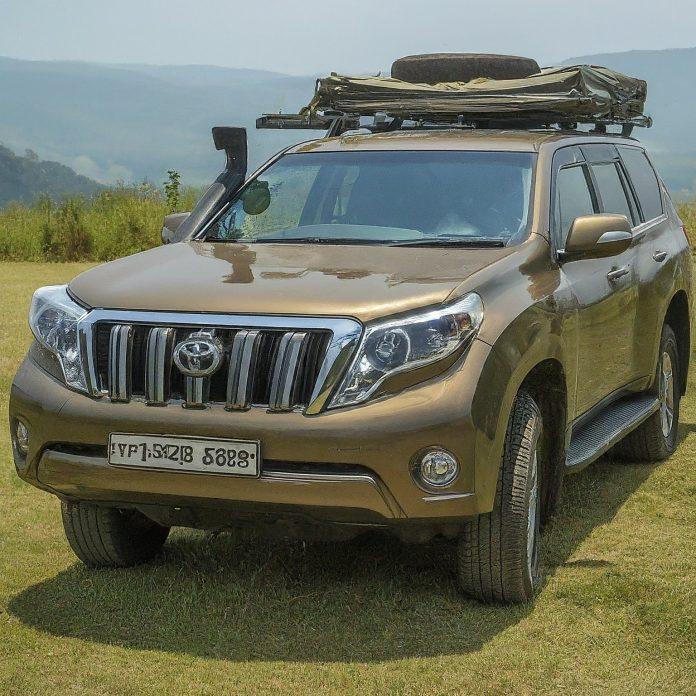
Also, place seats in the rear row, never in front of an active airbag. In a Land Cruiser or Prado, the second row gives you the easiest access for strapping kids in at roadside stops.
Choosing the Right Vehicle for Seats, Luggage and Gear
Child seats take up more room than you think. A family of four with two seats, suitcases, a cool box and a pushchair can fill a small SUV quickly. Therefore, match the vehicle to your full load, not just the number of people.
| Family set-up | Good fit | Why |
|---|---|---|
| Couple with one child, mostly paved roads | Toyota RAV4 | Easy to drive and park in Kigali; fine for one seat and light luggage. |
| Two or three children, park visits | Land Cruiser Prado | Room for two seats plus luggage; handles park tracks comfortably. |
| Larger family or grandparents along | Land Cruiser TXL or Hiace | Extra row and boot space for several seats and bags. |
For a safari in Akagera or the drive to Volcanoes, a 4×4 is worth it. Ground clearance and grip matter on park tracks, especially after rain. In contrast, a city-only stay works fine in a smaller SUV.
Planning Kid-Friendly Drives with Your GPS
Children rarely enjoy more than two hours in a seat at a stretch. Fortunately, Rwanda is compact, and most highlights sit within a half-day drive of the capital. Use the GPS to plan breaks before the kids demand them.
Realistic drive times from Kigali
- Musanze / Volcanoes National Park: about 2–2.5 hours.
- Akagera National Park gate: about 2.5 hours.
- Rubavu on Lake Kivu: about 3–3.5 hours.
- Nyungwe Forest: about 5–6 hours, so split it with an overnight in Huye.
With small children, add roughly 30–45 minutes to each leg for snack and toilet stops. Save the longer Nyungwe run for later in the trip, once everyone is used to the car.
Setting useful waypoints
Before each drive, add a fuel station, a café and your lodge as waypoints. Fuel is easy to find in towns but scarce inside parks. So fill up in Kayonza before Akagera, and in Musanze before heading up to the volcano trailheads.
Safety Rules and Road Habits to Know
Rwanda drives on the right, and traffic rules are enforced. Speed limits are low, often 40 km/h in towns and 60–80 km/h on highways, and speed cameras are common. Police also check that passengers wear seat belts, so having proper child seats keeps you on the right side of the law.
Watch for cyclists, moto-taxis and pedestrians, even on main roads. Also avoid driving after dark where possible; unlit roads and people walking on the verge make night driving tiring. Our team gives you a short briefing on local road habits when you collect the car.
Crossing a border with the family
If you plan to continue into Uganda, Kenya or Tanzania, tell us when you book. We prepare the cross-border paperwork in advance. Remember those three countries drive on the left, so take the first hour slowly. You can read more on our cross-border car hire page.
Booking Tips and What Else You Can Add
These extras are part of the package, but it pays to confirm details in writing. When you request a quote, list the number of seats, the children’s ages and whether you want a GPS. Then ask for the confirmation to state both items clearly.
Other family-friendly options include:
- Airport pickup – collect the car, seats already fitted, when you land. See our Kigali airport transfers.
- A driver – if you would rather not drive at all, a car hire with driver lets parents relax while a local guide handles the roads.
- Camping gear – adventurous families can add a rooftop tent kit for nights in the parks.
If you are still deciding between driving yourself and hiring a guide, our self-drive Rwanda page explains what is included and which documents you need.
FAQ: Car Rental with GPS Rwanda and Child Seats
Are child seats a legal requirement in Rwanda?
All passengers must be properly restrained, and police do check seat belts. A correctly sized child seat is the safe way to meet that rule for young children.
Can I bring my own child seat from home?
Yes. Many airlines carry seats free. Just make sure it fits with a standard three-point belt, since not every vehicle has ISOFIX points. We can help you fit it at pickup.
Does the GPS work inside the national parks?
Yes, it works without mobile data. However, park tracks are not always mapped in detail, so follow park signs and ranger advice once inside Akagera or Nyungwe.
How many child seats fit in a Land Cruiser?
A Prado or TXL comfortably takes two seats in the second row, with a third possible depending on seat sizes. Tell us your exact needs and we will confirm the layout.
Book Your Family-Ready 4×4
Ready to explore Rwanda with the kids? Send us your dates, children’s ages and route on WhatsApp or call +250 725 074659, or email info@4x4carrentalrwanda.com. We will prepare the right vehicle, seats and GPS before you land.