
Rwanda is small, so you can link misty volcanoes, savannah, rainforest and lakeshore light in one trip. These Rwanda safari photography routes show you where to drive, when the light is best and which 4×4 keeps your gear safe. Each route starts in Kigali.
Planning Rwanda Safari Photography Routes by Light and Season
Light shapes every photo you take here. Because Rwanda sits just south of the equator, the sun rises and sets around 6am and 6pm all year. As a result, your golden hours are short, so plan drives to arrive before them.
The long dry season (June to September) brings dusty air and soft haze, which suits savannah scenes in Akagera. The short dry season (December to February) often gives clearer skies after rain. Meanwhile, the wet months bring dramatic clouds and deep green hills, although tracks get muddy.
Golden-hour basics
- Leave camp or your lodge 30–45 minutes before sunrise.
- Rest and edit in the harsh midday light.
- Head back out from about 4pm for warm side-light.
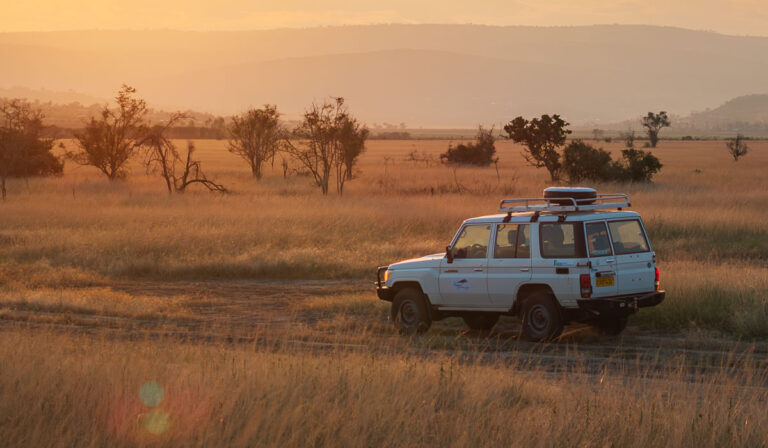
Route 1: Kigali to Akagera for Big-Game Images
Akagera is your savannah chapter. The drive to the gate takes about 2.5 hours on good tarmac, then dirt tracks inside the park. So leave Kigali before dawn if you want morning light on the plains.
What to shoot
Look for giraffe against the open grassland in the north, plus buffalo, zebra and elephant. Lakeside tracks in the south give you hippos, crocodiles and fish eagles. In addition, a boat trip on Lake Ihema is great for low-angle water-level shots.
Driving tips for photographers
Drive slowly and switch the engine off when you stop. That cuts vibration for long-lens shots. Also, keep a bean bag on the window ledge, because it steadies a big lens better than a tripod inside a car. Our 2 days Akagera safari gives you an overnight, so you get both an evening and a morning drive.
Route 2: Musanze and the Volcanoes Skyline
From Kigali, the road to Musanze takes about 2–2.5 hours through steep, terraced hills. Pull over safely at viewpoints, because the farmland patterns are some of the country’s most striking scenes.
Gorilla photography
Trekking in Volcanoes National Park needs a permit, currently US$1,500 for Rwanda. You get one hour with the gorillas, so prepare before you set off. Flash is not allowed, and the forest is dark, so bring a fast lens and raise your ISO.
Landscape stops
Early morning often shows the volcano peaks before clouds build. The twin lakes of Burera and Ruhondo also give layered views at sunset. However, those back roads are rough, so a high-clearance 4×4 is worth it.
Route 3: Lake Kivu Shoreline from Rubavu
Next, drive west to Rubavu, about 3–3.5 hours from Kigali or roughly 1.5 hours from Musanze. Lake Kivu’s evening light is soft and golden, which suits portraits and boat silhouettes.
At night, fishermen paddle out in trimaran canoes and sing as they row. Their lanterns make a lovely long-exposure subject from the shore. During the day, the Congo Nile Trail gives you terraced hills dropping into blue water. Read more on our Lake Kivu page.
Route 4: Nyungwe Forest for Canopy and Primates
Nyungwe is the longest drive, around 5–6 hours from Kigali. So split it with a night in Huye or drive the scenic lakeside road south from Kivu instead.
Shooting in the rainforest
The canopy walkway puts you level with the treetops. Mist often hangs in the valleys until mid-morning, which adds depth to wide shots. Chimpanzee tracking starts early, and the light under the trees is low, so again use a fast lens.
Protect your kit
Rain can arrive with little warning. Pack rain covers, silica gel and a dry bag. Also, wipe lenses before you get back into an air-conditioned car to avoid fogging.
Choosing a Vehicle for a Photo Safari
Your car is your mobile hide. For that reason, the right model makes a real difference.
| Vehicle | Why photographers like it |
|---|---|
| Land Cruiser Safari | Pop-up roof for 360° shooting, room for tripods and bags |
| Land Cruiser Prado | Comfortable on long drives, good ground clearance |
| Toyota RAV4 | Light and economical for solo shooters on main roads |
| Hilux with rooftop tent | Camp near the action for dawn shots |
If you want to focus only on the camera, consider hiring a driver. A local driver knows where animals gather and when to stop. Otherwise, a self-drive trip gives you total freedom over timing.
Sample 7-Day Photography Loop
- Day 1: Kigali city and markets, then rest.
- Days 2–3: Akagera sunrise and sunset drives.
- Day 4: Drive to Musanze, afternoon terraces.
- Day 5: Gorilla trek, then twin lakes at sunset.
- Day 6: Rubavu and evening fishermen on Kivu.
- Day 7: Return to Kigali, or continue south to Nyungwe.
Photo-trip mistakes to avoid
- Packing too many parks into a week. Long drives eat your best light, so allow at least two nights in each area.
- Driving after dark. Night roads have cyclists, pedestrians and animals, so aim to reach your lodge before 6pm.
- Forgetting power. Ask for a car charger or inverter so batteries charge between stops.
- Leaving gear on show. Keep bags out of sight when you park in towns.
FAQ: Photography Road Trips in Rwanda
Can I fly a drone in Rwanda’s national parks?
Drones need permission from the Rwanda Civil Aviation Authority, and parks have their own rules. Apply well before your trip and never fly without approval.
Is a pop-up roof essential?
It is very helpful in Akagera, where game viewing is from the car. For gorilla and chimp treks, you walk, so it matters less.
How much camera gear can fit in a Land Cruiser?
Plenty. Two photographers can carry long lenses, tripods and bags, with seats folded for extra room if needed.
Can I stop anywhere to photograph villages?
Stop only where it is safe to park. Always ask people before you photograph them, and respect a no.
Book Your Photo Safari Vehicle
Tell us your route, dates and gear list, and we will suggest the right 4×4. Message us on WhatsApp at +250 725 074659 or email info@4x4carrentalrwanda.com.