
Not every Rwanda trip needs a big Land Cruiser. Will you spend most of your time in Kigali and other towns? Then a compact car rental Kigali option is easier to park, cheaper to fuel and simple to drive. This guide covers when a small car makes sense, how to drive Rwanda’s cities, and where its limits are.
When a Compact Car Rental Kigali Booking Makes Sense
A compact car or small SUV shines on paved roads and in busy streets. It suits you if your plans look like any of these:
- Business meetings around Kigali’s districts, such as Kacyiru, Kimihurura and Nyarutarama.
- A city break with restaurants, markets, galleries and memorial visits.
- Day trips on tarmac to nearby towns like Muhanga or Nyamata.
- Town-to-town drives to Huye, Musanze or Rubavu in the dry season.
- Longer stays where low running costs matter.
A compact car also suits solo travellers and couples with light luggage. The boot of a small hatchback holds two medium suitcases, while a RAV4 fits a little more. If you are carrying bulky equipment or travelling as four adults, step up a size.
On the other hand, if national parks, rough tracks or rainy-season trailheads are on your list, a 4×4 is the safer choice. Many travellers combine the two: a small car for city days, then a Land Cruiser for the park section.
Small Car or Compact SUV?
In Rwanda, “compact” usually means one of two types. Each has clear strengths.
| Type | Strengths | Limits |
|---|---|---|
| Hatchback or small saloon | Easiest parking, lowest fuel use | Low clearance for speed bumps and gravel |
| Compact SUV like the Toyota RAV4 | Higher seating, more clearance, handles light gravel | Slightly higher fuel use and rate |
For most visitors, the RAV4 is the best compromise. It is small enough for city parking yet comfortable on longer drives. It also copes with the occasional unpaved side road to a hotel or viewpoint.
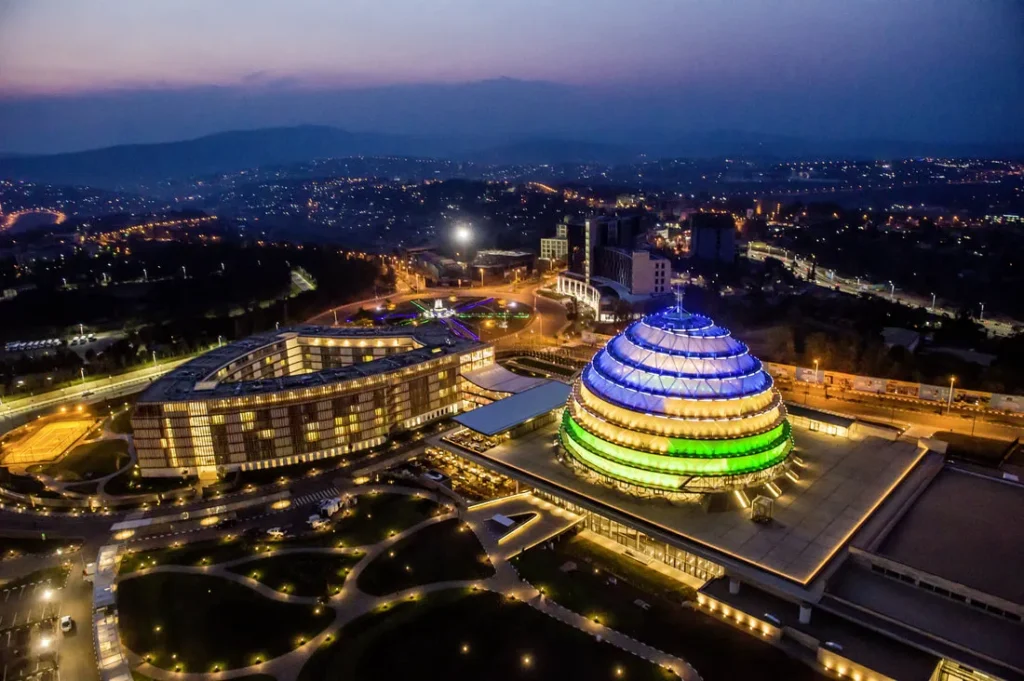
Driving in Kigali: What to Expect
Kigali is one of the cleanest and most orderly capitals in Africa. Still, it has its own rhythm, and a few local habits help you settle in fast.
Roads and layout
The city spreads across several hills, so roads climb and twist constantly. Main roads are well paved with clear markings. However, many residential streets are cobbled or steep, which is where a compact car’s light weight helps.
Traffic and rules
- Rwanda drives on the right.
- Roundabouts are common. Give way to traffic already on them.
- Speed cameras are everywhere, and limits drop sharply in town.
- Motorbike taxis (“motos”) weave through traffic, so check mirrors often.
- Mobile phone use while driving is strictly enforced.
- Police checkpoints are polite. Keep your licence and rental papers handy.
Rush hours
Morning (around 7–9 am) and evening (around 5–7 pm) traffic builds on routes into the centre and around Kimironko and Remera. Plan meetings outside these windows if you can.
Fuel stations and tolls
Fuel stations are easy to find across Kigali, and most accept cash and mobile money. There are no road tolls in Rwanda. However, keep some Rwandan francs for parking attendants and roadside snacks on longer drives.
Parking and Getting Around Town
Parking is one of the biggest advantages of a small car. Shopping centres, hotels and many restaurants have their own car parks. On the street, you may pay a parking attendant or through a mobile system, depending on the area.
Also, Kigali’s hill roads make some places look closer on a map than they feel. Allow extra time for steep detours. A navigation app with offline maps works well, and most buildings are easy to find by landmark. Our Kigali city taxi service is a handy backup for evenings out.
City highlights by car
- Kigali Genocide Memorial in Gisozi, a moving first stop.
- Kimironko Market for crafts, fabrics and fresh fruit.
- Inema Arts Center and Niyo Art Gallery for contemporary art.
- Nyandungu Eco-Park for a green break.
- Mount Kigali viewpoints at sunset.
Beyond Kigali: Rwanda’s Other Towns
Rwanda’s main towns are linked by good tarmac, so a compact car handles them well in dry weather.
- Musanze: 2–2.5 hours north. Fine for the town, but trailheads need a 4×4.
- Rubavu: 3–3.5 hours west on Lake Kivu. Easy driving and lovely lakeside roads.
- Huye: around 2.5–3 hours south, home to the Ethnographic Museum and the national university.
- Nyamata: under an hour south of Kigali, with an important memorial church.
However, hilly roads mean drives take longer than distances suggest. Also, avoid driving after dark, as pedestrians and cyclists use the road shoulders. For trips that include Akagera or rough tracks, see our SUV car rental Kigali options.
Keeping Costs Low with a Small Car
A compact car keeps your running costs down in several ways. It uses less fuel, which matters on longer stays. Also, its daily rate is usually lower than a full-size 4×4.
To save more, ask about weekly or monthly rates if you are staying a while. Fill up at major stations in Kigali where prices are clearly displayed. Finally, return the car with the agreed fuel level to avoid refuelling charges. Our cheap car rental Rwanda page has more budget tips.
Frequently Asked Questions
Can a compact car reach Volcanoes National Park?
It can reach Musanze and Kinigi on tarmac. However, many trailhead tracks need a 4×4, especially in the rainy season.
Is it easy to find parking in Kigali?
Yes, especially with a small car. Most hotels, malls and restaurants have parking, and street parking is managed in busy areas.
Do I need an International Driving Permit?
It is recommended alongside your home licence, particularly if your licence is not in English or French.
Can I collect a compact car at the airport?
Yes. Airport delivery is available, so you can drive straight into the city after landing.
Book a City Car
Tell us your dates, where you are staying and any towns you plan to visit. We will suggest the right compact car or small SUV. WhatsApp or call +250 725 074659, or email info@4x4carrentalrwanda.com.