
Buying vehicles ties up capital, and managing them takes staff time your business may not have. That is why many Kigali companies, contractors and embassies choose corporate fleet rental Rwanda style instead. You get a set of vehicles on a long-term contract, maintained by someone else. This guide helps you decide whether renting suits your organisation, and how to size and run the fleet once you do.
Rent or buy: the real comparison
The sticker price of a vehicle is only the start. Once you own it, you also pay for insurance, servicing, tyres, repairs and registration. Then, when the project ends, you have to sell it, often at a loss.
A long-term rental turns these costs into one predictable monthly bill. In addition, it avoids the heavy upfront spending of buying a fleet. For projects with a fixed end date, that difference is often decisive.
| Factor | Buying | Long-term rental |
|---|---|---|
| Upfront cost. | High. | Low. |
| Maintenance. | Your responsibility. | Usually handled by the provider; confirm in your contract. |
| Breakdowns. | Vehicle off the road until repaired. | Replacement terms can be agreed. |
| Scaling up or down. | Slow; buy or sell vehicles. | Add or return vehicles by agreement. |
| End of project. | Resell the fleet. | Hand the vehicles back. |
Who uses corporate fleet rental Rwanda services?
Long-term fleets suit any organisation whose transport needs are real but temporary or changing. Typical clients include:
- Construction and engineering firms on multi-year contracts.
- Embassies and international agencies with rotating staff.
- Companies opening a regional office in Kigali.
- Research teams and consultancies working upcountry.
- NGOs and government-funded projects with set budgets.
Each group has slightly different needs. For example, an embassy may want executive SUVs with drivers, while a contractor needs pickups for site work.
Sizing your fleet
A common mistake is renting one vehicle per manager. Instead, look at how vehicles are actually used. Many offices find that a shared pool, managed through a simple booking sheet, covers more trips with fewer cars.
Questions to work out first
- How many trips happen on a typical day, and how long are they?
- How many happen inside Kigali, and how many go upcountry?
- Which roles need a dedicated vehicle, and which can share?
- When are the peak weeks, such as field seasons or board visits?
Then cover the steady daily need with long-term vehicles, and use short-term hire for peaks. This keeps the monthly bill down without leaving staff stranded.
Choosing the right mix of vehicles
Most Kigali fleets combine two or three vehicle types. City work and upcountry work need different strengths.
Typical corporate fleet mix
- Executive SUV: a Land Cruiser V8 or Prado for senior staff and visiting guests.
- Field 4×4: a Land Cruiser TXL or Safari for rough rural roads and long trips.
- Pickup: a Hilux Double Cab for tools, samples and site materials.
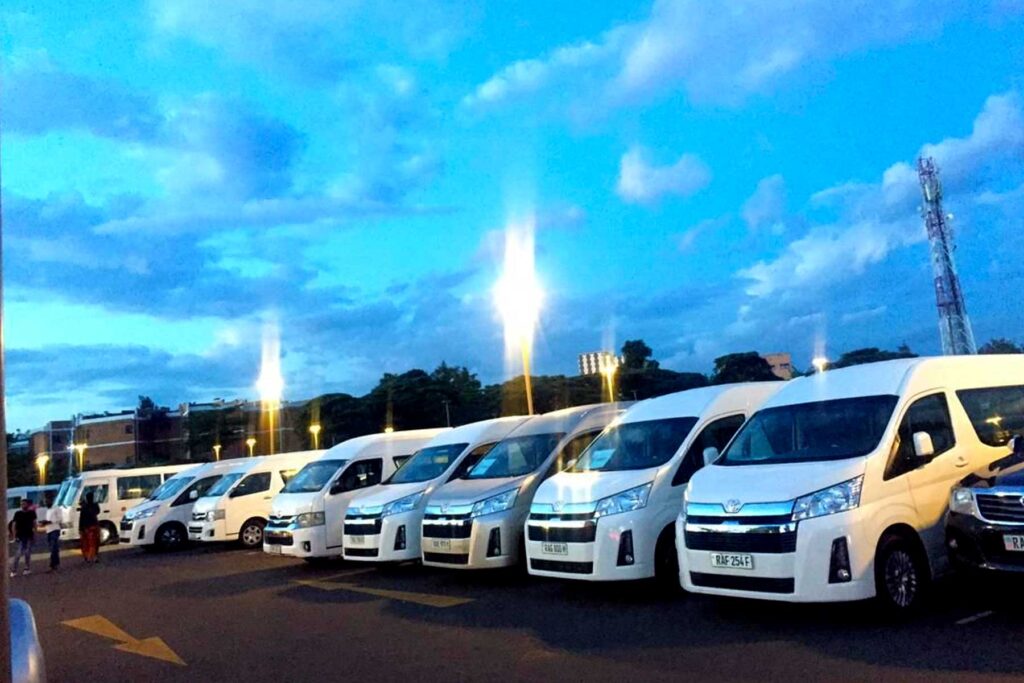
- Minibus: a Hiace for staff shuttles and workshop groups.
- City SUV: a RAV4 for short, cheap trips around Kigali.
The Land Cruiser V8 is a popular choice for executive transport, because it handles both city meetings and upcountry visits comfortably.
Drivers: in-house, rented or self-drive?
You can rent vehicles with drivers, without drivers, or a mix. A rented driver pool removes the work of recruiting and managing staff. It also gives you cover when a driver is sick or on leave.
On the other hand, some companies prefer their own staff to drive. In that case, set a clear vehicle policy covering licences, night driving and private use. Our car hire with driver page explains how chauffeur arrangements work.
Running a corporate fleet rental Rwanda contract well
Once the fleet is in place, a little admin keeps it efficient. First, appoint one person as the fleet contact. Next, keep a logbook for each vehicle with dates, kilometres and drivers. Then review usage every month.
What to agree in the contract
- Servicing schedule and who books it.
- Replacement time if a vehicle breaks down.
- Insurance cover, excess and accident procedure.
- Monthly mileage limits, if any.
- Invoice format, payment terms and notice periods.
Our car hire leasing page covers longer contracts in more detail.
Budgeting for a rented fleet
A rental fleet makes budgeting much simpler, but it does not cover everything. So build a full monthly picture before you present it to finance.
Costs to include
- Monthly rental for each vehicle.
- Driver salaries or rented driver fees, including overtime.
- Fuel, which usually sits outside the rental rate.
- Parking, tolls and car washes.
- Driver allowances for overnight field trips.
- Short-term extra vehicles for peak weeks.
Fuel is often the biggest variable. Tracking kilometres per vehicle each month quickly shows where trips can be combined or a smaller vehicle used. Ask what is included in the rate, and confirm it in your quote.
Safety and maintenance standards
Your company has a duty of care to staff on the road. So ask how vehicles are serviced and checked between uses. Every vehicle should carry a spare tyre, jack, warning triangle and a basic emergency kit.
For upcountry trips, set simple rules: no rural driving after dark, a shared travel plan, and regular check-ins. Rwanda drives on the right, but staff crossing into Uganda or Kenya must adjust to driving on the left.
Visiting executives and short events
Even with a long-term fleet, you will have short peaks. Board meetings, conferences and visiting delegations often need extra vehicles for a few days. Airport pickups for these guests can be added to the same account. That way, everyone is moved by one provider on one invoice. Book these extras as soon as event dates are fixed, because conference weeks in Kigali can be busy.
Frequently asked questions
What is the minimum length of a corporate rental?
It depends on the vehicles and the agreement. Ask for monthly and longer-term quotes and compare them. Many companies start with a few months and extend once usage is clear.
Can we change the number of vehicles during the contract?
Usually yes, with notice. Agree the process in writing at the start.
Can vehicles be branded with our logo?
Ask before you sign. Any branding must be agreed in advance and removed at the end.
Can fleet vehicles travel to neighbouring countries?
Cross-border trips need extra documents and permission, so plan them early.
Request a fleet proposal
Tell us your team size, typical routes and contract length, and we will suggest a fleet and driver plan. WhatsApp or call +250 725 074659, or email info@4x4carrentalrwanda.com.