
If you’re a foreigner driving in Rwanda for the first time, the roads will surprise you. They’re clean, well marked and closely policed. That’s good news, but it also means the rules are enforced. This guide covers the documents, Kigali traffic rules and insurance points every visiting driver should know before collecting a rental car.
Documents a Foreigner Driving in Rwanda Needs
Police checkpoints are common, especially on roads leaving Kigali. Officers are polite but will ask for papers. Keep these in the car at all times:
- Your passport or a clear copy, with your entry stamp or visa.
- Your national driving licence, valid and not expired.
- An International Driving Permit (IDP), strongly advised if your licence isn’t in English or French.
- The rental agreement and the vehicle’s insurance certificate, which we provide.
Short visits versus long stays
Visitors on a holiday or short work trip can normally drive on a valid foreign licence with an IDP. If you’re moving to Rwanda for a longer posting, the rules for converting your licence are different. Check the current requirements with Rwanda National Police before your foreign licence stops being accepted.
Age and experience
Most rental companies set a minimum age and ask that you’ve held your licence for a couple of years. Ask when you book so there are no surprises at pickup.
Kigali Traffic Rules That Catch Visitors Out
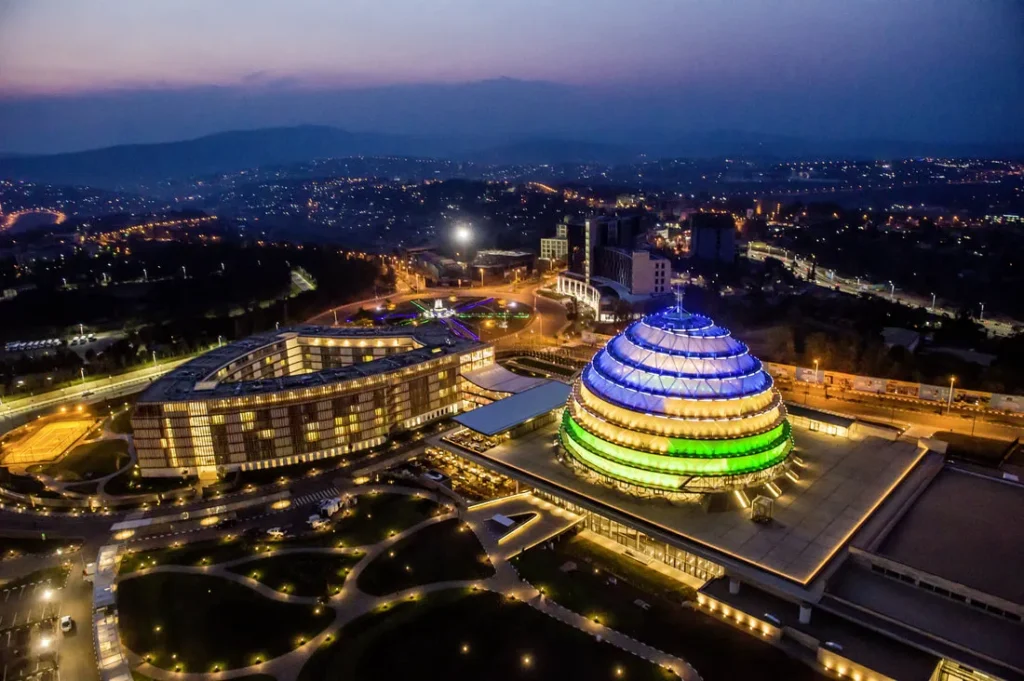
Rwanda drives on the right, with left-hand-drive cars. That’s easy for visitors from Europe or North America. Drivers from the UK, Kenya, Uganda or Tanzania need a day to adjust, especially at junctions.
Speed limits and cameras
Speed limits are low and strictly enforced. Expect around 40–60 km/h in towns and up to 80 km/h on open highways, but always follow the signs. Fixed and mobile cameras are common. Fines link to the number plate, so a rental company may pass them on to you after your trip.
Roundabouts
Kigali has many roundabouts. Traffic already on the roundabout has priority. Signal when you exit, and watch for motorbike taxis cutting inside.
Motorbike taxis
Moto-taxis are everywhere in the city. They weave between lanes and stop suddenly for passengers. Check your mirrors before every turn and leave space in front.
Other rules to know
- Seat belts are compulsory for all passengers.
- Handheld phone use while driving is banned.
- Drink-driving laws are strict, and police run breath tests. Simply don’t drink and drive.
- Pedestrians have priority at zebra crossings, and police watch these closely.
- On the last Saturday morning of each month, community work (Umuganda) takes place. Traffic is restricted, so plan to stay put until it ends.
Parking in the city
Central Kigali has paid parking zones, so look for the signs and ask locals how to pay. Never park on yellow lines or at bus stops. Hotels, malls and most restaurants offer guarded parking, which is the safest choice overnight.
Insurance Basics for a Foreigner Driving in Rwanda
Insurance is where many visiting drivers get confused. Rwandan law requires third-party cover on every vehicle. That protects other people and property, but not the car you’re driving.
Comprehensive cover and the excess
Good rental cars also carry comprehensive cover, which protects the vehicle itself against accident and theft. However, there is usually an excess. That is the amount you pay before insurance takes over. Ask the exact figure in writing before you sign.
What’s usually not covered
- Tyres, windscreen and undercarriage damage, unless you add extra cover.
- Damage from driving off marked roads or through rivers.
- Driving under the influence or by an unlisted driver.
- Loss of personal belongings left in the car.
Crossing borders
Your Rwandan policy doesn’t automatically cover Uganda, Tanzania, Kenya or DRC. For cross-border trips you need a regional insurance extension and the vehicle papers. We arrange these on our cross-border car hire service.
If Something Goes Wrong on the Road
After an accident
- Stop safely, switch on hazard lights and check for injuries.
- Call police on 112. Don’t move the vehicles unless police tell you to.
- Take photos of the scene, the vehicles and number plates.
- Call your rental company straight away.
- Get a copy or reference of the police report. Insurers need it.
Breakdowns and flat tyres
Pull well off the road and place your warning triangle behind the car. Then phone your rental company for help. Rural roads often have few places to stop, so take your time and choose a safe spot.
At a police stop
Stay calm and polite. Hand over your documents when asked. If you get a fine, ask for an official receipt or payment reference. Fines are normally paid through official channels, not in cash on the roadside.
Practical Tips for Driving Outside Kigali
- Avoid night driving. Roads are unlit and busy with people, bikes and animals after dark.
- Expect hills and bends. Use lower gears on long descents, especially to Lake Kivu and Nyungwe.
- Allow realistic times. Kigali to Musanze takes 2–2.5 hours; Kigali to Nyungwe takes 5–6 hours.
- Fuel up in towns. Stations are sparse near parks.
If the rules or the hills sound like too much, you can always book a vehicle with a local driver. See our car hire with driver option. For first-day nerves, an airport transfer to your hotel lets you start driving fresh the next morning.
Frequently Asked Questions
Is my US or EU licence valid in Rwanda?
Yes, for a short visit, provided it’s valid. Carry an IDP as well to avoid problems at checkpoints.
Who pays speeding fines on a rental car?
The driver does. Fines are linked to the plate, so the rental company will forward any fine issued during your rental.
Do I need extra insurance for gravel park roads?
Ask about tyre and windscreen cover. Those are the most common damage on park tracks and are often excluded from standard cover.
Can I drive during Umuganda?
Generally, no. Plan your departure for after midday on the last Saturday of the month.
Planning to drive yourself? Read our self drive Rwanda page, then message us on WhatsApp at +250 725 074659 or email info@4x4carrentalrwanda.com with your questions.