
Akagera is Rwanda’s only savannah park, and it’s one of the best places in East Africa to run your own game drive. A self-drive to Akagera means you choose the loops, the pace and how long to sit with a herd of elephants. This guide covers the drive from Kigali, how entry works, the best routes inside the park and the vehicle you’ll need.
The Drive from Kigali to Akagera
The trip east takes about 2.5 hours to the main southern gate. Leave Kigali through Kabuga and follow the paved road through Rwamagana to Kayonza. From there, turn north-east and follow the signs to the park.
The last section is a gravel road, which is easy in the dry season and muddier after rain. Overall, it’s one of the simplest drives in Rwanda, so it’s a good first self-drive outing.
Timing your departure
- Leave Kigali by 5:30–6 am to reach the gate as it opens and catch early animal activity.
- Fuel up in Kayonza. There’s no fuel station inside the park.
- Buy snacks and water before you leave town, too.
How Entry Works on a Self-Drive to Akagera
At the southern entrance, you stop at the reception centre. There, you pay park entry and a vehicle fee, get a map and ask about recent sightings. Fees are set by the park management and change from time to time, so check current rates before you go.
Should you hire a guide for your car?
You can drive the park alone. However, the reception usually offers a freelance guide who rides in your vehicle for a fee. On a first visit, it’s well worth it. Guides know where the lions were seen yesterday, and they read the tracks you would drive straight past.
Park rules to know
- Stay on marked tracks. Off-road driving is not allowed.
- Stay inside your vehicle except at marked spots.
- Keep a respectful distance from animals, especially elephants.
- Leave the park or reach your camp before the gates close at dusk.
Best Routes Inside the Park
Akagera stretches a long way north to south, and you can’t see it all in one day. So decide which half suits your interests.
The southern lakes
Near the entrance, the tracks wind past Lake Ihema and smaller lakes. Expect hippos, crocodiles, buffalo, waterbuck and excellent birdlife. The roads here are woodland tracks, sometimes narrow and bumpy. A boat trip on Lake Ihema is a relaxing add-on, usually booked at reception.
The northern plains
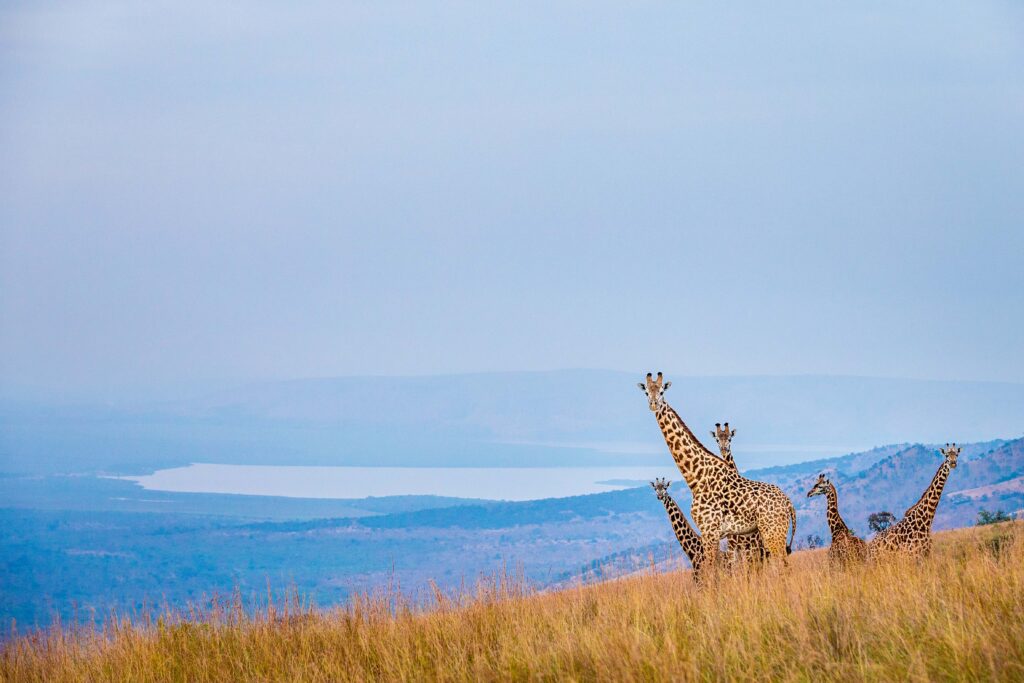
Further north, the woodland opens into rolling grassland. This is where you’re most likely to see giraffes, zebras and large herds of antelope. Lions and rhinos also roam this area, though sightings are never guaranteed. The drive north is long, so leave plenty of time.
Exiting via the north
If you drive the full length, you can leave through the northern exit gate and return to Kigali that way. Confirm the exit times and fees at reception before you set off, so you don’t arrive at a closed gate.
Day Trip or Overnight?
A day trip is possible, but it’s a long day. You’ll spend around five hours driving to and from Kigali, plus your game drive. As a result, many visitors only see the southern lakes.
Staying overnight changes everything. You can enjoy late-afternoon light, an early start the next day and time to explore the north. Options range from lodges to campsites. With a rooftop tent, you can camp at designated sites inside the park. Our 2 days Akagera safari shows how an overnight trip flows.
The Right 4×4 for Akagera
Inside the park, tracks are gravel, sand and dirt, with rocky stretches and some deep ruts. After rain, low-lying areas near the lakes turn to mud. So a proper 4×4 is the right call.
| Vehicle | Why it works in Akagera |
|---|---|
| Land Cruiser Safari | High clearance, strong 4×4, and a pop-up roof for viewing if fitted |
| Land Cruiser Prado | Comfortable, capable on most loops, good for families |
| Land Cruiser with rooftop tent | Lets you camp inside the park and start drives at dawn |
| Toyota RAV4 | Fine for the southern section in the dry season only |
See the Land Cruiser Safari details or ask about camping gear rental for an overnight stay.
Game-Drive Tips for First-Timers
- Drive slowly. Around 20–30 km/h lets you spot animals in the bush.
- Turn off the engine at sightings for quieter, better viewing.
- Bring binoculars and a zoom lens. Many animals keep their distance.
- Wear neutral colours. Tsetse flies are drawn to dark blue and black in wooded areas.
- Give elephants space. If one flaps its ears or walks towards you, back away calmly.
- Check tyres before you go. Thorny bush can cause punctures, so know where the spare and jack are.
What to pack for the day
There are few places to buy anything once you’re inside the park. So bring everything you need for a full day in the car.
- Plenty of drinking water and a packed lunch.
- Sunscreen, a hat and a light jacket for early mornings.
- A phone charger that works in the car.
- Cash or a card for park fees and the boat trip.
Best Time for a Self-Drive to Akagera
The dry seasons, from June to September and from December to February, are best. Animals gather near the lakes, the grass is shorter and the tracks are firm.
In the rainy months, the park turns lush and green and has fewer visitors. However, some northern tracks may become difficult. Always ask at reception which loops are open before heading out. Read more in our Akagera National Park guide.
FAQ
Can I drive myself inside Akagera?
Yes. Self-drive vehicles are allowed on the park’s tracks after you pay entry at reception.
Is a day trip to Akagera worth it?
Yes, if time is short. However, an overnight stay lets you see the northern plains, where giraffes and big herds gather.
Do I need a guide in my car?
It’s optional, but very helpful on a first visit. Guides improve your chances of seeing lions and rhinos.
Can I camp inside the park with a rooftop tent?
Yes, at designated campsites. Book your spot in advance through the park.
Book Your Akagera 4×4
Share your travel dates and whether you’ll camp or stay at a lodge on WhatsApp at +250 725 074659 or email info@4x4carrentalrwanda.com. We’ll set you up with a vehicle that’s ready for Akagera’s tracks.