
A Land Cruiser GX rental is a smart choice if your Rwanda trip goes beyond Kigali’s smooth tarmac. The GX is the simpler, tougher member of the Land Cruiser family, built for mud, rocks and steep hills. This guide explains why it suits Rwanda, how to drive it on rough roads, and how to plan routes with it.
Why Choose a Land Cruiser GX Rental in Rwanda
Rwanda’s main highways are good. However, the roads to trailheads, lodges, coffee farms and park tracks are often murram, gravel or rock. In the rainy months, they turn slippery and rutted fast.
The GX handles this well because of its strong chassis, high ground clearance and proper low-range four-wheel drive. It has fewer electronic extras than a luxury V8, so there is less to go wrong far from town. Also, it seats a family comfortably and swallows luggage, camping gear and spare water.
Our Land Cruiser Safari range includes GX and TXL versions. If you want more comfort for long tarmac days, the TXL adds a little refinement while keeping the same toughness.
Before You Drive: Checks at Pickup
A five-minute walk-around saves hours of trouble later. When you collect your vehicle, our team gives you a briefing, but it helps to know what to look for.
- Tyres: check tread and pressure, including the spare. Make sure the jack and wheel spanner are on board.
- Fluids: ask us to show you the oil, coolant and brake fluid levels.
- 4WD controls: practise engaging high and low range while parked.
- Lights and wipers: mountain fog and sudden rain are common.
- Documents: registration, insurance papers and our emergency number.
Also, photograph any scratches before you leave. It protects you and speeds up the return.
How to Drive a 4×4 on Rough Rwandan Roads
Good off-road driving is mostly about patience. Slow, smooth inputs keep you moving where fast, jerky ones get you stuck.
Use the right gear
On normal gravel, high-range 4WD gives extra grip without slowing you down. For steep climbs, deep mud or rocky descents, stop and select low range. Low range gives more pulling power and better engine braking.
Keep steady momentum
On mud and loose surfaces, hold a steady, modest speed. Don’t stop halfway up a slippery hill if you can avoid it. However, never charge at an obstacle, because you may damage the underside.
Descend with engine braking
Long downhill sections in the north and west can overheat brakes. Instead, select a low gear and let the engine hold the vehicle back. Touch the brakes gently, not constantly.
Read the ruts
Deep ruts can trap a vehicle. Where possible, straddle them with one wheel on each ridge. If you must drive in them, keep the steering straight and avoid sudden turns.
Crossing water
Small streams appear in the wet season. Check depth on foot first if it is safe. Then cross slowly and steadily to create a small bow wave, and test your brakes afterwards.
If you get stuck
First, stop spinning the wheels, because that only digs deeper. Then clear mud or stones from in front of the tyres and try reversing gently in low range. Branches or grass under the wheels can add grip. Local people are usually quick to help push, and a small thank-you is appreciated. If none of this works, call us and stay with the vehicle.
Packing List for Rough-Road Days
A little preparation makes remote driving far more relaxed. Before you leave town, check you have these on board.
- Offline maps on your phone, plus a charger cable for the car.
- At least two litres of drinking water per person.
- A torch or headlamp for early starts and late arrivals.
- Rain jackets, since showers arrive fast in the hills.
- Some cash in Rwandan francs for park fees, snacks and fuel in small towns.
- A local SIM card with data, so you can reach us on WhatsApp.
Road Rules and Safety Tips
Rwanda drives on the right. Traffic police are strict, and speed cameras are common, so respect the limits even on empty roads. Seat belts are required for everyone.
- Avoid night driving outside towns. Pedestrians, cyclists and livestock use roads after dark.
- Watch for fog in Nyungwe and around the volcanoes. Slow down and use dipped headlights.
- Keep a safe gap, because trucks on hills can stop suddenly.
- Fuel up in towns such as Musanze, Huye, Rubavu and Kayonza before rural stretches.
- Carry water and snacks in case a detour takes longer.
If anything goes wrong, call us. We offer roadside support, and our team can talk you through simple problems by phone.
Where to Take Your Land Cruiser GX Rental
Rwanda is compact, so you can see a lot in a week. Here are realistic drive times from Kigali.
| Destination | Drive time | Road notes |
|---|---|---|
| Volcanoes NP (Musanze) | 2–2.5 hours | Good tarmac; rough tracks to some trailheads |
| Akagera NP gate | About 2.5 hours | Tarmac, then dirt park tracks |
| Lake Kivu (Rubavu) | 3–3.5 hours | Winding mountain road |
| Nyungwe Forest | 5–6 hours | Long, curvy, often foggy |
Akagera National Park
Self-drive game drives are allowed in Akagera National Park. After rain, the northern tracks get soft, so the GX’s clearance helps. Add a boat trip on Lake Ihema to see hippos and crocodiles.
Volcanoes and the north
Gorilla trekking starts early, and some trailhead roads are steep and rocky. The Rwanda gorilla permit costs US$1,500 and is set by RDB, so book well ahead.
Nyungwe and Lake Kivu
Nyungwe offers chimpanzee trekking and the canopy walk. Then you can continue to Lake Kivu along a scenic, winding route.
Camping With a Rooftop Tent
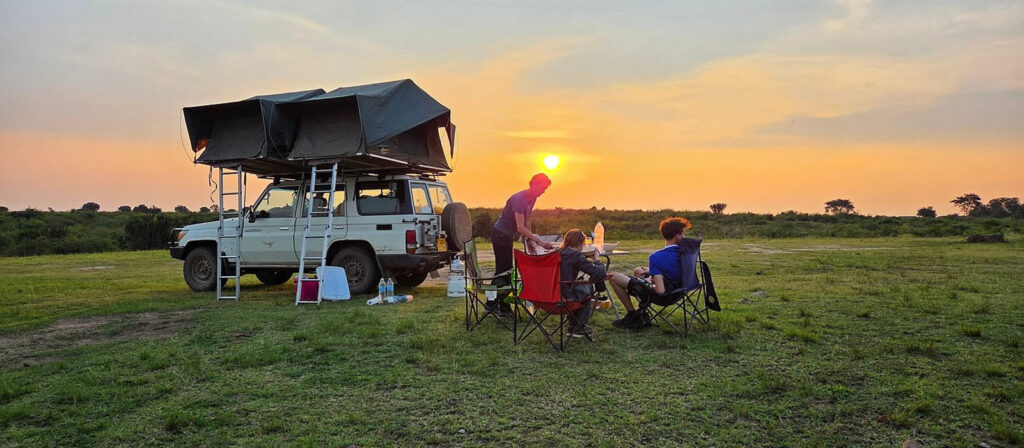
The GX makes a great camping base. With a rooftop tent, you sleep off the ground and set up in minutes. Our car rental with camping gear can include a tent, sleeping bags, chairs, a table and cooking kit.
Camp only at designated sites, such as those in Akagera or at lodges that allow it. Also, park on level ground before opening the tent, and keep food sealed inside the vehicle at night.
Self-Drive or With a Driver?
Many visitors love driving themselves. However, if you are nervous about mountain roads or simply want to relax, our car hire with driver is a good alternative. Local drivers know the routes, speak the language and share stories along the way.
Longer projects work too. NGOs, researchers and film crews often take the GX for weeks, with roof racks for equipment. Monthly hire keeps servicing with us, so your team stays focused on the work.
Crossing Borders in Your 4×4
You can take the vehicle into Uganda, Tanzania, Kenya or DRC with prior arrangement. We prepare the paperwork, including the COMESA yellow card insurance. Remember that Uganda, Kenya and Tanzania drive on the left, so take it slowly at first. See our cross-border car hire page for details. The Katuna border is about 1.5 hours from Kigali.
Frequently Asked Questions
What is the difference between a GX and a TXL?
Both are Land Cruisers with similar off-road ability. The GX is more basic and rugged, while the TXL adds comfort features for long drives.
Do I need off-road experience?
No, but you should drive calmly and follow the tips above. We give a full briefing at pickup, including how to use low range.
Which licence do I need?
A valid licence from your home country. An International Driving Permit is recommended, especially if your licence is not in English.
Should I book early?
Yes. Land Cruisers are popular in the dry seasons, so book as soon as your dates are set.
Book Your Land Cruiser Today
Tell us your route, dates and group size, and we will match you with the right vehicle and gear. Message us on WhatsApp at +250 725 074659 or email info@4x4carrentalrwanda.com.