
Most self-drive road trips in Rwanda begin in Kigali, and the day or two you spend there sets up the whole journey. This guide shows where and how to prepare for self drive travel Rwanda style: collecting the car, sorting money and data, stocking supplies and planning your first leg. Get these right and the open road takes care of itself.
Kigali: The Best Base to Prepare for Self Drive Travel in Rwanda
Kigali is where nearly every road trip starts, and for good reason. It has the airport, the best-stocked supermarkets, bank branches, mobile network shops and reliable fuel stations. Upcountry towns have the basics, but choice drops quickly once you leave the capital.
So plan at least half a day in the city before you set off. If you land late, sleep in Kigali and leave the next morning. Driving unfamiliar roads after dark is the one thing we always advise against.
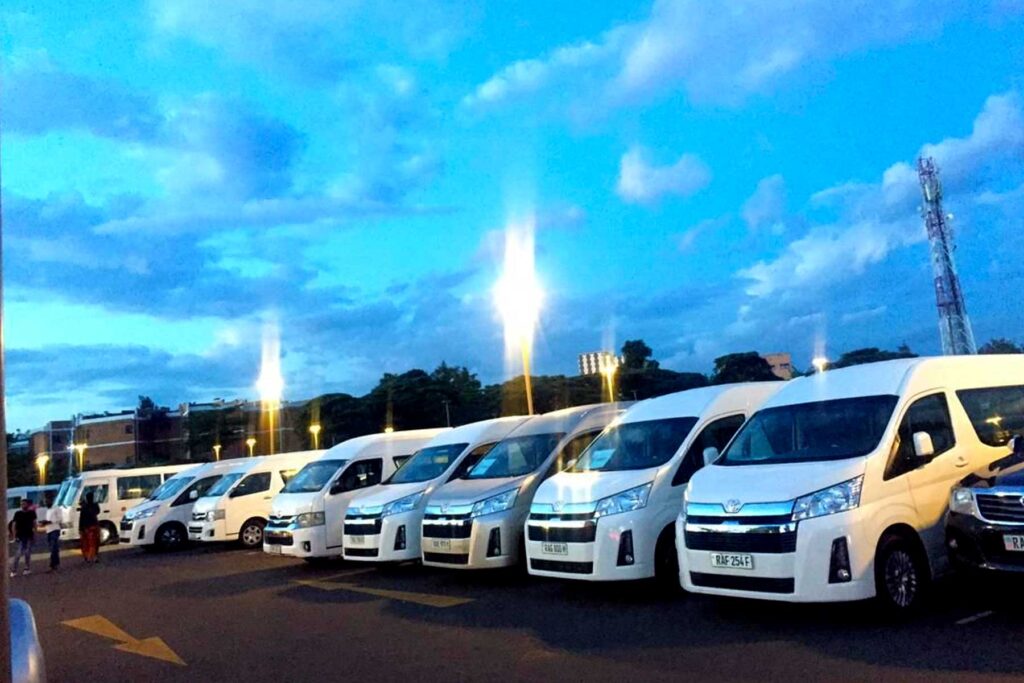
Where to collect your car
You can collect your vehicle at Kigali International Airport, at your hotel, or at a meeting point in town. Airport handover saves time if you’re heading straight out. Hotel delivery, on the other hand, lets you rest first and do the handover calmly in daylight. Our airport pickup service covers both options.
Documents to Sort Before You Leave Home
Paperwork is the part you can’t fix once you’re on the road. Pack these before you fly:
- Passport with a valid Rwandan visa or eligibility for visa on arrival.
- Driving licence from your home country, plus an International Driving Permit if it isn’t in English or French.
- Credit or debit card for the deposit and emergencies.
- Booking confirmations for gorilla permits, lodges and campsites, saved offline.
- Yellow fever certificate if you’re arriving from or travelling on to a country that requires it.
Also keep photos of everything on your phone and a printed copy in the glovebox.
Choosing the Right Car for Your Route
Where you’re going decides what you should drive. Main highways are paved, but park access roads and lodge drives are often murram that turns muddy in the rains.
| Your plan | Good fit |
|---|---|
| Kigali and paved highways only | Toyota RAV4 |
| Volcanoes, Akagera, Nyungwe loop | Land Cruiser Prado or TXL |
| Camping across several parks | Land Cruiser with rooftop tent |
| Family or group of 6+ | Land Cruiser Safari or Hiace |
If you’d like to sleep on the roof, read about our car rental with camping gear. For a full list of vehicles, see the rental fleet.
Your Handover Checklist
Take 20 minutes at handover. It’s the best protection you have against disputes later.
- Walk around the car and photograph every scratch, dent and chip.
- Check tyre tread and pressure, including the spare.
- Confirm the jack, wheel spanner, warning triangles and fire extinguisher are on board.
- Test lights, wipers, horn and air conditioning.
- Ask how to engage 4WD and low range, and try it once.
- Note the fuel level and mileage on the contract.
- Save the 24-hour support number in your phone.
Also read the rental terms carefully, especially the rules on off-road use and cross-border travel.
Money, Data and Supplies: Where to Stock Up
Cash and cards
Cards work in Kigali hotels, malls and larger restaurants. However, small shops, markets and some fuel stations upcountry prefer cash. Withdraw Rwandan francs from bank ATMs in Kigali and carry a mix of small notes.
SIM card and maps
Buy a local SIM or eSIM from MTN or Airtel shops in town or at the airport; bring your passport for registration. Mobile coverage is good on main roads. Still, download offline maps before you go, since signal drops in parts of Nyungwe and Akagera.
Groceries and water
Kigali’s supermarkets carry everything you’ll need for snacks, drinking water and camp cooking. Musanze, Rubavu and Huye have smaller shops, so restock there if needed. Buy extra water before heading to Akagera, where options inside the park are limited.
Fuel
Start every leg with a full tank. Stations are frequent around Kigali and in district towns, but sparse near the parks.
Planning the First Leg Out of Kigali
Rwanda is compact, so most parks are a morning’s drive away. Realistic times from Kigali are:
- Musanze / Volcanoes: 2–2.5 hours.
- Akagera main gate: about 2.5 hours.
- Rubavu on Lake Kivu: 3–3.5 hours.
- Nyungwe: 5–6 hours.
- Katuna border with Uganda: about 1.5 hours.
Leave by mid-morning to arrive with daylight to spare. For gorilla trekking, stay near the park the night before, because briefings start early. A gorilla permit costs US$1,500 and sells out in busy months. For route ideas, browse our road trips in Rwanda.
Road Rules to Know Before Self Drive Travel in Rwanda
Rwanda drives on the right. Roads are generally well kept, and police enforce limits closely with speed cameras. Follow the posted limits, which are low in towns and near schools, and watch for cyclists, motorbike taxis and pedestrians on rural roads.
Seat belts are mandatory, and phone use while driving is fined. On the last Saturday morning of each month, Umuganda community work closes many roads until about midday. If you plan to cross into Uganda, remember they drive on the left. Our cross-border car hire page explains the permits and insurance you’ll need.
FAQ: Preparing a Rwanda Road Trip
Should I collect the car on the day I land?
Only if you arrive early and feel rested. Otherwise, take delivery at your hotel the next morning and start fresh.
Where’s the last good place to shop before Volcanoes?
Musanze town has supermarkets, banks and fuel, so you can top up there before heading to the park.
Can I change my route after I set off?
Yes, within Rwanda. Just let us know if you plan to cross a border, because that needs paperwork in advance.
Do I need a 4×4 for a first-time road trip?
Not for paved routes only. For parks and lodges in the rainy season, though, a Land Cruiser is far safer.
Ready to Plan Your Trip?
Send us your dates and rough route, and we’ll suggest the right vehicle and pickup point. Message us on WhatsApp at +250 725 074659 or email info@4x4carrentalrwanda.com.