
Development work in Rwanda depends on getting people and equipment to the right place, safely and on schedule. For many organisations, NGO SUV hire Rwanda on a monthly lease is simpler and cheaper than owning a fleet. This guide explains how monthly leasing works in Kigali, which vehicles suit field and city work, and what to put in your contract.
Why NGOs Choose Monthly NGO SUV Hire Rwanda
Buying vehicles ties up project budgets for years. You also take on import paperwork, servicing, insurance renewals and eventual resale. In contrast, a monthly lease turns all of that into one predictable cost.
Leasing also matches the way projects really run. Funding cycles start and end, teams grow and shrink, and field sites change. With a flexible contract, your fleet can change with them.
Key benefits for organisations
- No large upfront spend, so more money goes to programmes.
- Maintenance handled for you by experienced mechanics.
- Replacement vehicles if one is off the road.
- Clear monthly invoices that fit donor reporting.
- Option to add drivers who know rural routes.
Matching Vehicles to Your Work
Different programmes need different vehicles. A health team visiting district hospitals has different needs from a conservation crew near a park boundary. Here is how our main models fit typical NGO work.
| Vehicle | Typical NGO use | Seats |
|---|---|---|
| Land Cruiser TXL / Safari | Rural field visits, rough roads, rainy season | 5–7 |
| Toyota Hilux Double Cab | Field crews with tools, supplies or samples | 5 |
| Land Cruiser Prado | Country directors, mixed city and rural use | 5–7 |
| Toyota RAV4 | Kigali errands, paved district roads | 5 |
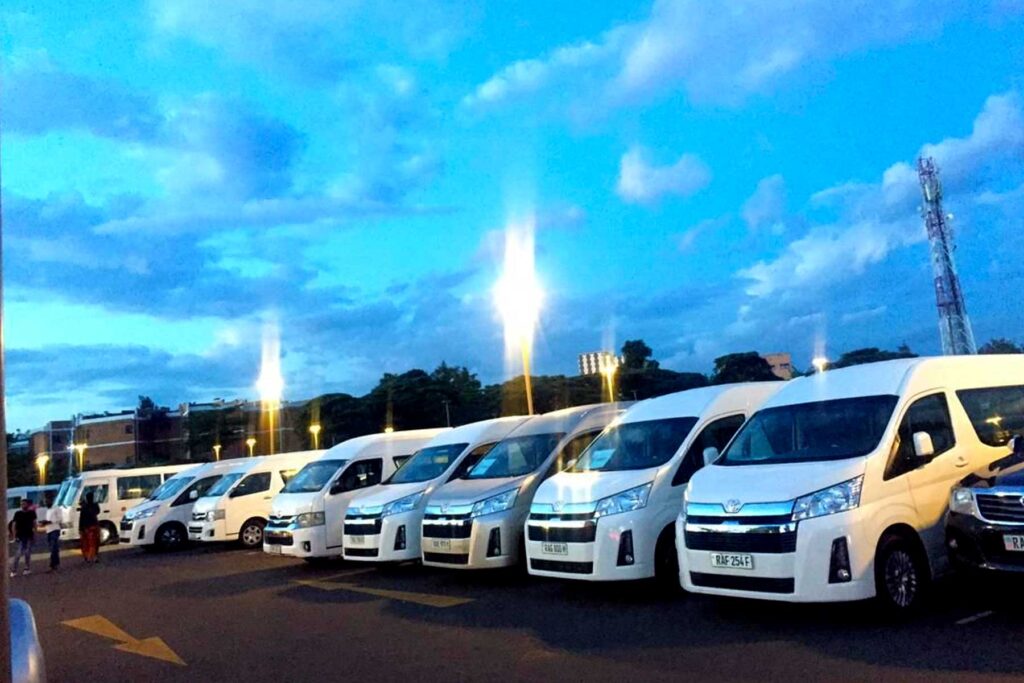
| Toyota Hiace | Staff shuttles, workshops, trainings | Up to 14 |
| Land Cruiser V8 | Visiting donors, board members, officials | 5–7 |
For deep-country work, the Toyota Land Cruiser remains the workhorse. It is known for durability, and parts are easy to find across the region. Meanwhile, the Toyota Hilux Double Cab is ideal when your team carries equipment.
What to Include in a Monthly Lease
A good contract prevents misunderstandings later. Before you sign, make sure these points are clear in writing.
Vehicle and service terms
- Exact model, age range and number of vehicles.
- Servicing schedule and who pays for routine parts.
- Replacement vehicle timing if a car is in the workshop.
- Mileage terms for long field trips.
Insurance and liability
- Type of insurance cover and the excess amount.
- Who is allowed to drive, and licence requirements.
- The process for reporting accidents or damage.
Flexibility
- Notice period to add or return vehicles.
- Options to extend when a project is renewed.
- Cross-border permissions, if your work spans countries.
Our car hire leasing page explains how we structure longer agreements.
Self-Drive or Dedicated Drivers?
Many organisations let trained staff drive themselves. Others prefer professional drivers for safety and duty-of-care reasons. Both approaches work, and some teams use a mix.
When self-drive suits your team
Self-drive works well for experienced staff on routine routes. It lowers costs and gives teams flexibility. Rwanda drives on the right, and drivers need a valid licence. An International Driving Permit is recommended for foreign staff.
When to add a driver
Drivers are valuable for long rural trips, new staff and visiting guests. They know the roads, the weather patterns and the safest overnight stops. In addition, your staff can prepare for meetings while travelling. See our car hire with driver service for details.
Field Travel: Distances and Road Conditions
Rwanda is small, but hills and winding roads make journeys slower than maps suggest. Plan field schedules around realistic times from Kigali.
- Musanze and the north: about 2–2.5 hours.
- Eastern Province and Akagera gate: about 2.5 hours.
- Rubavu and the western lake shore: about 3–3.5 hours.
- Nyungwe and Rusizi area: about 5–6 hours.
- Katuna border with Uganda: about 1.5 hours.
Main roads are paved and well kept. However, the last stretch to many villages is gravel or red earth. During the rains, these tracks become slippery, so a 4×4 with good tyres is essential. Also, avoid night travel outside towns whenever possible.
Keeping Costs Under Control
Every NGO watches its budget closely. Fortunately, a few habits make a long-term lease even better value.
- Right-size the fleet. Use RAV4s for city work and save Land Cruisers for the field.
- Plan trips together. Combine site visits to cut fuel and driver hours.
- Track fuel use. Simple logbooks spot problems early.
- Brief your drivers. Smooth driving saves fuel and reduces wear.
- Review quarterly. Return vehicles you no longer need.
For short assignments or consultants, our long and short term car hire options may be a better fit than a full lease.
Safety and Duty of Care
Your organisation is responsible for staff while they travel. So vehicle safety should be part of your security plan, not an afterthought. We check brakes, tyres, lights and seat belts on every service, and we replace worn parts before they fail.
Simple rules for field teams
- Wear seat belts in every seat, every trip.
- Follow speed limits, which are usually 40 km/h in towns and 60–80 km/h on highways.
- Share trip plans and expected arrival times with the office.
- Carry a charged phone, first aid kit and spare tyre.
- Plan around Umuganda, the community work morning on the last Saturday of each month.
In addition, give new staff a short driving briefing in their first week. Local habits, such as moto-taxis passing on both sides, take time to learn. A quick orientation reduces incidents and keeps vehicles in good shape.
How to Get Started
Setting up a lease is straightforward. First, share your project scope, team size and main field locations. Next, we recommend a fleet mix and send a written proposal. Finally, once you agree, we deliver the vehicles to your office in Kigali and brief your team.
Most organisations start with a small fleet and add vehicles as programmes expand. That approach keeps early costs low while you learn what your teams really need.
Visitors, Missions and Events
NGOs also host donors, evaluators and partners. These visits need smooth airport pickups and professional transport. A chauffeur-driven Prado or V8 makes a good impression and keeps tight schedules on track.
For workshops and trainings, a Hiace shuttle moves participants between hotels and venues. Many teams also arrange a short field visit for guests, for example to a project site near Musanze or Akagera. Tell us the programme and we will plan vehicles around it.
Frequently Asked Questions
What is the minimum period for a monthly lease?
Leases usually start at one month and can run much longer. Contact us with your project timeline for a tailored offer.
Can we change vehicles during the contract?
Yes. Many contracts allow you to add, swap or return vehicles with agreed notice.
Do you provide vehicles for work in Uganda or Tanzania?
Yes, with the correct paperwork and regional insurance. Remember those countries drive on the left.
Is maintenance included in NGO leases?
Routine servicing is typically included. We confirm exactly what is covered in your written contract.
Plan Your Organisation’s Fleet
Send us your team size, field locations and project dates, and we will propose a practical fleet and contract. WhatsApp or call +250 725 074659, or email info@4x4carrentalrwanda.com. We are happy to meet your logistics team in Kigali.