
Car Rental with Camping Gear
- 4x4 Car Rental Rwanda
- Car Rental with Camping Gear

Car Rental with Camping Gear in Rwanda
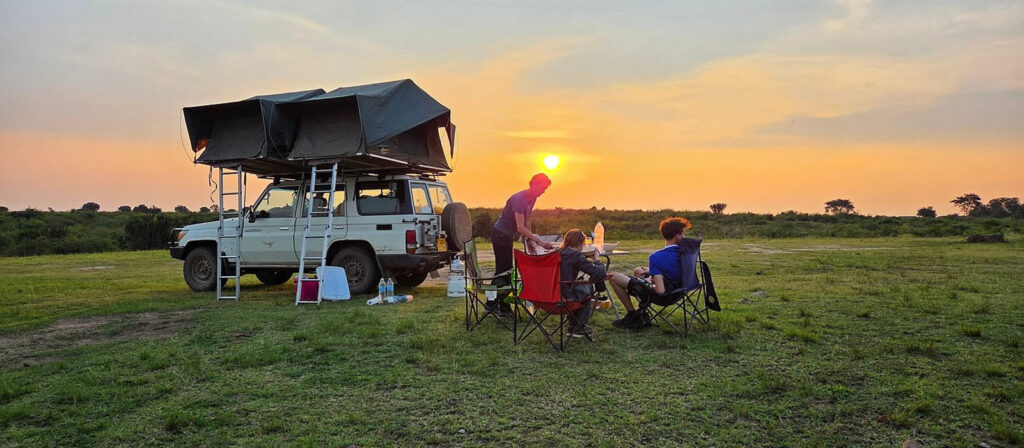
Rwanda rewards travellers who slow down. Some of its best moments happen away from lodge timetables: a fire by Lake Kivu, a tent above Akagera’s plains, a cold highland dawn. Our car rental with camping gear lets you plan that kind of trip without owning any equipment. You pick a 4×4, tell us your route, and drive away with everything you need to sleep well.
This page explains what the camping kit includes and which vehicle fits your group. It also covers where you can camp, how to plan the route and how booking works, from pickup to drop-off.

Why Rent a Camping-Ready 4x4 Instead of Booking Lodges Every Night
A camping-ready 4×4 turns a fixed itinerary into one you can change on the road. If Akagera’s sunrise game drive makes you want a second night, you don’t need a new booking. Your bed is already on the roof. Camping also costs far less than moving from lodge to lodge.
Better still, it puts you close to the night sounds and the stars, not behind a hotel window. So for self-drive travellers in Rwanda, a rooftop or ground tent often turns a rushed loop into a trip with room to breathe.
What's Included in Our Camping Gear Rental
We inspect and clean every camping package before it leaves our yard. Depending on the package, your rental includes:
- A rooftop tent mounted on the vehicle, or a freestanding ground tent, for 2 to 4 people
- Mattresses, pillows and sleeping bags suited to cool highland nights
- A gas cooker with pots, plates and cutlery
- A cooler box for food and drinks
- Folding camp chairs and a table
- Solar lanterns or rechargeable camp lights
- A tool kit, tyre repair kit and spare fuel can
- A first aid kit and warning triangle
Need something extra, such as a baby seat, more bedding or a second cooler? Just tell us when you book, and we’ll add it to your package.
Good to Know Before You Camp in Rwanda
- Camp only at registered sites in national parks or at established lakeside campgrounds. Wild camping elsewhere isn’t allowed.
- The dry seasons, roughly June to September and December to February, bring the easiest driving. In the wet months a 4×4 still copes, but expect slower going.
- Book park campsites ahead, especially in Akagera and Nyungwe during peak months.
- Heading into Uganda or Tanzania? Tell us early, so we can arrange the cross-border papers.
How Booking Works
- Send us your route, travel dates and group size.
- We suggest a vehicle and camping package to match.
- Confirm your pickup point, either Kigali International Airport or our office, and your return date.
- Get a full walkthrough of the car and gear, including tent setup and cooker use.
- Drive with 24/7 phone support for your whole rental.
- Return the car and gear at the agreed place. There’s no need to repack, because we handle the clean-down.
What to Bring Yourself
Our gear covers shelter, sleep and cooking. However, you’ll still want to pack:
- Warm layers, because highland nights get cold even near the equator
- Insect repellent and a head torch
- Personal medicine and printed copies of your park permits
- Rwandan francs for park fees and small purchases
- A refillable water bottle; safe drinking water is sold at fuel stations and shops on main routes
Rental Rates
Rates depend on the vehicle, the camping package and the length of your rental. Longer trips usually bring the daily rate down. So instead of one fixed price, we send a quote built on your dates and group size. It covers the vehicle, gear, insurance and any driver-guide option, with no hidden extras.
Choosing the Right 4x4 for Your Camping Trip
Toyota RAV4 with Rooftop Tent: Best for Couples
Compact, easy on fuel and simple to drive on tarmac and graded park roads, it suits a Kigali, Lake Kivu and Nyungwe route with light off-road driving.
Toyota Land Cruiser Prado with Rooftop Tent: Best for Families of 3 to 4
Extra clearance and cargo space handle Akagera's rougher tracks and the volcanic roads around Musanze, which makes it our most requested camping vehicle.
Land Cruiser V8 or Hilux Double Cab with Canopy: Best for Groups and Overlanding
More people, more gear or a long route into Uganda or Tanzania call for this setup, with a hard canopy, lots of storage and power for long days.
Car Rental with Camping Gear: Where to Camp in Rwanda
Rwanda only allows camping at registered sites. Luckily, several of the best ones sit right inside or beside the parks. Here’s where most of our campers stay.
Akagera National Park
Akagera has the country’s best-known campsites, including spots near the lakes in the south and on the open plains further north. You’ll often hear hippos at night. The south gate is about 2.5 hours from Kigali, so you can arrive in time for an afternoon game drive. Read our Akagera National Park guide for more.
Lake Kivu shoreline
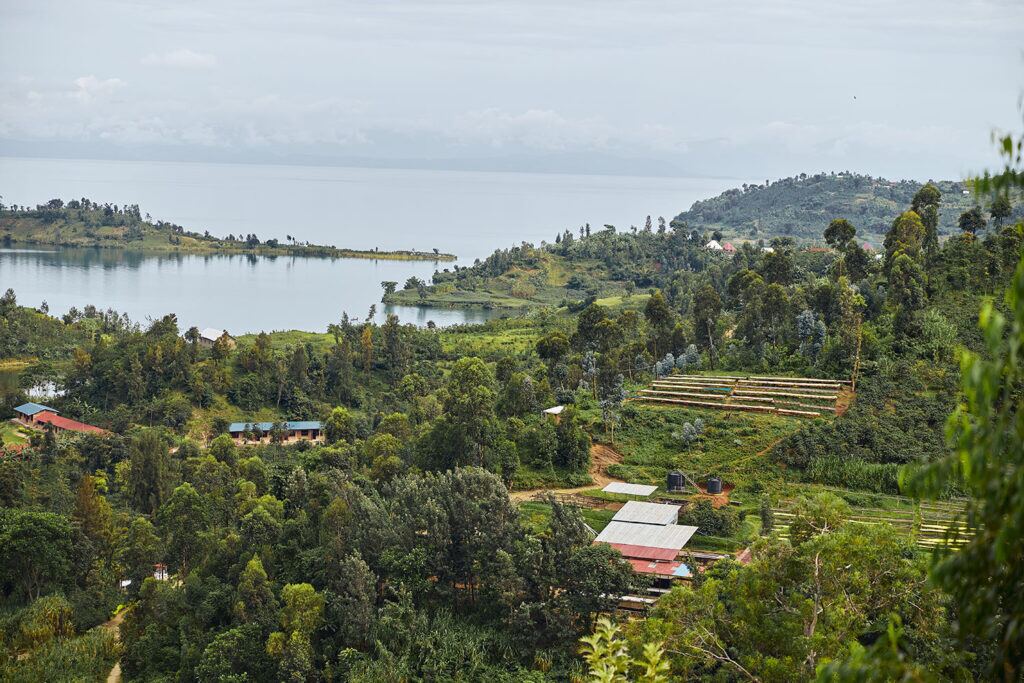
Around Rubavu and Karongi, some lakeside lodges and guesthouses let you pitch a tent or park a rooftop-tent car. Rubavu is about 3 to 3.5 hours from Kigali. Always ask the owner first.
Nyungwe and Volcanoes
Nyungwe has limited camping near its trailheads, so book well ahead. Around Musanze, a few lodges near Volcanoes National Park host campers. That way you can sleep close to the park before an early gorilla trek.
Because rules and site availability change, check each site with the park or owner before you go. We’re happy to help you plan.
Rooftop Tent vs Ground Tent: Which Should You Choose?
Both tent types work well in Rwanda. However, each suits a different style of trip.
| Rooftop tent | Ground tent | |
|---|---|---|
| Setup time | About 5 to 10 minutes | About 15 to 20 minutes |
| Comfort | Built-in mattress, flat and dry | Depends on the ground and mats |
| Space | Best for 2, some fit 3 | Sizes for up to 4 |
| Day trips | Must pack away before driving | Can stay pitched at camp |
| Wet weather | Off the mud and puddles | Needs a good groundsheet |
A rooftop tent is ideal if you move camp most days. You park, open it and sleep. A ground tent is better if you stay two or three nights in one place. Then you can leave camp set up while you go on game drives.
Families sometimes combine both. For example, parents sleep on the roof while children share a ground tent. Just tell us your group, and we’ll suggest the best mix.
Sample 6-Day Camping Route for Car Rental with Camping Gear
This route links Rwanda’s lakes, forest and savanna while keeping daily drives manageable. You can stretch it with extra nights at any stop.
- Day 1, Kigali to Rubavu (about 3 to 3.5 hours). Collect your camping 4×4 and head west. Set up camp near Lake Kivu by late afternoon.
- Day 2, Lake Kivu shoreline. Drive south along the lake road to Karongi. The road is slow and twisting, so take your time.
- Day 3, Karongi to Nyungwe. Continue south, then climb into the forest. Camp or stay near the park.
- Day 4, Nyungwe. Walk the canopy walkway or join a forest hike. Nights here are cold, so wear your warmest layers.
- Day 5, Nyungwe to Kigali (about 5 to 6 hours). Break the drive in Huye for lunch and a museum stop.
- Day 6, Kigali to Akagera (about 2.5 hours). Enter early, game drive all afternoon and camp under the stars.
Add a seventh day to drive out through Akagera’s north gate and back to Kigali. Also, keep each driving day short enough to pitch camp in daylight.
Camping Safety and Etiquette in Rwanda's Parks
Camping in Rwanda is safe when you follow park rules. Rangers patrol the main campsites, and the parks are well managed. Still, wildlife is wild, so a few habits matter.
- Store food in the car. Never leave food in your tent. Baboons and other animals will find it quickly.
- Stay near camp after dark. In Akagera, hippos and buffalo graze near water at night. Keep a torch handy and don’t wander.
- Light fires only where allowed. Use fire pits where provided, and put fires out fully before bed.
- Take all rubbish with you. Rwanda is very clean, and plastic bags are banned. Pack a bin bag for the car.
- Keep noise low. Other campers come for the quiet and the night sounds.
- Respect park hours. Gates have opening times, and night driving in parks is not allowed.
Finally, share your route with our team before you set out. If you need help, call or WhatsApp +250 725 074659 at any hour.
Cooking and Food on a Rwanda Camping Trip
Our kit includes a gas cooker, pots, plates and a cooler box, so you can cook simple, tasty meals at camp. Here’s how to plan your food.
Where to shop
Stock up in Kigali before you leave. Supermarkets there carry pasta, rice, tinned food, coffee and snacks. Also, buy fresh fruit and vegetables from roadside stalls and town markets. Bananas, avocados, tomatoes and passion fruit are cheap and excellent.
Easy camp meals
- Breakfast: porridge, eggs, bread and Rwandan coffee
- Lunch: avocado sandwiches or leftovers from dinner
- Dinner: pasta with vegetables, rice and beans, or grilled meat on the first night
Cooler tips
Ice is easiest to find in bigger towns. So refresh it whenever you pass through Musanze, Rubavu, Huye or Kayonza. Keep meat for the first day or two, then switch to tins and dry food. Finally, carry at least five litres of drinking water per person per day for remote stops.
Crossing Borders with a Camping 4x4
Many campers combine Rwanda with Uganda’s parks. For example, you can camp near Bwindi or Lake Bunyonyi after crossing at Katuna or Cyanika. Bwindi is about 5 to 7 hours from Kigali, including the border stop.
What you need
- Advance notice, so we can prepare cross-border papers and insurance for the vehicle
- Your passport and the right visa; the East Africa Tourist Visa covers Rwanda, Uganda and Kenya
- Your driving licence, plus an International Driving Permit if your licence isn’t in English or French
- Any park permits for Uganda, which UWA sets and which change, so check current rates
Allow an hour or more at the border. Also, expect gravel roads around some Ugandan campsites, so a Prado or Land Cruiser is the better pick. For a full rundown, read our cross-border car hire guide.
Mistakes to Avoid on Your First Rwanda Camping Trip
Most camping problems in Rwanda are easy to prevent. These are the mistakes we see most often, and how to avoid them.
- Arriving after dark. Pitching a tent by torchlight is hard, and park gates close in the evening. So plan to reach camp by about 4 pm.
- Underestimating the cold. Days feel warm, but highland nights can drop sharply. Pack a fleece, a hat and warm socks.
- Not booking campsites. Popular sites in Akagera fill up in July, August and December. Reserve before you travel.
- Running low on gas or fuel. Check the cooker gas each morning. Also fill the tank in every bigger town.
- Overloading the roof. A rooftop tent already uses the roof. So keep heavy bags inside the car.
- Skipping the handover. Practise opening and closing the tent at pickup, not at your first campsite.
Finally, keep a little cash for campsite fees and firewood. Some remote sites can’t take cards or mobile money, so small notes save a lot of hassle.
Frequently Asked Questions
No. Before you leave, we show you how to open the tent, light the cooker and pack everything away. Most people feel confident after one night.
Usually 5 to 10 minutes once you've done it once. Packing it away takes about the same time.
No. Camping is only allowed at registered sites in parks and at approved campgrounds or lodges. Always ask permission before pitching on private land.
Yes, in the highlands. Nyungwe and the Volcanoes area can get chilly at night. Our sleeping bags suit these nights, but bring warm layers too.
Yes. Many guests choose a driver-guide who also helps set up camp. Ask for this option when you request your quote.
A Toyota RAV4 works in the dry season. However, a Land Cruiser Prado is better for the rougher northern tracks and the wet months.
Send your dates, route and group size on WhatsApp at +250 725 074659 or email info@4x4carrentalrwanda.com. We'll reply with a full quote.