
If you have never slept in a roof tent, the first evening can feel like a puzzle of straps, poles and ladders. The good news is that it becomes second nature within a night or two. This hands-on guide explains how a rooftop tent Toyota Prado setup works, how to set it up and pack it away, and how to drive and sleep comfortably during a Rwanda camping safari.
How a rooftop tent Toyota Prado setup is built
The tent sits on a strong roof rack bolted to the Prado. When closed, it folds into a flat, weatherproof case. When open, it unfolds over the side or rear of the car and rests on a telescopic ladder.
- The base: a rigid floor with a thick foam mattress built in.
- The canvas: a breathable, water-resistant fabric with mesh windows.
- The rainfly: an outer layer that sheds water and adds shade.
- The ladder: adjustable in height and doubling as the support for the fold-out section.
Most Prado tents sleep two adults. A small child can usually fit between them.
Opening the tent, step by step
We show you the process at handover. Still, it helps to know the sequence before you arrive at your first campsite.
- Park on level ground. A slope makes the bed uncomfortable. Use small stones under the wheels if needed.
- Remove the travel cover. Unzip or unstrap it and store it in the car.
- Extend the ladder and pull it outward. The tent unfolds as you go.
- Set the ladder height so it rests firmly on the ground at a slight angle.
- Fit the window rods to hold the rainfly away from the canvas.
- Open the vents to reduce condensation overnight.
The first time, allow fifteen minutes. After that, most campers finish in five.
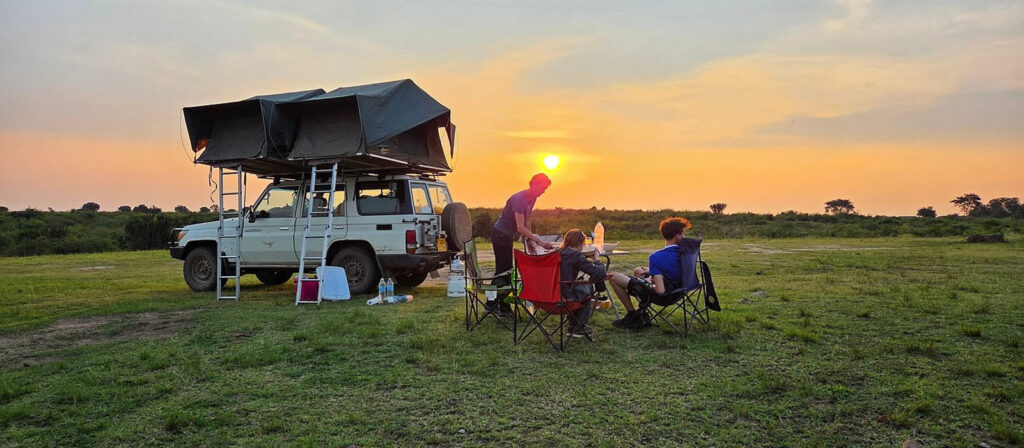
Closing and packing away
Packing up is the reverse, with a few extra checks. Rushing this step is the most common cause of damaged canvas.
- Remove pillows and loose items, but leave thin bedding inside if it fits.
- Push all fabric inward so nothing gets caught in the hinge.
- Fold the tent closed using the ladder as a lever.
- Tighten every strap and refit the travel cover.
- Check that the ladder is stowed and secured before driving.
If the canvas is wet, pack it anyway, but open it again within a day to dry. Damp canvas left closed for days can develop mould.
A little daily care
Brush leaves and dust off the cover before you close it. Also check the zips and straps each morning, because a torn strap is easy to fix early but hard to fix on the road. Finally, shake out the mattress cover every few days to keep the bed fresh.
Sleeping comfortably in Rwanda’s climate
Rwanda’s altitude makes nights cooler than many visitors expect. Weather also varies a lot between regions.
Cold nights in the north
Near Volcanoes National Park, nights can feel chilly even in the dry season. Bring a warm sleeping bag or ask for extra blankets. A hat and socks make a big difference.
Warm nights in the east
In Akagera, evenings are warmer. Open the mesh windows for airflow, and keep the insect netting closed.
Rain and wind
In the wet months, from March to May and in November, fit the rainfly tightly and close the windows on the windward side. Park with the tent’s opening away from the wind.
Driving a Prado with a tent on the roof
A roof tent changes how the Prado handles. The differences are small but worth knowing.
- Extra height: watch for low branches, garage roofs and hotel entrance canopies.
- Higher centre of gravity: take bends and rough tracks a little slower.
- Crosswinds: on exposed hill roads, keep both hands on the wheel.
- Fuel use: wind resistance adds a little to consumption on highways.
Rwanda drives on the right, and most main roads are paved. Drive times stay realistic: about 2–2.5 hours to Musanze, around 2.5 hours to the Akagera gate and 3–3.5 hours to Rubavu.
Rooftop tent Toyota Prado packing list
The tent gives you a bed. Everything else needs to fit inside the Prado, so pack light and smart.
- Sleep: sleeping bags or blankets, pillows, a head torch.
- Kitchen: gas stove, pot, pan, plates, cups, cutlery and a washing bowl.
- Camp comfort: folding chairs, a small table and a cool box.
- Water: enough drinking water for at least a day.
- Extras: rubbish bags, wet wipes, insect repellent and a basic first aid kit.
Our car rental with camping gear service can supply most of this. If you are planning an itinerary, our road trips in Rwanda page has route ideas.
Camping etiquette and safety
- Camp only at designated campsites or with the landowner’s permission.
- Seal food inside the car at night, especially in parks.
- Follow ranger instructions in Akagera and other protected areas.
- Leave no rubbish behind; carry it to the next town.
If gorilla trekking is part of your trip, remember that permits cost US$1,500 and are issued by RDB. Book them before you plan your campsites.
Roof tent FAQs
Is it hard to climb the ladder at night?
Not really. Keep a head torch in the tent and the ladder at a comfortable angle.
Can the tent stay open while I drive?
No. Always close and strap the tent before moving the car.
What if it rains while I am setting up?
Open the tent quickly and fit the rainfly first. The inside stays dry once the cover is in place.
Do I need to remove the tent to fit in a car park?
No, but check height limits at covered parking in Kigali. Open-air parking avoids the issue.
How many nights can I camp in a row?
As many as you like. Many campers mix tent nights with a lodge night every few days for a hot shower and a full recharge.
Book your Prado with a roof tent
Want to see a Land Cruiser Prado camping setup before you commit? Send us your dates and group size, and we will prepare one with a full kit. WhatsApp or call +250 725 074659, or email info@4x4carrentalrwanda.com.