
Driving yourself through Rwanda is one of the best ways to see the country, and it is safer than many first-timers expect. Still, the hills, the moto taxis and the village roads take some getting used to. This Rwanda self drive safety guide covers the habits, hazards and simple routines that keep a first trip calm and incident-free.
Before You Turn the Key: Papers and Checks
Safety starts at the handover, not on the highway. Take ten unhurried minutes with the vehicle before you drive away.
Documents to carry
- Your valid driving licence, plus an International Driving Permit if you have one.
- Your passport or a clear copy.
- The rental agreement and insurance papers, kept in the glovebox.
- Our phone number saved on your phone and written on paper.
Vehicle walk-round
- Check the spare tyre, jack and wheel spanner are present.
- Find the warning triangles and the fire extinguisher.
- Test lights, indicators, wipers and the horn.
- Photograph any existing scratches with the staff member present.
- Ask how to engage four-wheel drive and low range.
If anything is unclear, ask before you leave. It is much easier to learn the controls in a car park than on a muddy slope.
Road Rules First-Time Visitors Must Know
Rwanda drives on the right. That helps visitors from most of Europe and the Americas, but anyone from the UK, Kenya or Uganda needs to adjust. Take extra care at roundabouts and when pulling out of fuel stations.
- Speed: limits are low in towns and villages, and cameras are common. Watch the signs closely.
- Seatbelts: compulsory for all passengers.
- Phones: no hand-held use while driving.
- Alcohol: police run checks, and limits are strictly enforced. Simply do not drink and drive.
- Checkpoints: stop when signalled, stay polite and show your papers.
Fines are usually issued officially and paid through formal channels. If you get one, keep the paperwork and let us know.
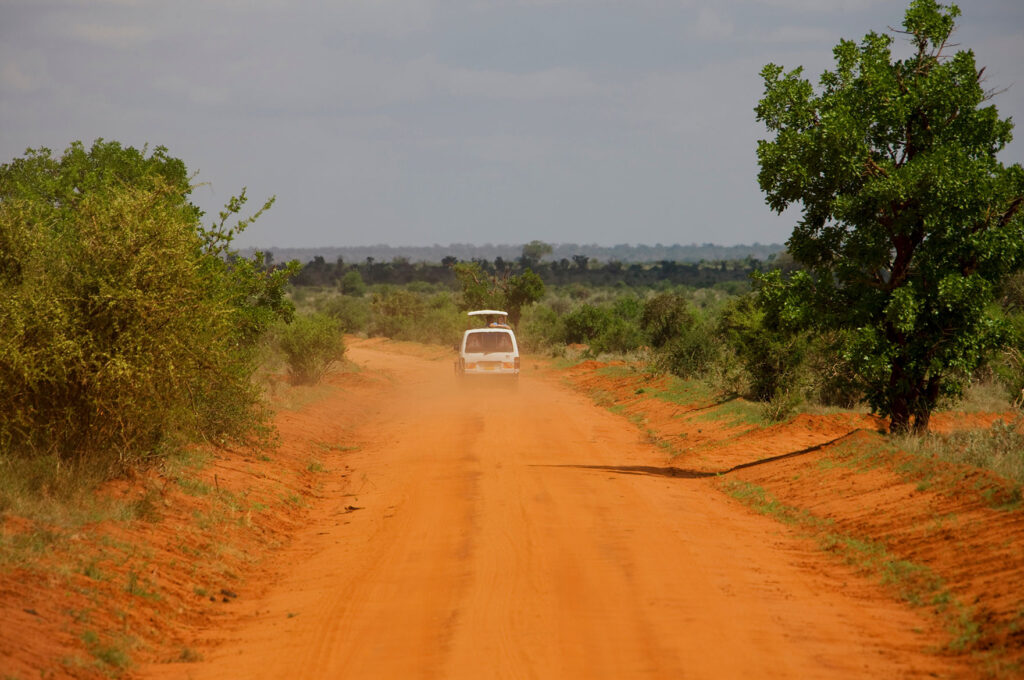
Rwanda Self Drive Safety on Hills and Bends
Rwanda’s nickname, the land of a thousand hills, is no exaggeration. The main highways climb and drop constantly, with tight bends and long descents. That is the biggest adjustment for most first-time drivers.
Descending safely
On long downhill stretches, shift to a lower gear and let the engine slow the car. Riding the brakes all the way down overheats them. The road from Kigali to Musanze and the route through Nyungwe both have long descents where this matters.
Overtaking
Heavy trucks crawl up the hills, and the temptation to overtake is strong. Only pass on a long, clear straight with a solid view ahead. Patience costs a few minutes; a blind overtake can cost far more.
Sharing the Road With Moto Taxis, Bikes and People
Rwandan roads are busy with more than cars. In towns, moto taxis weave through traffic and stop suddenly. On rural roads, people walk, push bicycles and herd goats along the edge of the tarmac.
- Check mirrors often, especially before turning or changing lanes.
- Slow down through villages, markets and near schools.
- Expect cyclists carrying heavy loads uphill to wobble.
- Give a short tap of the horn on blind bends in rural areas.
- Watch for cattle and goats stepping out without warning.
Weather, Fog and Unpaved Tracks
Rain changes everything on dirt roads. Wet red clay becomes slippery very quickly, and puddles can hide deep holes. Therefore, slow down well before muddy sections and engage four-wheel drive early, not once you are stuck.
Fog is common in the early morning around Nyungwe and the northern volcanoes. Use dipped headlights and increase your following distance. If visibility drops badly, pull over somewhere safe and wait.
Choosing the right vehicle for conditions
In the rainy seasons, a stronger 4×4 adds a real margin of safety on park tracks. A Land Cruiser Prado is a confident choice for first-timers: capable but not oversized.
Rwanda Self Drive Safety Means Arriving Before Dark
Night driving is the single biggest risk you can easily avoid. Pedestrians, cyclists and unlit vehicles are hard to see. Rwanda sits near the equator, so it gets dark around 6 to 6.30 pm all year.
Build realistic drive times into each day. Kigali to Musanze takes 2 to 2.5 hours, to Rubavu about 3 to 3.5 hours, and to Nyungwe 5 to 6 hours. Leave early, allow for photo stops and aim to arrive by mid-afternoon. Our road trips in Rwanda page suggests sensible daily distances.
If Something Goes Wrong
Breakdowns and minor bumps happen even to careful drivers. Knowing the steps keeps a small problem small.
- Pull over safely and switch on hazard lights.
- Place warning triangles behind and in front of the vehicle.
- Get passengers off the road and away from traffic.
- For an accident with injuries, call the emergency number 112.
- Call us with your location and photos of the problem.
- Do not move vehicles after a collision until police advise you.
We will advise you, arrange help or organise a replacement where needed. More detail on support is on our self drive Rwanda page.
Personal Security on the Road
Rwanda is widely regarded as one of the safest countries in Africa for travellers. Even so, sensible habits help. Keep bags and phones out of sight when parked. Use guarded car parks at hotels and lodges overnight.
Carry some cash in francs for fuel and small purchases, because card machines are rarer in rural areas. Finally, share your daily route with someone, especially if you plan remote tracks.
FAQ
Is Rwanda a good country for a first self-drive in Africa?
Yes. Roads are generally good, traffic is orderly and rules are enforced. Hills and village traffic are the main things to adjust to.
Can I drive at night if I am careful?
We strongly advise against it. Poor visibility of people, bikes and animals makes night driving risky even for experienced drivers.
What should I do at a police checkpoint?
Stop, greet the officer, and show your licence and the vehicle papers when asked. Checks are routine and usually quick.
Do I need four-wheel drive engaged all the time?
No. Use it on unpaved, wet or steep sections. On tarmac, two-wheel drive is normal.
Planning your first self-drive in Rwanda? Message us on WhatsApp at +250 725 074659, and we will walk you through the vehicle and route before you set off.