
A rental car is only as safe as its tyres, its brakes and the company standing behind it. So before you compare prices, it pays to know what a safe car rental Kigali actually looks like. This guide explains how to check the vehicle, the contract and the support you will get if something goes wrong on the road.
What Makes a Safe Car Rental Kigali Visitors Can Trust
Safety in car hire comes down to three things. First, a vehicle in good mechanical condition. Second, clear insurance and paperwork. Third, real help when you need it, wherever you are in the country.
A low daily rate means little if the car breaks down near Nyungwe with no one answering the phone. Therefore, judge any offer on all three points, not on price alone.
Checking the Vehicle Itself
You do not need to be a mechanic to spot warning signs. At pickup, take ten minutes and look closely.
Tyres
Tyres matter more than anything on Rwanda’s hilly, sometimes wet roads. Check the tread depth on all four, plus the spare. Look for cracks, bulges or mismatched brands. For park trips, all-terrain tyres give better grip on gravel and mud.
Brakes and steering
On a short test drive, the brakes should feel firm and the car should stop in a straight line. The steering should not pull to one side or feel loose. Long descents near Musanze and Nyungwe put real strain on brakes, so any doubt is worth raising.
Lights, wipers and seat belts
Check that headlights, indicators and brake lights work. Test the wipers, because sudden downpours are common. Finally, make sure every seat belt clicks in and retracts properly.
Safety kit on board
- Spare wheel, jack and wheel spanner.
- Warning triangle and reflective jacket.
- Fire extinguisher and basic first-aid kit.
Insurance and Paperwork to Confirm
A safe rental also protects you financially. Ask these questions before you sign:
- What insurance is included, and what is the excess if the car is damaged?
- Does cover apply on gravel roads and inside national parks?
- Is the vehicle registered and its inspection up to date?
- Are all drivers named on the contract?
- If you plan to cross a border, is regional COMESA cover arranged?
Keep the registration, insurance certificate and rental contract in the car at all times. Police may ask to see them at routine checks.
Roadside Support and Breakdown Plans
Even well-kept cars occasionally get a puncture or a flat battery. What matters is how quickly help arrives. Before you leave Kigali, ask:
- Is there a phone or WhatsApp number answered around the clock?
- How does the company reach you in Musanze, Rubavu, Nyungwe or Akagera?
- Will they send a mechanic, a replacement car, or both?
- Who pays for repairs caused by normal wear?
Save the emergency number in every traveller’s phone, not just the driver’s. Also, share your daily route with the rental team on longer trips.
Maintenance Records and Vehicle Age
A car’s history tells you a lot. It is reasonable to ask when the vehicle was last serviced and whether the tyres or brakes were replaced recently. A well-run company keeps these records and shares them without fuss.
Age alone is not the full story. A well-maintained older Land Cruiser can be safer than a newer car that has been neglected. Therefore, focus on service history and condition rather than the model year.
Choosing the Right Vehicle for Safe Travel
Choosing a car that suits the roads is a safety decision too. A small saloon on a muddy park track is a risk, however careful you are.
- Kigali and main highways: a compact SUV such as the Toyota RAV4 is stable and easy to handle.
- Parks and rural roads: a Land Cruiser Prado or TXL gives clearance and proper four-wheel drive.
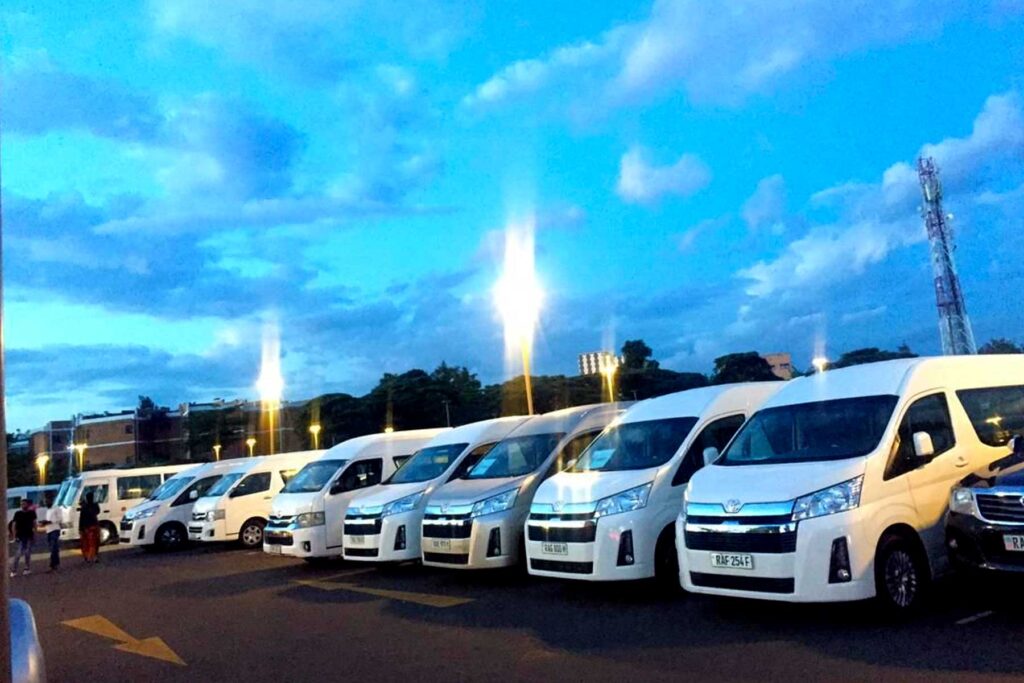
- Groups: a Hiace keeps everyone in one vehicle rather than two cars travelling apart.
If you are unsure about driving on unfamiliar roads, a car hire with driver is often the safest choice of all. Local drivers know the bends, the busy markets and the speed-camera spots.
Safe Driving Habits in Rwanda
A good car needs a careful driver. Rwanda’s roads are among the best-kept in the region, yet the hills and heavy foot traffic call for attention.
- Drive on the right and keep to the low, well-enforced speed limits.
- Wear seat belts in every seat, front and back.
- Avoid night driving; rural roads are unlit and busy with pedestrians.
- Slow down near schools, markets and villages.
- Use low gear on long descents to protect the brakes.
- Never use a handheld phone while driving.
For more practical advice on documents and what is included, see our self-drive Rwanda page.
Warning Signs of an Unsafe Rental Offer
Most operators in Kigali are honest. Even so, be cautious if you notice any of these:
- A price far below every other quote, with no clear explanation.
- No written contract, or a refusal to name the insurance cover.
- A request to pay the full amount to a personal account before any confirmation.
- Different vehicle photos from the car that actually arrives.
- No physical address or working phone number.
If something feels wrong, pause and ask more questions. A trustworthy company will answer clearly.
FAQ: Safe Car Rental Kigali
Is it safe to drive yourself in Rwanda?
Yes, for confident drivers. Roads are generally good and the country is orderly. Just plan for hills, pedestrians and daylight-only driving.
What should I do after a minor accident?
Stop safely, switch on hazard lights and call the police and the rental company. Take photos and do not move the vehicles until advised.
Can I refuse a car at pickup?
Yes. If tyres, brakes or lights are not right, ask for the problem to be fixed or for another vehicle before you leave.
Are child seats available for safety?
Yes. Request them at booking with each child’s age, and check the fit before driving off.
Book a Well-Checked Vehicle
Ask us anything about our vehicles, insurance or roadside support. Message us on WhatsApp or call +250 725 074659, or email info@4x4carrentalrwanda.com.