
Mining and quarry sites in Rwanda are tough on vehicles. Steep murram tracks, red mud in the rainy season and heavy loads of tools will expose a weak truck within days. This guide explains how heavy duty pickup hire Rwanda works for site teams, what to ask for, and how to keep a work vehicle running for months.
Why Mining Crews Choose a Double Cab Pickup
Most concessions sit far from tarmac, often in hilly western and northern districts such as Rulindo, Ngororero and Rutsiro. The last stretch to a pit is usually a narrow dirt road with sharp bends and loose gravel. A sedan or small SUV simply cannot carry a crew and its kit over that ground every day.
A double cab pickup solves both problems at once. You get five seats for engineers, geologists or supervisors, plus an open load bed for equipment. Because the cab and the bed are separate, muddy core boxes and diesel cans stay away from passengers.
What the load bed is good for
- Sample bags, core trays and survey tripods
- Generators, water pumps and small compressors
- Jerrycans of fuel and drinking water for remote shifts
- Spare tyres, recovery straps and basic site tools
For heavier plant or bulk ore, you still need proper trucks. The pickup is the daily workhorse that moves people and light gear between camp, pit and town.
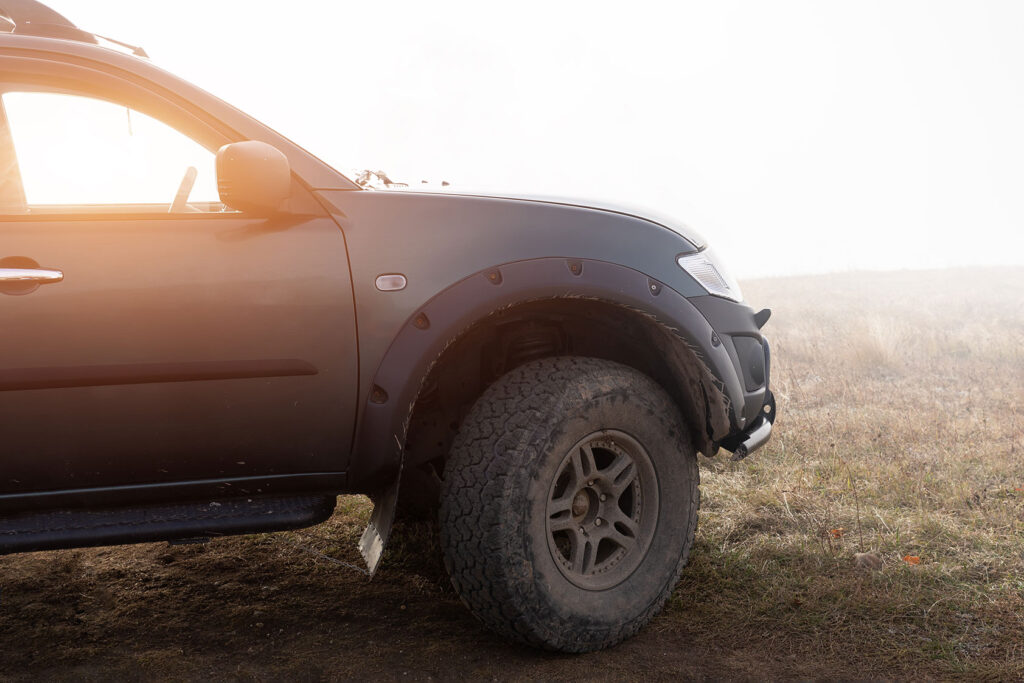
The Toyota Hilux as a Site Vehicle
Our main utility vehicle is the Toyota Hilux Double Cab. It is the pickup you see at almost every project site in East Africa, and that is no accident. Parts are easy to find in Kigali and in district towns, so a broken spring or worn brake pad does not ground the vehicle for a week.
Features that matter on site
- Selectable 4WD with low range: essential for climbing wet clay slopes slowly and safely.
- Diesel engine: strong pulling power at low speed and fuel that is available across the country.
- Leaf-spring rear suspension: handles a loaded bed far better than a soft SUV setup.
- High ground clearance: clears ruts, rocks and drainage channels on access roads.
However, a pickup rides harder than a passenger 4×4 when the bed is empty. If your managers also need comfortable trips to Kigali meetings, consider pairing the Hilux with a Land Cruiser or Prado for those runs.
Planning Heavy Duty Pickup Hire Rwanda for a Project
Site work rarely lasts a weekend. Most mining, exploration and construction clients hire for several weeks or months. So it pays to plan the contract around how your team actually works.
Questions to settle before you book
- How many vehicles do you need, and will that number change between phases?
- Will your own staff drive, or do you need local drivers who know the area?
- Where will the vehicles be based: Kigali, a district town, or the camp itself?
- How many kilometres will each pickup cover per day, roughly?
- Who is responsible for fuel, and how will you track it?
Clear answers help us match the right vehicles and service schedule to your project. For contracts running beyond a month, our long and short term car hire options give you a steady fleet without buying assets. Larger organisations that want a fixed fleet for a year or more can also look at car hire leasing.
Self-Drive or Local Driver on Mining Roads
Many engineers are confident off-road drivers. Even so, Rwandan access roads have their own quirks. Rain can turn a firm track into slick clay within an hour, and village paths are busy with people, bicycles and goats.
When a local driver makes sense
- Your team is new to Rwanda or to driving on the right.
- You need someone to talk with local authorities, suppliers or community members in Kinyarwanda.
- Staff should rest or work on reports between site visits.
- Your company insurance or safety policy limits who may drive.
Our car hire with driver service places experienced drivers with project teams. They know how to read the weather, when to engage low range and which routes become impassable after storms.
Keeping a Hired Pickup Safe and Productive
A work vehicle that stands idle costs you money and time. Fortunately, a few simple habits keep a heavy duty pickup reliable on hard ground.
Daily checks for drivers
- Walk around the vehicle and look at tyres for cuts and low pressure.
- Check engine oil and coolant before the first trip.
- Make sure the load is tied down and not above the cab roof.
- Clean mud from lights, mirrors and number plates.
Loading and driving rules
Never overload the bed, because overloading damages springs and makes braking dangerous on descents. Also, spread heavy items evenly and keep them close to the cab. On steep downhill sections, use low range and engine braking rather than riding the brakes.
Finally, report any warning light or strange noise straight away. Small faults found early are quick to fix. Ignored, they become breakdowns on a remote hillside.
Paperwork, Insurance and Site Access
Before a pickup goes on site, sort out the paperwork. Drivers need a valid licence, and foreign staff should carry an international driving permit alongside their home licence. In addition, check what your rental insurance covers for off-road and site use, and ask us to explain it in writing.
Many mine operators also have their own entry rules. For example, some require reflective strips, a beacon light, a fire extinguisher or a first-aid kit in every vehicle. Tell us your site requirements early so we can prepare the vehicles before handover.
Working across borders
Some exploration teams cover concessions in neighbouring countries too. A pickup can cross into Uganda, Tanzania or Kenya with the correct permits through our cross-border car hire service. Remember that those countries drive on the left, so brief your drivers before they reach the border.
Heavy Duty Pickup Hire Rwanda: Getting Started
The smoothest projects start with a short call. We ask about your site, the road conditions and your team size, then suggest a fleet. After that, we agree on handover location, service intervals and how to reach us if something goes wrong.
Many clients start with one or two pickups for a scouting phase. Then they scale up once drilling or construction begins. Because the contract is flexible, you only pay for vehicles you actually use.
FAQ: Pickups for Mining and Site Work
Can a hired Hilux be used on an active mine site?
Yes, as long as we agree on it before handover. Tell us the site location and road type so we can confirm insurance terms and prepare the vehicle for your operator’s safety rules.
Can the vehicle be based at our camp instead of Kigali?
Usually yes. We can deliver pickups to district towns or project camps and arrange regular servicing so your team does not need to drive back to Kigali often.
Do you supply drivers who know rural roads?
Yes. Our drivers are used to murram roads, steep hills and rainy-season mud. They can also help your team communicate with local communities and suppliers.
How far ahead should a project team book?
Book as early as you can, especially if you need several pickups at once. A few weeks’ notice gives us time to prepare matching vehicles and any site-specific equipment.
Talk to Us About Your Site Fleet
Send us your project location, start date and the number of vehicles you need. WhatsApp or call +250 725 074659, or email info@4x4carrentalrwanda.com, and we will propose a pickup fleet that fits your site. You can also reach us through our contact page.