
Rwanda has some of the best-kept roads in East Africa, and the rules are enforced firmly. Knowing the main Rwanda driving laws before you collect your car will save you fines, delays and stress. This guide covers the rules that matter most to visitors, plus practical tips for city streets, park tracks and border crossings.
Rwanda Driving Laws: The Basics Every Visitor Needs
Start with the big one: Rwanda drives on the right side of the road. If you come from the UK, Kenya, Uganda or Tanzania, this takes a little practice. So spend your first hour on quiet Kigali streets before heading onto busy roads.
Next, everyone in the car must wear a seat belt, front and back. Police checks are common, and they do look. In addition, using a handheld phone while driving is not allowed, so set up your navigation before you move.
Quick rule summary
- Drive on the right and overtake on the left.
- Seat belts for all passengers, every trip.
- No handheld phone use while driving.
- Zero tolerance for drinking and driving.
- Carry your licence, ID and vehicle papers at all times.
Speed Limits and Traffic Cameras
Speed limits in Rwanda are modest, and they are monitored closely. In towns and Kigali, the usual limit is 40 km/h. On open highways, signs typically allow 60 km/h or 80 km/h depending on the section.
Fixed and mobile speed cameras are common, especially on main routes out of Kigali. Fines are linked to the vehicle, so they come back to the rental company and then to you. Therefore, the cheapest way to drive here is simply to follow the signs.
Plan for slower journeys
Because of the hills, curves and lower limits, trips take longer than the distance suggests. Here are realistic drive times from Kigali:
- Musanze and Volcanoes National Park: about 2–2.5 hours.
- Akagera park gate: about 2.5 hours.
- Rubavu on Lake Kivu: about 3–3.5 hours.
- Nyungwe Forest: about 5–6 hours.
- Katuna border with Uganda: about 1.5 hours.
Documents You Must Carry
Police checkpoints are routine, even on short trips. Keep your papers in the car and easy to reach. A typical check is polite and quick when everything is in order.
Your personal documents
- Driving licence from your home country.
- International Driving Permit (IDP), recommended for most foreign visitors.
- Passport or a clear copy, plus your visa if required.
Vehicle documents
- Registration papers and valid insurance.
- Your rental agreement.
- For cross-border trips, the authority letter and regional insurance.
We hand over every document with the car and explain each one. Our self drive Rwanda page lists the full rental requirements.
Alcohol, Phones and Other Strict Rules
Rwanda takes drink-driving very seriously. Police use breath tests, and penalties can include heavy fines and detention. So if you plan to enjoy a drink at dinner, book a driver or a taxi home.
Phones are another common problem. Hands-free calls are safer, but the best habit is to let a passenger handle navigation. Also, do not stop on the road to take photos. Instead, find a safe pull-off or a fuel station first.
Motorbikes and pedestrians
Moto-taxis are everywhere in Kigali. They may pass on either side, so check your mirrors before every turn. Pedestrians and cyclists also share rural roads, often with heavy loads. Give them plenty of space and slow down near villages and schools.
Roundabouts, Right of Way and Parking
Kigali has many roundabouts. Traffic already on the roundabout has priority, so yield before you enter. Use your indicator when you exit, because moto-taxis often move into gaps quickly.
Parking in the city centre is organised, and some streets use paid parking zones. Never park on yellow lines, bends or pedestrian crossings. Also, when a police officer directs traffic at a junction, their signal overrides the traffic lights. In convoys for official events, pull over and wait until the road reopens.
Driving in National Parks
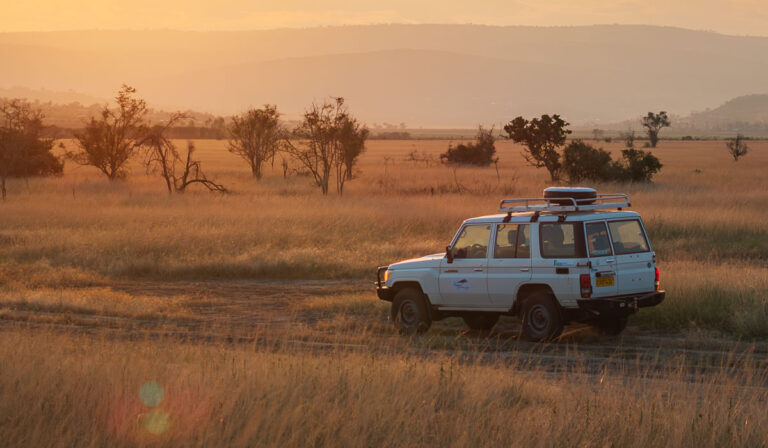
Park roads come with their own rules. In Akagera, you must stay on marked tracks and follow the park speed limits. Animals always have the right of way, and you must never get out of the car except at designated spots.
A high-clearance vehicle makes park driving much easier. The Toyota Land Cruiser Safari handles mud and rocky tracks well and gives you a good view. For lighter gravel roads, a RAV4 is usually fine. Read more on our Akagera National Park guide before you go.
Gorilla trekking mornings
Trekkers must reach the park headquarters near Kinigi very early. Driving in the dark on mountain roads is tiring, so many visitors stay in Musanze the night before. The Rwanda gorilla permit costs US$1,500 and is issued by RDB, so arriving late is an expensive mistake.
Rooftop Tents, Loads and Camping
If you rent a 4×4 with a rooftop tent, the tent must be closed and secured before you drive. Loose roof loads are both dangerous and illegal. Our team shows you how to open, close and lock the tent at handover.
Also, camp only at designated campsites, lodges or areas where you have permission. Wild camping on private or protected land can lead to problems with local authorities. See our car rental with camping gear page for kit details.
Crossing Borders with a Rental Car
Many travellers extend their trip to Uganda, Tanzania or Kenya. You can do this legally with the right paperwork. You will need a letter of authority from us and COMESA regional insurance, often called the Yellow Card.
Remember that Uganda, Kenya and Tanzania all drive on the left. That switch is the biggest risk right after the border. So slow down, stay alert at roundabouts, and let a passenger remind you which side to keep. Our cross-border car hire page explains the process.
Practical Safety Tips for Visitors
- Avoid night driving outside cities, as unlit roads hide people and animals.
- Keep fuel above half in rural areas, where stations are spread out.
- Use low gears on descents to save your brakes on long hills.
- Slow down in rain, because red earth roads turn slippery fast.
- Check the car daily: tyres, oil, water and lights.
- Plan around Umuganda, the community work morning on the last Saturday of each month, when traffic is restricted.
Finally, if a police officer signals you to stop, pull over safely and stay calm. Have your documents ready and answer clearly. Checks are usually short and friendly.
Frequently Asked Questions
Do I need an International Driving Permit in Rwanda?
It is strongly recommended for most visitors. Carry it together with your national licence and passport.
What side of the road does Rwanda drive on?
Rwanda drives on the right. Neighbouring Uganda, Kenya and Tanzania drive on the left, so take care when you cross.
What happens if I get a speeding fine?
Camera fines are linked to the vehicle. We will let you know about any fine during your rental, and it must be paid.
Is it safe to drive in Rwanda as a tourist?
Yes. Roads are generally good and traffic is orderly. However, if you prefer not to drive, our car hire with driver service lets you relax.
Drive Rwanda with Confidence
Following the rules here is easy once you know them, and the rewards are huge. Tell us your route and we will match you with the right 4×4 and a full briefing at handover. WhatsApp or call +250 725 074659, or email info@4x4carrentalrwanda.com to book.