
Akagera rewards photographers with golden savannah light, lake reflections and big game against open skies. To make the most of it, your vehicle has to work like a mobile hide. This guide to Akagera wildlife car rental for photographers covers how to set up the car, where to be at which hour, and the habits that turn sightings into sharp images.
Turning Your Akagera Wildlife Car Rental Into a Photo Hide
In Akagera, you shoot almost everything from the vehicle. So the car’s layout matters more than its badge. Think about where you will rest the lens, how you will move between sides, and where your bags will sit.
Features that help photographers
- Pop-up roof: lets you shoot standing, above the grass line, in any direction.
- Opening windows on both sides: for low-angle, eye-level shots.
- Spare seats: one empty row for camera bags means faster lens changes.
- Charging sockets: to top up batteries between game drives.
- Dark interior: fewer reflections when shooting through open windows.
The Safari Land Cruiser ticks most of these boxes. For a solo shooter on a budget, a smaller SUV can work, but you lose the elevated roof position.
Camera Support Inside the Vehicle
Tripods are awkward in a car. Instead, photographers use supports that sit on the window frame or roof edge.
Beanbags
A beanbag is the simplest and most flexible support. Bring it empty and fill it with rice or beans bought in Kigali. Drape it over the window sill, then press the lens into it for a steady base.
Window mounts
A clamp-on window mount with a gimbal head suits long lenses of 500mm or more. It takes a minute to set up, so use it when you expect to wait at a sighting.
Engine off, always
Ask your driver, or remind yourself, to switch off the engine for every shot. Even idle vibration blurs images at long focal lengths.
Timing Your Drives for the Best Light
Akagera lies close to the equator, so the sun rises and sets fast, around 6 am and 6 pm year-round. The best light lasts about an hour at each end of the day. Plan your route so you are at a good location when it arrives.
| Time | Where to be | Typical subjects |
|---|---|---|
| Gate opening to 8 am | Northern plains or lake edges | Lions, giraffes, mist over water |
| Midday | Shaded lakeside spots | Hippos, birds, rest and back up images |
| 4 pm to sunset | Open grassland facing west | Elephants, buffalo, silhouettes |
Because the drive from Kigali to the gate takes about 2.5 hours, staying inside or near the park is a big advantage. You can then be on the tracks at first light rather than arriving mid-morning.
Positioning the Car at a Sighting
Good wildlife photography is often about where you stop. A few metres can change the background, the light and the animal’s behaviour.
- Read the light first: put the sun behind you for clean, front-lit shots, or to the side for texture.
- Mind the background: shift forward or back to avoid a distracting bush or another vehicle.
- Get low when you can: shooting from a window gives a more intimate angle than from the roof.
- Anticipate movement: park ahead of a walking animal, not behind it.
- Keep distance: a relaxed animal gives better images than one disturbed by a close approach.
Finally, be patient. Many of the best frames come after ten quiet minutes, when an animal forgets the car and starts to play, feed or groom.
Always stay on marked tracks. Park rules forbid off-road driving, and it damages the habitat you came to photograph.
Photographic Highlights in Akagera
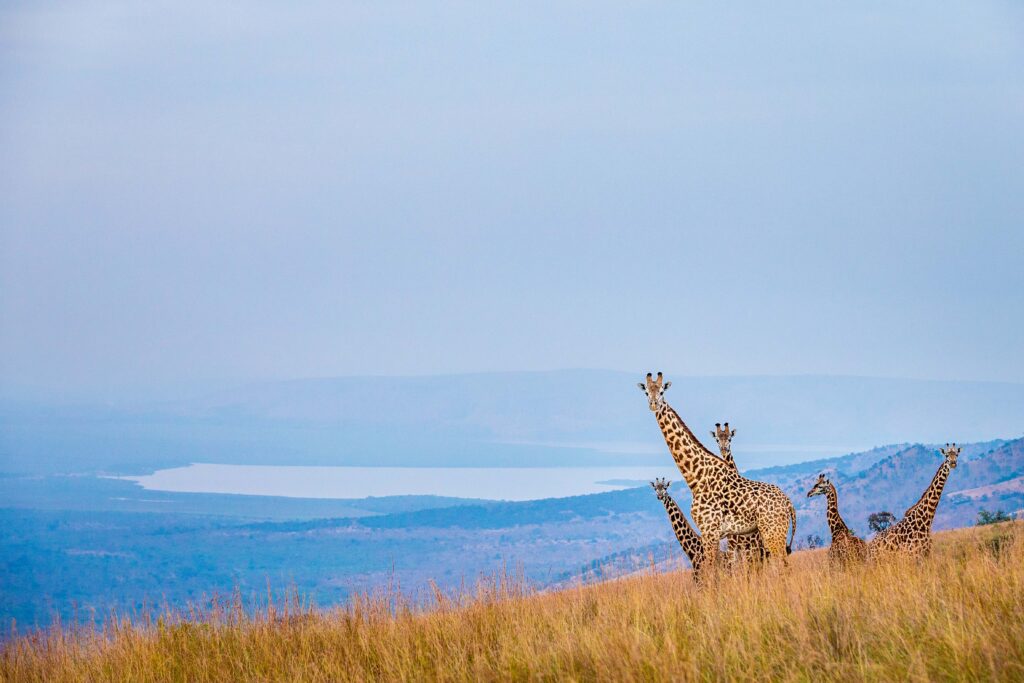
Akagera’s mix of lakes, papyrus swamp and savannah gives you a wide range of subjects in one park.
- Big cats: lions in the central and northern areas, often resting in grass.
- Rhinos and elephants: best in open country, where you can frame them against the sky.
- Water birds: fish eagles, kingfishers and shoebill sightings are prized around the lakes.
- Lake Ihema boat trip: a low, water-level view of hippos and crocodiles.
- Landscapes: rolling hills in the north at sunrise, with mist in the valleys.
For route ideas and park background, see our Akagera National Park page.
Self-Drive or Photographic Driver?
Self-drive lets you wait at a sighting for as long as you want. On the other hand, it is hard to drive, spot and shoot at once. A driver who understands photography positions the car, cuts the engine at the right moment and keeps the vehicle steady.
If you go with a driver, explain your priorities at the start: light, angles and patience over ticking off species. Our car hire with driver service can match you with a driver used to working with photographers.
Protecting Gear From Dust and Bumps
Akagera’s tracks are dusty in the dry season and bumpy all year. A little care keeps your equipment working.
- Keep cameras in padded bags on the seat, not loose on the floor.
- Close windows between sightings to cut dust.
- Change lenses inside the car with the windows up.
- Carry a blower and lens cloths, and clean sensors in the evening.
- Back up memory cards every night; a power bank or car charger helps.
Safari Photography FAQ
What lens should I bring for Akagera?
A 100–400mm or similar zoom covers most mammals. Add a longer lens for birds and a wide lens for landscapes and vehicle scenes.
Can I stand on the vehicle roof for a higher angle?
No. Stay inside the vehicle and use the pop-up roof opening. Climbing onto the body is unsafe and against park rules.
Is the rainy season bad for photography?
Not necessarily. Skies are dramatic and the grass is green, though some tracks become harder. A 4×4 with good clearance is essential then.
Can I fly a drone in Akagera?
Drone use in Rwandan national parks needs special permission from the authorities. Do not fly one without written approval.
Plan Your Photo Safari
Tell us your dates, gear and shooting style, and we will set up a vehicle that suits your photography. Message us on WhatsApp at +250 725 074659 or email info@4x4carrentalrwanda.com.