
Kigali is a natural starting point for driving into Uganda, Tanzania and beyond. The roads are good, the borders are close, and you can be in another country before lunch. This guide to Kigali cross border travel by self-drive explains which border posts to use, what paperwork the car and driver need, and how to cross without long delays.
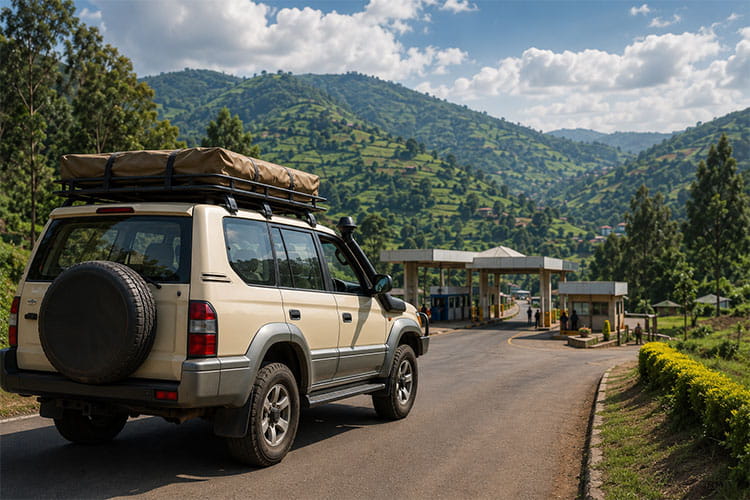
Main Border Crossings for Kigali Cross Border Travel
Rwanda has several road crossings. Which one you use depends on where you are heading next.
| Border post | Leads to | From Kigali | Best for |
|---|---|---|---|
| Gatuna / Katuna | Uganda (Kabale) | About 1.5 hours | Bwindi, Lake Bunyonyi, Kampala |
| Cyanika | Uganda (Kisoro) | Via Musanze, 2.5–3 hours | Mgahinga and southern Bwindi |
| Kagitumba | Uganda (Mirama Hills) | Northeast via Nyagatare | Lake Mburo, western Uganda |
| Rusumo | Tanzania | Southeast | Serengeti and northern Tanzania circuit |
| Rubavu / Goma | DRC | 3–3.5 hours | Only with advance clearance |
There is no direct border with Kenya. To drive to Kenya, you pass through Uganda or Tanzania first.
Documents for the Vehicle
The car needs its own paperwork, separate from your passport. You cannot arrange this at the border, so tell us your plans when you book. We prepare:
- COMESA yellow card – regional third-party insurance recognised in neighbouring countries.
- Cross-border authorisation letter – our written permission to take the vehicle out of Rwanda.
- Vehicle registration documents – originals or certified copies, kept in the car.
At some borders, customs also issues a temporary import permit or charges a road-use fee for foreign-registered vehicles. These fees are set by each country and change, so carry some cash in US dollars or local currency.
Documents for the Driver and Passengers
Every traveller needs a valid passport with blank pages and the right visa for each country. Drivers should also carry:
- Their national driving licence.
- An International Driving Permit, which officers in Uganda and Tanzania may ask for.
- A copy of the rental contract naming them as a driver.
Visas and health papers
Rwanda, Uganda and Kenya offer a joint East Africa Tourist Visa, useful if you visit two or three of them. Tanzania needs its own visa. Many travellers are also asked to show a yellow fever certificate, so keep it with your passport. Check the rules for your nationality before travelling, because they change.
What Happens at the Border, Step by Step
Most crossings in the region now use one-stop border posts, so both countries’ officers work in one building. The process is usually:
- Park in the designated area and lock the vehicle.
- Exit Rwanda at immigration with your passport.
- Enter the next country at immigration, showing visas and health certificates.
- Take the vehicle papers to customs and clear the car.
- Pay any road or permit fee and keep the receipt.
- Drive through the barrier, where documents may be checked again.
On a quiet day, this takes under an hour. However, allow two hours at busy times, especially at Gatuna with heavy truck traffic.
Tips for a faster crossing
- Arrive in the morning, when offices are fully staffed.
- Keep all papers together in one folder.
- Ignore touts offering to “help”; officers will guide you.
- Change only small amounts of money at the border.
Driving Differences Once You Cross
This is the change that catches most people out. Rwanda drives on the right, but Uganda, Kenya and Tanzania drive on the left. After the border, take the first few kilometres slowly and be careful at junctions and roundabouts.
Road conditions vary too. The main road from Katuna to Kabale is paved but hilly, while routes into Bwindi become rough murram. In Tanzania, distances are much longer, so plan fuel and overnight stops carefully.
Money, Phones and Fuel Across Borders
Each country has its own currency: Rwandan francs, Ugandan shillings and Tanzanian shillings. US dollars are widely accepted for park fees and some hotels, but notes should be recent and undamaged. ATMs are easy to find in Kabale, Kisoro and larger Tanzanian towns.
Your Rwandan SIM may roam, although charges can be high. Instead, buy a local SIM in each country for maps and calls. Finally, fill the tank before crossing, since stations near remote parks can be far apart.
Choosing a Vehicle for Cross-Border Trips
For trips beyond Rwanda, a sturdy 4×4 is the sensible choice. Roads to parks such as Bwindi can be steep and muddy.
- Land Cruiser Prado: comfortable for couples and small families.
- Land Cruiser Safari / TXL: the strongest choice for long trips and rough tracks.
- 4×4 with rooftop tent: ideal if you plan to camp across several countries.
Our cross-border car hire page lists which vehicles are cleared for regional travel.
Popular Self-Drive Routes from Kigali
Kigali to Bwindi via Katuna
Cross at Katuna, then drive through Kabale to Bwindi. Allow about 5–7 hours in total. Many travellers stop a night at Lake Bunyonyi on the way. For context, see our Bwindi and Mgahinga guide.
Kigali to Mgahinga via Cyanika
Drive north to Musanze, then cross at Cyanika to Kisoro. It is a short, scenic route and pairs well with gorilla trekking on both sides.
Rwanda and Uganda combined
For a longer loop, follow a plan like our 15-day Uganda and Rwanda safari.
FAQ: Kigali Cross Border Travel
How much notice do you need for cross-border paperwork?
Tell us at the time of booking. A few days’ notice is usually enough, but earlier is better in peak season.
Can I return the car in Uganda or Tanzania?
Usually the vehicle must come back to Rwanda. Ask us about one-way options before you plan a route that ends elsewhere.
Can I drive into DRC?
Only with prior clearance. Check current travel advisories and confirm with us well before your trip.
What if police stop me in Uganda?
Stay calm, show your licence, IDP and the vehicle papers, and ask for a receipt for any fine.
Plan Your Border Crossing
Share your route and dates on WhatsApp or call +250 725 074659, or email info@4x4carrentalrwanda.com. We will prepare the vehicle and paperwork for every border on your trip.