
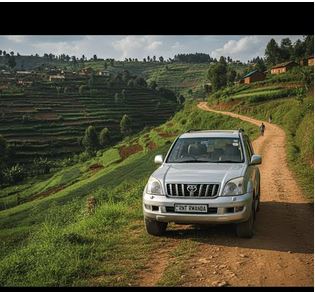
Fuel is often the biggest cost after the daily rate on a Rwanda road trip. Because most safari 4x4s here run on diesel, it pays to understand how diesel engines use fuel on these hills. This guide to diesel car hire Rwanda budgeting shows you how to estimate fuel, spot hidden travel costs and drive more economically.
Why Most Safari 4x4s in Rwanda Run on Diesel
Rwanda is called the Land of a Thousand Hills for good reason. Roads climb and drop constantly, and park tracks can be steep and muddy. Diesel engines suit this well, because they deliver strong pulling power at low engine speeds.
In practice, that means a loaded Land Cruiser can crawl up a volcanic slope without revving hard. It also means diesel engines tend to burn less fuel than petrol ones under heavy loads. So for long safaris with luggage, camping gear and passengers, diesel is usually the sensible choice.
Where petrol still makes sense
Smaller SUVs used mainly in Kigali may run on petrol. For short city stays and good tarmac, that works fine. However, once you head for park tracks or carry a full load, a diesel 4×4 is the stronger option.
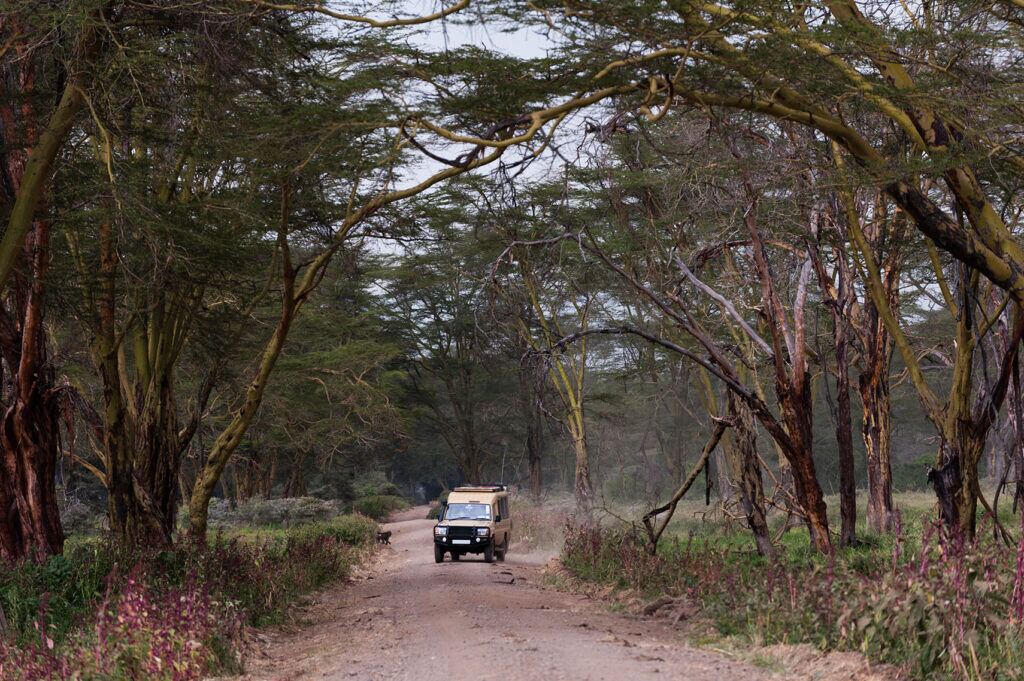
How to Estimate Fuel for Your Diesel Car Hire Rwanda Trip
You do not need exact figures to budget well. Instead, use a simple method based on your route, your vehicle and current pump prices.
- Map your route. Add up the distances between each stop, including game drives inside parks.
- Ask for the vehicle’s typical consumption. We can tell you what to expect for the model you book.
- Check the current diesel price. Rwanda sets pump prices periodically, so ask us or check at a station.
- Add a buffer. Allow an extra 15–20% for hills, park tracks, detours and idling.
Typical drive times from Kigali
| Destination | Drive time | Fuel note |
|---|---|---|
| Musanze / Volcanoes | 2–2.5 hours | Long climbs; stations in Musanze town. |
| Akagera gate | About 2.5 hours | Fill up before the park; game drives add distance. |
| Rubavu / Lake Kivu | 3–3.5 hours | Winding roads raise consumption. |
| Nyungwe | 5–6 hours | Few stations near the forest; refuel in Huye. |
Costs Beyond the Fuel Tank
Fuel is only one line in your travel budget. To avoid surprises, list the other costs before you book. Our guide to cheap car rental in Rwanda covers ways to keep the overall bill down.
- Daily rental rate: varies by model, season and length of hire.
- Driver fee: applies if you choose a chauffeur instead of self-drive.
- Park entry and vehicle fees: set by RDB and subject to change, so check current rates.
- Activity permits: a Rwanda gorilla permit is US$1,500; other activities cost less.
- Accommodation: lodges, guesthouses or campsites along your route.
- Cross-border papers: extra documents and insurance if you leave Rwanda.
Also, confirm the fuel policy in your agreement. Most rentals ask you to return the car with the same fuel level you received.
Choosing the Right Diesel Vehicle for Your Group
A bigger vehicle uses more fuel, but it also carries more people. So the cost per passenger often favours a larger 4×4 for groups.
Matching vehicle to trip
- Land Cruiser Safari: pop-up roof and space for up to six or seven, ideal for park-heavy itineraries.
- Land Cruiser Prado: a comfortable middle ground for couples and small families.
- Hilux Double Cab: rugged and practical, with an open load bed for gear.
- Toyota Hiace: best for larger groups on tarmac routes.
Choose the smallest vehicle that fits your group, luggage and route comfortably. That simple rule keeps both rental and fuel costs sensible.
Camping Versus Lodges: The Fuel Trade-Off
A rooftop tent setup changes your budget. You save on lodge nights, but the extra weight on the roof adds some fuel use.
For most travellers, the savings on accommodation far outweigh the extra diesel. Camping also lets you stay inside or near parks, which cuts daily driving to and from lodges. As a result, a camping trip to Akagera can use less fuel overall than staying outside the park.
If this appeals, see our car rental with camping gear options for what a full kit includes.
Driving Habits That Save Diesel
How you drive affects consumption as much as what you drive. Fortunately, a few simple habits make a real difference.
- Keep a steady speed on highways instead of speeding up and braking hard.
- Use 4WD only when the surface needs it; 2WD is more economical on tarmac.
- Check tyre pressures weekly, because soft tyres increase drag.
- Avoid long idling at viewpoints or while waiting at lodges.
- Pack light and remove roof loads you are not using.
- Plan the route so you do not backtrack between parks.
Where to refuel
Fill up in Kigali before leaving, then top up in larger towns like Musanze, Rubavu, Huye and Kayonza. Stations are scarce near Nyungwe and inside Akagera, so never pass a reliable pump with half a tank.
One-Way Trips and Cross-Border Fuel Planning
Some travellers start in Kigali and finish elsewhere, or continue into Uganda or Tanzania. In those cases, plan fuel stops on both sides of the border. Remember too that Uganda, Kenya and Tanzania drive on the left, while Rwanda drives on the right.
Diesel prices also differ between countries. Therefore, ask us which side of the border usually works out cheaper for your route. Our cross-border car hire page explains the papers you need.
Diesel and Fuel Cost FAQ
Is diesel easy to find across Rwanda?
Yes, on main roads and in towns. However, it is limited near Nyungwe and inside Akagera, so fill up beforehand.
Do I pay for fuel separately from the rental?
Usually, yes. Fuel is normally your cost, and you return the vehicle at the same level you received it.
Does a chauffeur-driven trip use less fuel?
Often slightly, because local drivers know the roads and drive smoothly. They also avoid wrong turns and backtracking.
Can I put petrol in a diesel vehicle by mistake?
Never start the engine if this happens. Call us immediately, because running it can cause serious damage.
Get a Clear Quote for Your Route
Share your itinerary and group size, and we will suggest the right vehicle and a realistic fuel plan. For diesel car hire Rwanda bookings, WhatsApp us on +250 725 074659 or email info@4x4carrentalrwanda.com.