
Does your company or project need vehicles for months rather than days? Then a monthly corporate car rental Kigali agreement is usually simpler than buying a fleet. You get a fixed monthly cost, servicing handled for you and the freedom to add or return vehicles as the work changes. This guide explains how monthly contracts work and how to set one up without surprises.
It is aimed at finance teams, operations managers and project leads who are comparing options.
Why Choose Monthly Corporate Car Rental Kigali Contracts
Buying vehicles ties up capital, and selling them at the end of a project takes time. Renting by the month avoids both problems. In addition, the rental company carries the burden of servicing, registration and insurance renewals.
- Predictable budgeting: one monthly invoice per vehicle.
- Flexibility: scale the fleet up or down as projects change.
- Less admin: maintenance and paperwork handled by the provider.
- Newer vehicles: no need to keep ageing cars to justify the purchase.
As a result, monthly rental suits projects with a clear end date, new offices still finding their feet and teams with seasonal peaks.
Renting Versus Buying: A Quick Comparison
| Factor | Monthly rental | Buying |
|---|---|---|
| Upfront cost | Low, usually a deposit | Full purchase price. |
| Servicing | Arranged by the provider | Your responsibility. |
| Breakdowns | Replacement as per contract | Vehicle off the road until fixed. |
| End of project | Return the vehicle | Sell or store it. |
| Flexibility | Add or remove cars | Fixed fleet. |
Buying can make sense for very long, stable operations. However, for most projects under a few years, renting is easier to manage.
Matching Vehicles to Roles
Not every staff member needs a Land Cruiser. Choosing the right mix keeps costs sensible.
City-based staff
For meetings and errands in Kigali, a Toyota RAV4 is economical and easy to park.
Senior management and visitors
A Land Cruiser Prado or V8 gives a professional image for government meetings and guest pickups.
Field teams
Heading to districts on rough roads? Choose a Land Cruiser Safari or a Hilux Double Cab, which also carries equipment in the back.
Group movements
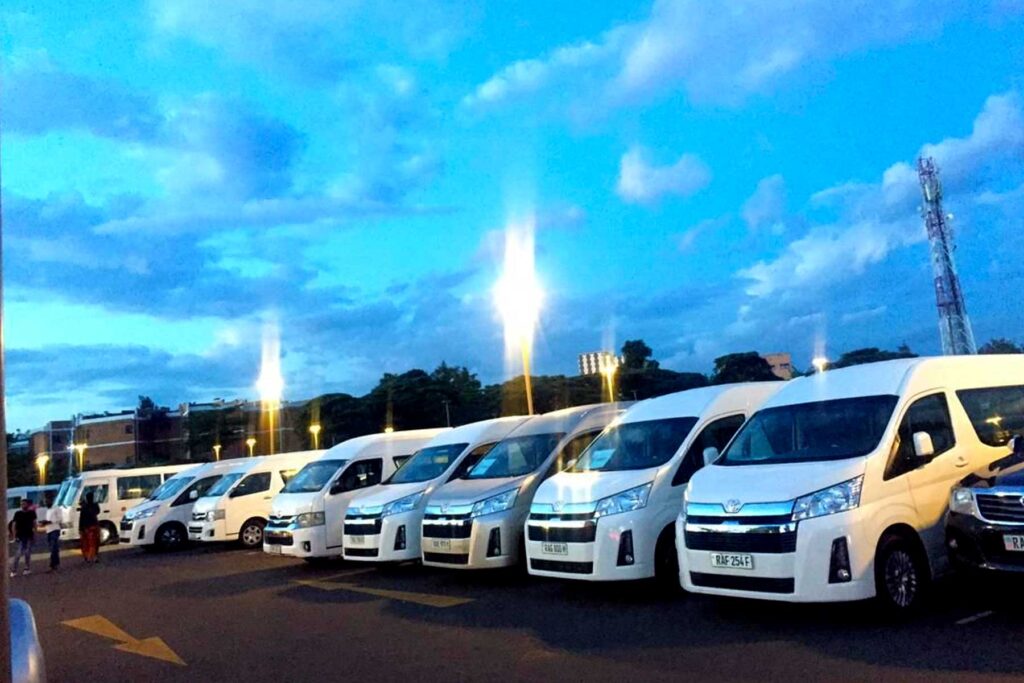
A Toyota Hiace suits staff shuttles, training days and workshops.
What a Monthly Contract Should Include
A clear contract prevents most disputes. Before signing, make sure it covers:
- The monthly rate per vehicle and what it includes.
- Mileage allowance, if any, and the charge above it.
- Service intervals and where servicing happens.
- Replacement vehicle terms after a breakdown or accident.
- Insurance cover and the excess.
- Notice period to add, swap or return vehicles.
- Payment terms and invoice format.
Ask for these points in writing. Then share the draft with your finance and security teams before you commit.
Onboarding New Staff to the Fleet
New arrivals often get a vehicle on their first day. A short induction helps them use it safely and correctly. Cover the basics in about half an hour:
- How to report a fault or breakdown, and who to call.
- Where to refuel and how to record receipts.
- Local rules, such as seat belts for all passengers and no phone use while driving.
- Umuganda restrictions on the morning of the last Saturday of each month.
Keep a one-page summary in each vehicle’s glovebox. That way, anyone who borrows the car has the key information to hand.
Handling Accidents and Incidents
Even careful drivers have the occasional scrape. Agree a clear process before it happens. In Rwanda, police usually need to attend and file a report for insurance purposes, so drivers should not move the vehicle unless told to.
Next, the driver should photograph the scene and call the rental company. The contract should then set out how quickly a replacement arrives and how the excess is handled. Clear steps keep your team moving and avoid long disputes.
Self-Drive or Monthly Drivers?
Some organisations let staff drive themselves, while others hire drivers for the whole contract. Both options work in Kigali.
Self-drive is cheaper and gives staff flexibility. Staff need a valid licence, and an International Driving Permit is recommended for expatriates. Remember that Rwanda drives on the right.
On the other hand, a dedicated driver knows the city, handles parking and keeps the vehicle tidy. This is common for senior staff and for teams who travel upcountry often. See our car hire with driver page for how this works.
Managing Fuel, Logbooks and Costs
Fuel is usually paid separately from the rental. Therefore, set a simple system from day one. Many teams use a vehicle logbook that records each trip, the driver and the purpose. Others ask drivers to submit fuel receipts weekly.
These records help you spot unusual usage early. They also make it easy to allocate costs between projects or donors at the end of each month.
Tips for keeping costs down
- Pool vehicles for shared routes instead of assigning one per person.
- Review usage after the first month and right-size the fleet.
- Plan field trips together to reduce empty return journeys.
Setting Up Monthly Corporate Car Rental Kigali Teams Can Rely On
Start with a short brief. Note how many staff, which roles, where they travel and for how long. Then request a quote covering the full mix of vehicles. Compare it with our car hire leasing Rwanda options if your project runs for a year or more.
Finally, schedule a review after the first month. Early feedback from drivers and staff often reveals small changes that save money.
Frequently Asked Questions
What is the minimum period for a monthly rental?
Usually one month. Confirm the exact minimum and notice period in your quote.
Can we swap a vehicle mid-contract?
Often, yes, with notice. Agree the process in the contract so swaps are quick.
Are vehicles serviced during the rental?
Servicing is normally arranged by the provider at agreed intervals. Check where and how often in your contract.
Can monthly vehicles travel to other districts or parks?
Yes, within Rwanda. For trips across borders, extra paperwork and insurance are needed.
Can invoices be split by project or donor?
Ask for this when you request a quote. Separate invoices per vehicle or per project make donor reporting much easier.
Request a Monthly Fleet Quote
Share your team size, roles and project length, and we will propose a vehicle mix. WhatsApp or call +250 725 074659, or email info@4x4carrentalrwanda.com.