
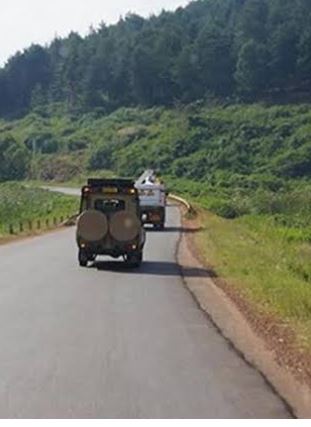
The road through Nyungwe is one of the most beautiful drives in Africa, winding through misty montane rainforest with monkeys on the verge. It is also long, curvy and often wet. This guide focuses on Nyungwe Forest car hire: which vehicle to choose, how to drive the forest road safely and how to plan your days around chimps, trails and the canopy walk.
Getting to Nyungwe from Kigali
Nyungwe sits in Rwanda’s southwest, between Huye and Lake Kivu. From Kigali, plan 5–6 hours of driving. The route is paved all the way, but the second half is steep and full of bends.
The typical route
- Kigali to Huye (Butare), with a lunch or coffee stop.
- Huye to Nyungwe’s eastern edge, passing through tea country near Kitabi.
- Through the forest itself, past the Uwinka area, toward Gisakura and Rusizi.
Leave Kigali early so you reach your lodge before dark. Also, consider breaking the journey with a night in Huye, especially if you visit the museums there.
Choosing Your Nyungwe Forest Car Hire Vehicle
You don’t need a heavy off-roader for the main road. However, the right vehicle makes the long drive more comfortable and opens up side tracks.
| Vehicle | Why choose it for Nyungwe |
|---|---|
| Toyota RAV4 | Economical on the long paved road; good for couples. |
| Land Cruiser Prado | Comfortable on bends, with clearance for lodge and trailhead tracks. |
| Land Cruiser Safari | Space for families and gear; robust on wet side roads. |
| 4×4 with rooftop tent | For campers combining Nyungwe with Lake Kivu. |
For most nature travellers, the Land Cruiser Prado is the sweet spot. It handles hours of bends without fatigue and copes with muddy lodge driveways.
Driving Tips for the Nyungwe Forest Road
The forest road is well surfaced, but conditions change quickly. Nyungwe is one of the wettest places in Rwanda, so expect rain and mist at any time of year.
Rain and fog
- Use dipped headlights in mist, even during the day.
- Slow down well before bends, since you often can’t see what is around them.
- Leave extra distance behind trucks and buses.
- Watch for small landslides or fallen branches after heavy rain.
Wildlife on the road
L’Hoest’s monkeys, baboons and other primates often sit by the roadside. Slow down, enjoy them from the car and never feed them. Also, stopping is only safe where you can pull fully off the road.
Hills and brakes
Long descents can overheat brakes. So shift to a lower gear and let the engine slow the car. In addition, take a short break if the brakes smell hot.
Fuel, Signal and Supplies
There are no fuel stations inside the forest. Fill up in Huye on the way in, or in Rusizi on the western side. Similarly, mobile signal is patchy within the park, so download offline maps first.
- Carry water and snacks for the drive.
- Pack rain jackets and warm layers; the forest is cool and damp.
- Bring cash for small purchases, as card payment is not always available.
- Keep a torch handy for lodge paths after dark.
Planning Nyungwe Activities Around Your Car
Having your own car lets you time each activity well. Most popular experiences start early, so stay close to the trailheads.
Chimpanzee tracking
Chimp tracking starts at dawn, and meeting points can be some distance from your lodge. Confirm the meeting place the evening before, and allow extra driving time in case of rain. Permits are issued through RDB; check current fees before you go.
The canopy walk
The canopy walkway starts near the Uwinka area, beside the main road. It is a short hike down to the suspended bridge, so wear good shoes. Morning visits usually have the clearest views.
Hiking trails
Nyungwe has a network of forest trails, from short loops to full-day hikes. Park rangers guide most walks, so book at the visitor centre or through your lodge. For more ideas, see our Nyungwe National Park guide.
Nyungwe Forest Car Hire Tips for Nature Photographers
Many visitors come for birds, primates and orchids as much as for the big activities. A vehicle gives you the flexibility to stop at viewpoints, return to a good spot, or wait for light to improve.
- Pull fully off the road at designated viewpoints before taking photos.
- Keep a lens cloth handy, because mist and drizzle coat glass quickly.
- Store camera gear in a dry bag inside the car on wet days.
- Early mornings bring the best birdlife and the softest light.
Birders often spot forest species right from the roadside, especially near the tea estates at the forest edge. So drive slowly through these sections, and keep binoculars on the passenger seat.
Where to stay with a car
Lodges and guesthouses cluster at the eastern edge near Kitabi and on the western side near Gisakura. Some have steep or unpaved driveways, so ask about access when you book. With your own car, you can stay outside the park and drive in each morning.
Combining Nyungwe With Other Destinations
Nyungwe pairs naturally with Lake Kivu. From the western edge of the forest, Rusizi and the lakeshore are close. Then you can drive north along the lake toward Karongi and Rubavu.
Many travellers also combine Nyungwe with Volcanoes National Park for gorillas. The Rwanda gorilla permit is US$1,500. Our 5 days chimpanzees and gorillas itinerary shows how to link both parks.
Self-drive or with a driver?
Self-drive suits confident drivers comfortable with mountain bends. However, if long winding drives make you nervous, car hire with a driver lets you enjoy the forest views instead.
FAQ
Do I need a 4×4 for Nyungwe Forest?
Not for the main paved road. However, a 4×4 is helpful for some lodge driveways and trailhead tracks, especially after rain.
How long is the drive from Kigali to Nyungwe?
Plan 5–6 hours. Leave early and allow time for a stop in Huye.
Is there fuel inside Nyungwe?
No. Fill up in Huye before entering, or in Rusizi on the western side.
Can I drive Nyungwe at night?
We don’t recommend it. Fog, bends and wildlife make the forest road much safer in daylight.
Book Your Nyungwe Vehicle
Share your dates and route, and we’ll suggest the best vehicle for the forest road. WhatsApp or call +250 725 074659, or email info@4x4carrentalrwanda.com.