
Akagera is Rwanda’s only savannah park, and it is one of the easiest safaris in Africa to do in a rental car. Good Akagera safari planning comes down to three things: the right vehicle, smart timing and a realistic route inside the park. This guide covers all three, from the drive out of Kigali to the moment you leave through the northern gate.
Getting From Kigali to Akagera
The main entrance sits in the south of the park, near Lake Ihema. From Kigali, the drive takes about 2.5 hours on paved road east through Kayonza and Kabarondo. The last stretch to the gate is a gravel road, which is usually fine in a 4×4.
Leave Kigali by 5:30 or 6 a.m. if you want to reach the gate for the cool early-morning hours. Animals are most active then, and the light is better for photos. Fill the tank in Kayonza, because there are few fuel options near the park.
Day trip or overnight?
A day trip is possible, but it is long. You will spend five hours on the road and only a few hours in the park. An overnight stay lets you explore the south one day and drive north the next, which is far more rewarding.
Choosing a Rental Car for Akagera
Akagera’s internal roads are mostly gravel and dirt. Some sections are sandy, and others turn muddy after rain. A proper 4×4 is strongly recommended.
| Vehicle | Why choose it |
|---|---|
| Land Cruiser Safari | Pop-up roof for standing game viewing, tough suspension and room for a guide. |
| Land Cruiser Prado | Comfortable and capable for two to four people, though without a pop-up roof. |
| Toyota RAV4 | Workable in the dry season on main tracks, but limited on rough or wet roads. |
The pop-up roof makes a real difference on a savannah safari. Everyone can stand, scan the plains and take photos without leaning out of windows.
Akagera Safari Planning: Best Time to Go
Akagera is open all year. However, the season shapes what you see and how the roads behave.
Dry seasons
June to September, and to a lesser degree December to February, are the best months for game viewing. Grass is shorter, animals gather near water and the tracks are firm. These months are also the busiest, so book your car early.
Rainy seasons
March to May and October to November bring green landscapes and fewer visitors. Birdlife is excellent. Still, some northern tracks can become slippery, so a Land Cruiser is the safer choice.
Planning Your Route Inside the Park
The park is long and narrow, running north to south along the Tanzanian border. As a result, most self-drivers enter in the south and exit through the northern gate.
The southern lakes
The south is woodland and lakes. Around Lake Ihema you will find hippos, crocodiles, buffalo and many water birds. The afternoon boat trip on the lake is one of the park’s highlights. You can read more about the boat trip on Lake Ihema before you go.
The northern plains
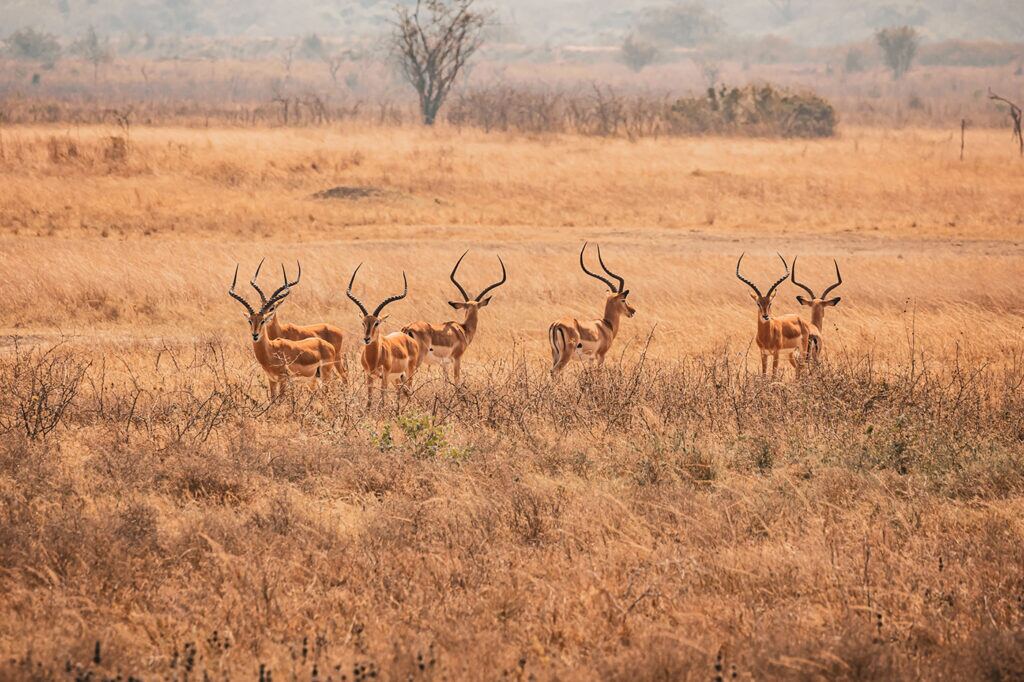
Further north, the land opens into rolling grassland. This is where you are most likely to see giraffe, zebra, elephants and large herds of antelope. Lions and rhinos also live in the park, though sightings are never guaranteed.
Hire a guide for your car
At reception, you can arrange a freelance park guide to ride in your vehicle. They know where animals have been seen recently. This is one of the best-value upgrades on any self-drive safari.
A Simple Two-Day Self-Drive Plan
This plan suits most first-time visitors in a rental 4×4. It balances driving time with time watching animals.
- Day 1 morning: Leave Kigali at dawn and enter through the southern gate. Pay fees at reception and pick up a guide if you want one.
- Day 1 afternoon: Explore the lakeshore tracks, then join the late-afternoon boat trip on Lake Ihema. Overnight at a lodge or campsite in the south.
- Day 2 morning: Head north early through the plains, where the big herds gather.
- Day 2 afternoon: Exit through the northern gate and drive back to Kigali, arriving before dark.
Tell the gate staff at entry that you plan to leave by the north. That way, they know where to expect you.
Park Rules for Self-Drivers
- Keep to the park speed limit of 25 km/h.
- Stay inside the vehicle, except at marked viewpoints and picnic sites.
- Do not drive off-road or onto closed tracks.
- Exit the park before the gates close, unless you are staying inside.
- Never feed animals or leave litter.
Entry, vehicle and activity fees are set by the park authorities and change from time to time. So check current rates before you travel and carry a card for payment.
Camping or Lodges?
Akagera has lodges and tented camps at several price levels. However, it also has designated campsites, which makes it perfect for a rooftop tent trip. Our car rental with camping gear option includes the tent, bedding and cooking kit. Book campsites in advance, especially in the dry season.
If you would like a ready-made plan, look at our 2 days Akagera safari itinerary.
What to Pack in the Car
- Binoculars and a camera with a zoom lens.
- Plenty of drinking water and snacks.
- Sunscreen, a hat and insect repellent.
- A downloaded offline map of the park.
- A light jacket for early mornings.
Frequently Asked Questions
Can I self-drive in Akagera without a guide?
Yes, self-driving is allowed. A guide is optional, but it greatly improves your chances of good sightings.
How long should I spend in the park?
One full day covers the highlights. Two days let you enjoy both the southern lakes and the northern plains without rushing.
Is a pop-up roof worth it?
For Akagera, yes. It makes viewing and photography far easier for everyone in the car.
Can I combine Akagera with gorilla trekking?
Easily. Drive back to Kigali, then continue 2–2.5 hours to Musanze for Volcanoes National Park.
Start Your Akagera Safari Planning
Tell us your dates and group size, and we will match a safari vehicle to your trip. WhatsApp or call +250 725 074659, or email info@4x4carrentalrwanda.com.