
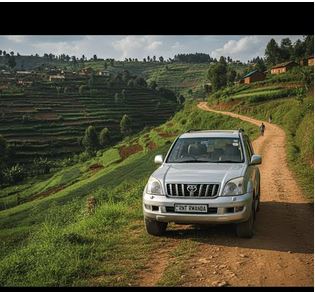
Rwanda dry season travel, from June to September and again from December to February, opens every park and road in the country. With firm roads everywhere, your choice of transport depends on your style, budget and group rather than the weather. This guide compares the main options so you can pick the one that fits your trip.
Your Transport Options for Rwanda Dry Season Travel
Most visitors choose between five ways of getting around. Each has clear strengths.
| Option | Best for | Main drawback |
|---|---|---|
| Self-drive 4×4 | Independent travellers, couples, families | You handle navigation and fuel |
| Car with driver | First-timers, business, photographers | Higher daily cost |
| Packaged guided safari | Short trips with no planning time | Fixed schedule |
| Public buses | Backpackers between towns | Don’t reach park trailheads or game tracks |
| Taxis and motos | Short hops in Kigali | Not suited to park visits |
For anything involving Akagera game drives or gorilla trailheads, you need a private vehicle. Buses stop in towns, not inside parks.
Self-Drive: Freedom on Dry Roads
The dry months are the easiest time to drive yourself. Gravel tracks are firm, trailheads are reachable and the risk of getting stuck is low. As a result, many confident drivers choose self-drive in Rwanda for exactly these months.
Who it suits
Self-drive works best if you’re comfortable on hilly roads and driving on the right. It also suits travellers who like to linger at viewpoints or change plans mid-trip.
Dry-season driving notes
- Dust is the main nuisance on gravel. Keep windows closed behind other vehicles.
- Low-range 4WD is rarely needed, but clearance still helps on rocky tracks.
- Book early, because self-drive 4x4s are in high demand from June to August.
Car With a Driver: Relaxed and Informed
A local driver turns long road days into sightseeing time. You watch the hills instead of the bends, and the driver handles parking, fuel and checkpoints.
The guide factor
Many drivers double as guides. They know which Akagera tracks are producing sightings and where to stop for coffee or a view. For a first visit, that local knowledge is valuable.
What to budget
Expect a daily driver fee, plus meals and lodging for the driver on overnight trips. See car hire with a driver for how it works.
Packaged Safaris Versus a Flexible Hire
A packaged safari bundles the vehicle, driver, lodging and sometimes permits. It’s convenient if you have little time to plan. However, the schedule is set in advance.
By contrast, a flexible hire lets you design the route. You can add a night at Lake Kivu or skip a stop that doesn’t appeal. Our Rwanda car hire safaris sit in the middle: suggested routes you can adjust.
Questions to help you decide
- Do you enjoy planning, or would you rather hand it over?
- Will you want to change plans on the road?
- Is anyone in your group nervous about driving abroad?
Picking a Vehicle for Rwanda Dry Season Travel
Dry conditions widen your vehicle choice. You don’t always need the biggest 4×4, so match the size to your group and the tracks you’ll drive.
Small groups on mainly tarmac routes
A Toyota RAV4 covers Kigali, Musanze and Lake Kivu comfortably. It’s also economical on fuel.
Safari-focused trips
For Akagera, a Land Cruiser with a pop-up roof gives better views and more room for cameras. Pop-up roofs also let you stand up for photos without leaving the vehicle.
Larger groups
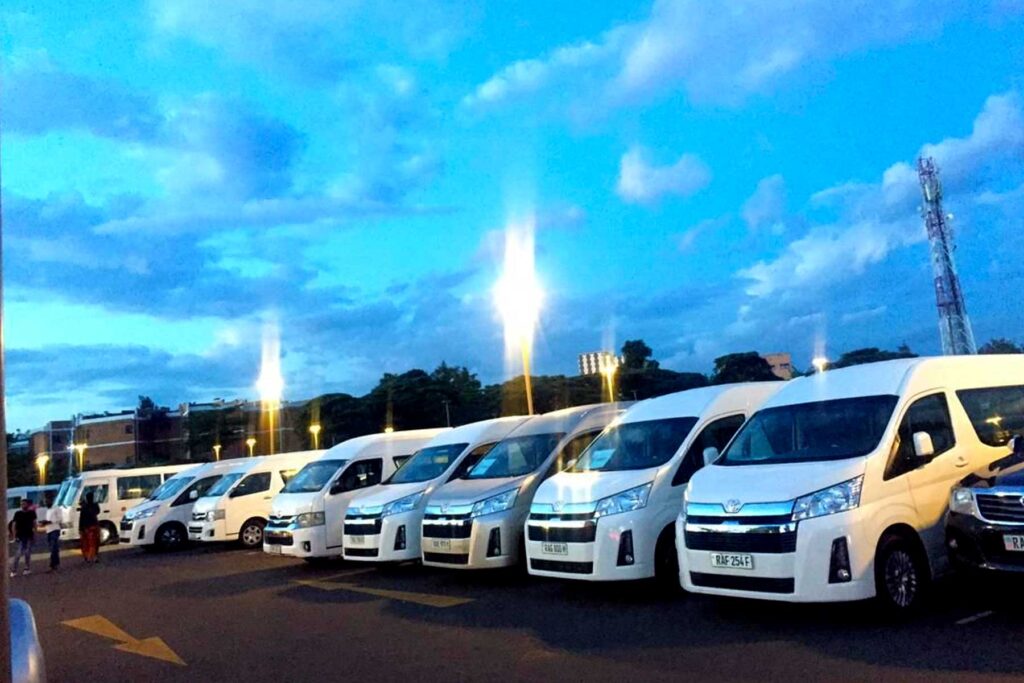
A Toyota Hiace seats bigger families or groups, usually with a driver. It works well for city tours and tarmac routes.
Camping trips
The dry season is perfect for camping. A rooftop-tent 4×4 lets you sleep at park campsites without worrying about rain.
Getting From the Airport and Around Kigali
Your transport choice starts the moment you land. Peak-season flights arrive full, and the arrivals hall gets busy. Therefore, arrange your first ride before you fly.
Airport options
- Car delivered to the airport: ideal if you’re driving north the same day.
- Pre-booked transfer: best if you land late or want to rest first. See Kigali airport transfers.
- Airport taxi: available, but agree the fare before you get in.
Getting around the city
Kigali is compact but hilly. For a day of museums, markets and restaurants, a taxi or a car with driver saves parking hassle. Motorbike taxis are quick and cheap, though they suit light travellers rather than families with bags.
When to collect your self-drive car
If your first days are in Kigali, consider collecting the car only when you leave the city. That saves a day or two of hire and parking. Then hand it back at the end, or arrange a drop-off at your hotel.
Sample Dry-Season Routes by Transport Type
Here’s how different choices play out on a typical week.
Self-drive loop
Kigali to Akagera (about 2.5 hours) for a full game drive, back via Kigali to Musanze (2–2.5 hours) for gorillas, then Rubavu on Lake Kivu.
Driver-led itinerary
The same route, but with a guide who handles early starts and knows where wildlife has been seen. You simply enjoy the ride.
Mixed approach
Take a driver for gorilla day and Akagera, then self-drive the scenic Lake Kivu stretch. Many travellers find this gives the best of both.
FAQ
What is the best transport for Rwanda dry season travel?
A private 4×4, either self-drive or with a driver, gives the most flexibility. It also reaches park tracks that buses can’t.
Can I use public buses to reach national parks?
Buses reach nearby towns like Musanze, but not trailheads or game tracks. You’d still need a vehicle inside the parks.
Is self-drive easier in the dry season?
Yes. Firm, dry roads reduce the risk of getting stuck, though dust can limit visibility.
Should I book transport early for July and August?
Yes. Peak demand means 4x4s and drivers book up months ahead.
Choose Your Dry-Season Ride
Tell us your group size and route, and we’ll recommend self-drive, a driver or a mix. WhatsApp or call +250 725 074659, or email info@4x4carrentalrwanda.com.