
Driving yourself into a Rwandan park is a thrill, but the rules change the moment you pass the gate. This national parks travel safety Rwanda guide covers what to expect in Volcanoes, Akagera and Nyungwe when you are behind the wheel. You will learn how to handle wildlife, park roads, weather and the drive in and out.
Why Park Safety Differs from Road Safety
On Rwanda’s main highways, your concerns are traffic, buses and pedestrians. Inside a park, the risks are different. Animals have right of way, tracks are unpaved, and help may be an hour away.
Also, each park has its own character. Akagera is open savannah with big game. Volcanoes is about steep farm roads and high-altitude hiking. Nyungwe is a mountain rainforest with one winding road through it. Therefore, plan your safety habits park by park.
Akagera: Self-Drive Safety Among Big Game
Akagera is Rwanda’s Big Five park and the one where self-drivers face real wildlife. The gate is about 2.5 hours from Kigali, so leave early to arrive with daylight to spare.
Stay inside the vehicle
Elephants, buffalo, lions and rhinos live here. Never get out except at marked points, such as the park HQ or designated picnic sites. Even a quick photo stop on foot is dangerous.
Give animals space
- Stop well back from elephants. If one flaps its ears or swings its head, reverse slowly.
- Never drive between a mother and her young.
- Switch off the engine when you stop, so animals relax.
- Keep windows partly up near lions and buffalo.
Watch the clock and the lakes
Self-drivers must stay on marked tracks and keep to the park’s posted speed limits. Plan to be at your lodge or out of the gate before dusk. Hippos leave the lakes to graze in the evening, and they are dangerous on land. For a guided option, see our 2 days Akagera safari.
Volcanoes: Safety on Trailhead Roads and Treks
At Volcanoes, the danger is less about animals and more about roads and altitude. Musanze is 2 to 2.5 hours from Kigali on good tarmac. After that, the roads to the trailheads turn to rough volcanic stone.
Driving to the trailhead
Briefings at Kinigi start early in the morning. So sleep nearby, and drive the route the day before if you can. Engage four-wheel drive on loose rock. Then park where the ranger tells you, facing out for an easy exit.
Trekking with gorillas
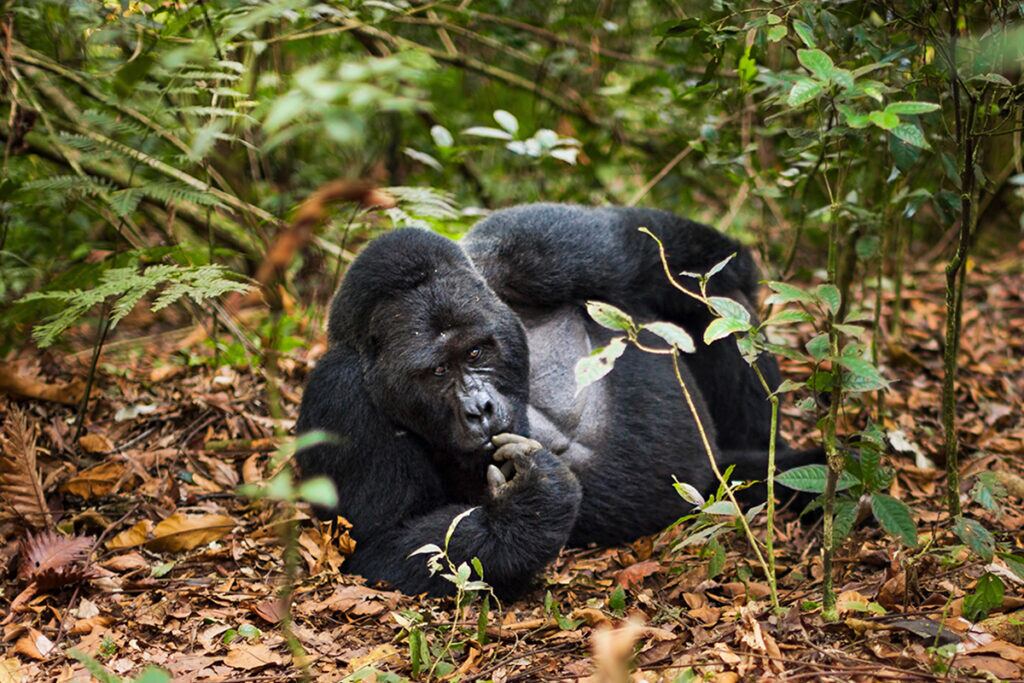
Permits cost US$1,500 and come with strict rules set by RDB. Keep the distance your ranger asks for, usually about seven metres. Do not eat, cough or sneeze near the gorillas, and stay with your group. Hire a porter if the climb looks hard. It helps you and supports the local community. Learn more on our Volcanoes National Park page.
Nyungwe: Fog, Bends and Forest Roads
The drive to Nyungwe takes 5 to 6 hours from Kigali. The final stretch runs right through the forest on a winding paved road.
- Fog arrives fast. Use dipped headlights and slow right down. Never overtake on a blind bend.
- Monkeys sit on the road. L’Hoest’s monkeys and baboons often appear around corners. Do not feed them.
- Rain makes edges soft. Keep away from the road shoulder after heavy showers.
- Trails need a guide. Chimp tracking and the canopy walk are guided. Do not wander off marked paths.
As a result, give yourself a full day for the drive, with no tight schedule at the end.
National Parks Travel Safety in Rwanda: Vehicle Habits
Your 4×4 is your shelter and your lifeline in the parks. A few routines keep it that way.
- Fill the tank before entering. Fuel stops near Akagera and Nyungwe are few.
- Check tyre pressures each morning. Rocky tracks cause slow punctures.
- Carry at least two litres of water per person, plus snacks.
- Download offline maps. Signal can drop inside the parks.
- Lock the car at trailheads and keep valuables out of sight.
A tough Land Cruiser Safari handles all three parks well. It also gives you a raised roof for safer game viewing in Akagera.
Health and Personal Safety in the Parks
Rwanda is one of the safest countries in Africa to travel. Still, the outdoors brings its own risks.
- Malaria. Akagera is lower and warmer, so mosquito risk is higher there. Use repellent and ask a doctor about tablets.
- Tsetse flies. They appear in parts of Akagera. Wear light, neutral colours rather than dark blue or black.
- Altitude and cold. Volcanoes and Nyungwe are cool and wet. Pack layers and rain gear.
- Sun. The equatorial sun is strong, even on cloudy days.
Getting In and Out Without Rushing
Many park incidents happen on the drive, not on safari. Tired drivers push on after dark to reach a lodge, and that is when risk climbs. Rural roads have few streetlights, and people and livestock walk along the edges at night.
So set a simple rule. Aim to arrive at each park or lodge by mid-afternoon. If a day runs late, stop in the nearest town, such as Musanze, Huye or Kayonza, and finish the drive next morning. In addition, share your daily plan with us or your lodge. Someone should always know where you are heading and when you expect to arrive.
Park Safety FAQs
Can I self-drive in Akagera without a guide?
Yes, self-drive is allowed on marked routes. However, a park guide can join your car for a fee and helps you find wildlife.
What should I do if my car breaks down inside a park?
Stay inside the vehicle, especially in Akagera. Call the park office and then WhatsApp us so we can arrange help.
Is it safe to drive to Volcanoes in the rainy season?
Yes, with a 4×4 and extra time. Trailhead tracks get muddy, so start earlier than usual.
Are there age limits for park activities?
Gorilla trekking has a minimum age set by RDB, currently 15. Other activities have their own rules, so check before you go.
Drive Rwanda’s Parks with Confidence
Pick a well-prepared 4×4 and we will brief you on every park before you set off. Our self-drive Rwanda team is a message away. WhatsApp or call +250 725 074659, or email info@4x4carrentalrwanda.com.