
Film crews have very different transport needs from tourists. You carry cases of fragile kit, work long and unpredictable days and often need a car that doubles as a camera platform. This guide explains how Kigali filming car hire works for documentaries, commercials and news shoots, how vehicle plans fit around your permits and which vehicles suit each part of a production.
Permits First, Vehicles Second
Every legitimate shoot in Rwanda starts with the right paperwork. The rules depend on what and where you film, so check current requirements early in pre-production.
- Filming in national parks needs authorisation through the Rwanda Development Board (RDB), plus the usual park and activity permits.
- Gorilla filming also needs trekking permits, which RDB currently sets at US$1,500 per person. Film crews may face extra conditions.
- Drones require approval from the Rwanda Civil Aviation Authority before you fly.
- Press and media accreditation may apply to journalists and news crews.
We don’t issue permits ourselves. However, we plan your vehicles around your approved locations and dates. Once you know where the permits allow you to shoot, send us the schedule and we’ll build the transport plan to match. Fees and processes change, so always confirm with the issuing authority or your local fixer.
Building a Kigali Filming Car Hire Plan
A production fleet is rarely one vehicle. Most shoots combine several roles, and each needs a different car.
| Role | Suggested vehicle | Why it works |
|---|---|---|
| Camera car for wildlife | Land Cruiser Safari with pop-up roof | Standing room for operators and a stable shooting position |
| Gear and grip truck | Toyota Hilux Double Cab | Open bed for stands, jibs and cases, plus five seats |
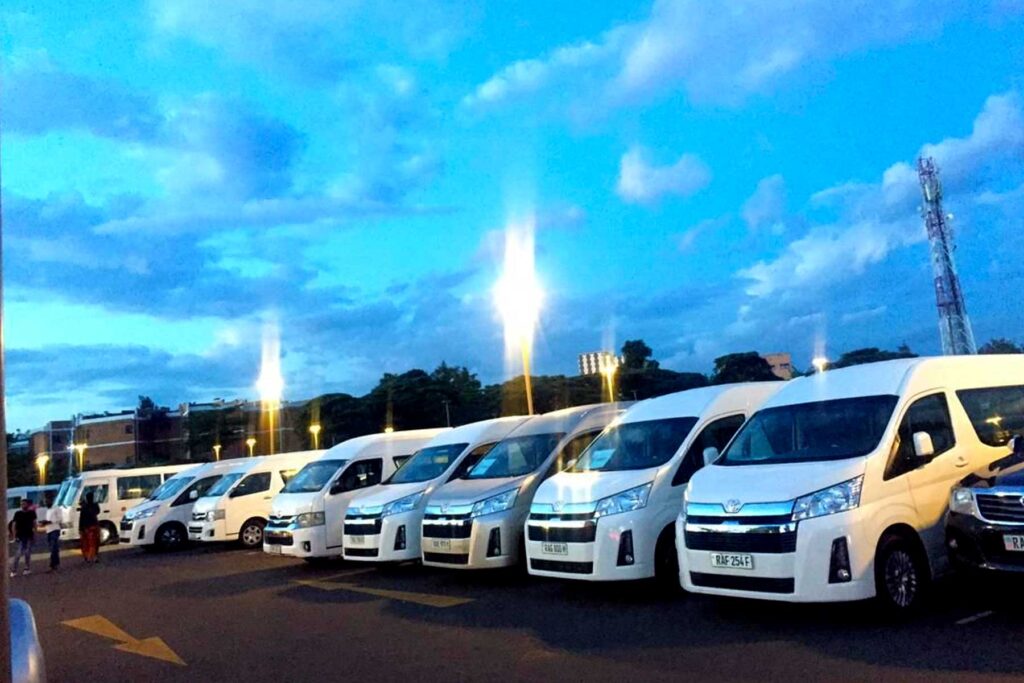
| Crew transport | Toyota Hiace | Moves a full team between hotel and set |
| Talent or client car | Land Cruiser Prado or V8 | Comfort for presenters, directors and visiting clients |
| Scouting runs | Toyota RAV4 | Quick, economical recce trips around Kigali |
Check the Hilux Double Cab and Land Cruiser Safari details when planning your gear load.
Drivers Who Understand a Film Schedule
On a shoot, your driver is part of the crew. They need to arrive before call time, wait patiently during long setups and know when to keep the engine off for sound.
What to agree in advance
- Daily hours: pre-dawn calls and golden-hour wraps make for long days. Agree start and finish times, and any overtime.
- Meals and lodging for drivers on location away from Kigali.
- Standby rules: where drivers wait, and how you reach them.
- Silence on set: engines and radios off during takes.
Our car hire with driver page explains the basics. Mention filming when you book, so we can assign drivers comfortable with production work. A driver who knows the route also helps the producer judge realistic travel times between setups.
Shooting in Kigali: Urban Logistics
Kigali is clean, photogenic and well organised, which makes it popular for commercials and B-roll. Still, city shoots need careful planning.
- Filming on public roads may need local authority or police permission, especially for tracking shots.
- Parking for unit vehicles is limited downtown. Scout a base near each location.
- Traffic peaks around 7–9 am and 5–7 pm. Schedule company moves outside those windows.
- Car-free Sundays close some roads on certain mornings. That can be a gift or a problem, depending on your shot.
- The monthly Umuganda on the last Saturday morning restricts traffic, so avoid company moves then.
Taking the Unit on Location
Once you leave Kigali, distances and road conditions shape your schedule. Plan travel days as part of the shoot, not as an afterthought.
- Volcanoes National Park: 2–2.5 hours to Musanze. Steep trailhead roads call for 4x4s.
- Akagera National Park: about 2.5 hours. Gravel game tracks suit pop-up-roof Land Cruisers.
- Nyungwe National Park: 5–6 hours on winding roads. Pack gear securely against the bends.
- Lake Kivu: 3–3.5 hours to Rubavu, with slow lakeside roads to other towns.
For overnight shoots in remote spots, a camping-equipped 4×4 can serve as a basecamp.
Protecting Your Kit on the Road
Dust, bumps and heat are the enemies of camera gear. A few habits keep equipment safe.
- Use hard cases, and strap them down in the load bed or boot.
- Cover cases with tarps on dusty park tracks.
- Never leave equipment visible in parked vehicles.
- Keep batteries and drives out of direct sun on hot days.
- Ask whether vehicles have charging points, and confirm in your quote rather than assuming.
Budgeting Your Kigali Filming Car Hire
Transport often ends up as one of the larger line items, so plan it carefully. A clear brief from you gives a tighter, more accurate quote from us.
What drives the cost
- Number of vehicles and how many days each one is needed.
- Drivers: daily fees, overtime and allowances on location.
- Distance: long upcountry moves use more fuel and time.
- Specialist setups such as pop-up roofs or camping kits.
- Cross-border days, which need extra paperwork.
Ways to keep it lean
Release vehicles on days they aren’t needed, rather than holding the full fleet for the whole shoot. Also, group locations by region to cut repeat trips. For example, shoot all Musanze scenes in one block, then move west to Lake Kivu. Finally, send a day-by-day call sheet early, so we can price exactly what you use.
Crossing Borders for Regional Stories
Some stories don’t stop at Rwanda’s border, such as gorilla populations shared with Uganda and DRC. Vehicles can cross with the right paperwork, but your crew will also need permits in each country. Remember that Uganda drives on the left. See our cross-border car hire page for details.
FAQ
Can you get filming permits for us?
No. Permits come from the relevant authorities. However, we plan vehicles around your approved locations and dates.
Which vehicle is best as a wildlife camera car?
A Land Cruiser Safari with a pop-up roof. It gives operators a stable, raised position on game drives.
Can drivers work very early or late hours?
Yes, when agreed in advance. Set daily hours and overtime terms in your booking.
Do we need permission to film on Kigali streets?
Often, yes, especially for tracking shots or road closures. Check with local authorities well before the shoot.
Plan Your Production Transport
Send your shoot dates, locations, crew size and gear list on WhatsApp at +250 725 074659 or email info@4x4carrentalrwanda.com. We’ll put together a vehicle plan that keeps your unit moving.