
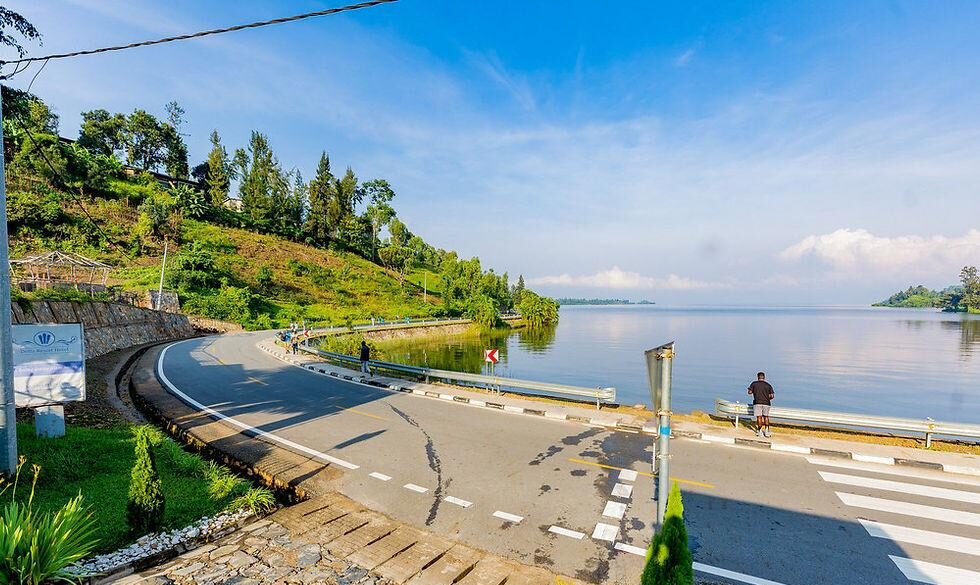
Lake Kivu runs along Rwanda’s western border for roughly 90 km, and the road that hugs its shore is one of the prettiest drives in East Africa. This Lake Kivu driving guide walks you through the main routes, the towns worth stopping in, and how to handle the hills behind the wheel. Pick up a Kigali car rental, point it west, and give yourself more time than the map suggests.
The Lake Kivu Driving Guide in One Glance
Most lake trips start in Kigali and follow one of two shapes. You either drive straight to Rubavu (Gisenyi) and work south along the shore, or you head to Karongi first and split the lake into two halves. Either way, you end up on the Kivu Belt road, which links Rubavu, Karongi and Rusizi along the water.
| Leg | Typical drive time | Road notes |
|---|---|---|
| Kigali → Rubavu | 3–3.5 hours | Tarmac via Musanze; mountain bends after Musanze |
| Kigali → Karongi | About 3 hours | Tarmac via Muhanga; steep descent to the lake |
| Rubavu → Karongi | About 3 hours | Kivu Belt road; constant curves and village traffic |
| Karongi → Rusizi | About 3 hours | Kivu Belt road; quieter, very hilly |
| Rusizi → Nyungwe | About 1.5 hours | Tarmac climbing into the forest |
These times assume dry weather and a few photo stops. Treat them as a minimum, not a target.
Descending the Rift Escarpment
The road down to the lake is the first real test of the trip. Whether you come from Musanze or Muhanga, you drop hundreds of metres in a series of tight hairpins. The views open up suddenly, so it is tempting to look around. However, keep your eyes on the road and use the pull-offs instead.
How to drive the hairpins
- Shift down a gear early and let the engine hold your speed on long descents.
- Avoid riding the brakes. Hot brakes fade, especially in a loaded vehicle.
- Expect cyclists carrying heavy loads, often on the inside of bends.
- Give way to buses and trucks that need the full width to turn.
Rwanda drives on the right, so the lake views on the southbound Kivu Belt run are mostly on your passenger side. That is good news for whoever is holding the camera.
Three Lakeside Towns Worth a Night Each
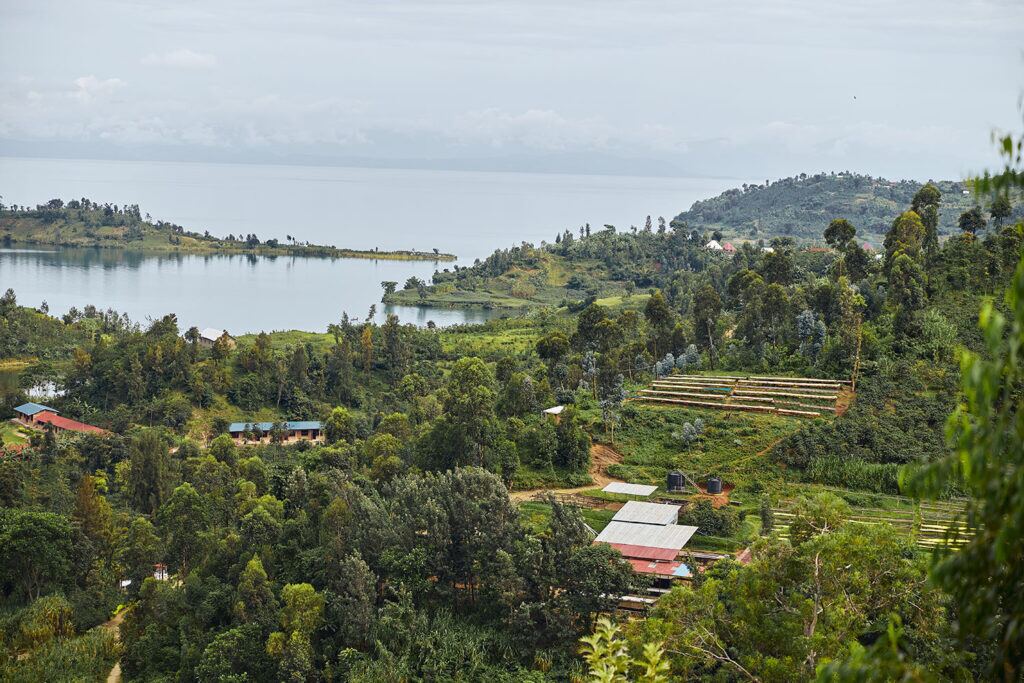
The Kivu shore has three main bases. Each one has a different mood, so it pays to sleep in at least two of them.
Rubavu (Gisenyi)
Rubavu is the liveliest stop, with a sandy public beach, lakeside hotels and a busy evening scene. Go down to the shore at dusk to watch the fishing boats head out. The crews often sing as they paddle, and their lanterns dot the water after dark. Rubavu also sits right on the border with Goma in DRC, so follow current travel advice before planning anything across it.
Karongi (Kibuye)
Karongi feels calmer. The town sits on a ragged peninsula with dozens of small islands just offshore. Many visitors park the car for a day and take a boat to Napoleon’s Island, with its fruit bats, or to Amahoro Island. You can read more about the boat side of things in this Lake Kivu boat cruise guide.
Rusizi (Cyangugu)
Rusizi sits at the southern tip of the lake. Few tourists stay long, which is exactly why some people love it. It is also the natural jumping-off point for Nyungwe Forest, so it fits neatly at the end of a south-bound trip.
Detours Along the Kivu Belt
The main road is beautiful, but the side tracks are where the region shows its character. Several detours are short, and most are best done in daylight.
- Tea estates near Rubavu: bright green slopes just inland from town, good for a morning walk.
- Coffee washing stations: small cooperatives between Rubavu and Karongi welcome visitors during the harvest season, roughly March to June.
- Congo Nile Trail viewpoints: the hiking and biking trail crosses the road several times, with quiet viewpoints above the lake.
- Hidden coves: small fishing bays reached by dirt tracks off the main road.
Some of these tracks turn slippery after rain. That is where a proper 4×4 earns its keep, because the extra ground clearance and low-range gearing keep you moving on red clay.
Picking a Vehicle for the Lake Roads
The Kivu Belt itself is tarmac, so any sound car can manage it in the dry season. The choice really depends on your detours, your group size and the rest of your itinerary.
| Vehicle | Best for |
|---|---|
| Toyota RAV4 | Couples sticking mainly to tarmac, with easy fuel economy |
| Land Cruiser Prado | Small families adding coffee-farm tracks and Nyungwe |
| Land Cruiser Safari | Groups combining the lake with Akagera game drives |
Also think about luggage. The lake loop usually means several hotel changes, so a big boot makes daily packing much easier. If you want to camp, ask about a vehicle with a rooftop tent and gear, then confirm exactly what is included in your quote.
Safety Notes for This Lake Kivu Driving Guide
The lake roads are generally calm, yet they demand steady attention. Villages run right up to the tarmac, and children often walk along the edge on their way to school.
- Keep to the speed limits, which drop sharply through towns and trading centres.
- Avoid driving the Kivu Belt after dark. Unlit bends, pedestrians and livestock make night driving hard work.
- Fill the tank in Rubavu, Karongi or Rusizi. Fuel stations are sparse in between.
- Carry some cash in Rwandan francs for small shops and boat trips.
- In the rainy months, check with locals before taking any dirt detour.
Finally, build slack into your plan. A puncture or a road works stop can easily add an hour, and the scenery is too good to rush.
Linking the Lake With Gorillas and Chimps
Lake Kivu sits neatly between Rwanda’s two great primate parks. So it works well as a rest stop in the middle of a wildlife trip.
From the north
Start in Volcanoes National Park for gorilla trekking. Musanze to Rubavu is a short drive, so you can trek in the morning and watch the sunset over the lake the next evening. A Rwanda gorilla permit costs US$1,500, and RDB sets the rules, so book early.
To the south
Finish in Nyungwe National Park for chimpanzee tracking and the canopy walk. From Rusizi, the forest is only about an hour and a half away. After that, the drive back to Kigali takes around 5–6 hours.
A sample week could look like this: Kigali to Musanze, gorillas, Rubavu, Karongi, Rusizi, Nyungwe, then back to Kigali. It is a full loop of the country’s west without retracing your steps.
Frequently Asked Questions
Is the Kivu Belt road paved all the way?
The main road between Rubavu, Karongi and Rusizi is tarmac. However, side roads to coves, coffee stations and viewpoints are often dirt, and they can turn muddy after rain.
How many days do I need for the lake drive?
Three nights is a comfortable minimum, one each in Rubavu, Karongi and Rusizi. With a single night, you will spend most of your time in the car.
Can I drive into DRC from Rubavu or Rusizi?
Both towns sit on the DRC border, but taking a rental car across needs special permission and depends on current security advice. Ask us before you plan it, and assume it is not possible unless we confirm it in writing.
What is the best time of year for this trip?
The dry seasons, roughly June to September and December to February, give the clearest views and the easiest side roads. The green seasons are lush and quiet, but plan shorter driving days.
Plan Your Lake Kivu Road Trip
Tell us your dates, group size and the stops you have in mind, and we will suggest a vehicle and route that fits. You can also browse our Rwanda road trip ideas for more inspiration. Message us on WhatsApp at +250 725 074659 or email info@4x4carrentalrwanda.com.