
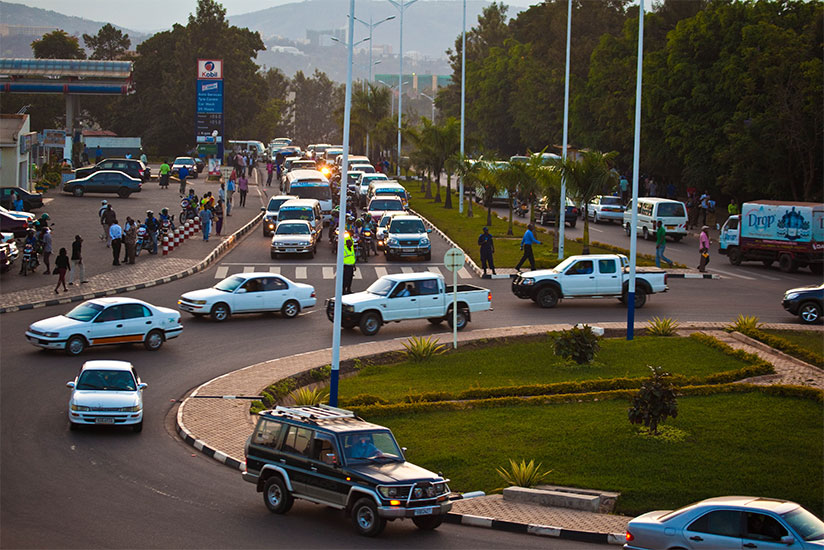
Rwanda’s main highways are smooth and well signed, but Rwanda rural roads are a different story once you turn off the tarmac. Expect red murram tracks, steep switchbacks, busy village centres and the odd herd of goats. Here is what the countryside really looks like from behind the wheel of a rental 4×4, and how to handle it calmly.
What Rwanda Rural Roads Actually Look Like
Most journeys start on good asphalt. The national roads linking Kigali to Musanze, Huye, Rubavu and the Akagera area are paved and in decent shape. The change comes on the final stretch to a lodge, a trailhead or a village guesthouse.
Murram and gravel tracks
Many feeder roads are compacted red earth, known locally as murram. In dry weather they are firm but dusty and corrugated. After rain, the same surface turns slick and sticky, and ruts form quickly where trucks have passed.
Volcanic rock and steep gradients
Around Volcanoes National Park, some access roads to trekking starting points are rough lava-stone tracks. They shake the vehicle hard at speed, so slow down and pick your line. In the southwest, roads climb and drop sharply between ridges, with tight bends and few barriers.
Narrow lanes through farmland
In tea and banana country, tracks often fit only one vehicle. You will sometimes reverse to a wider spot so a truck or minibus can pass. Patience works far better than the horn.
Who Else Shares the Road in the Countryside
Traffic outside towns is light by car count, yet the road is rarely empty. In fact, the biggest surprise for visitors is how many people use it on foot and by bike.
- Pedestrians: children walking to school, farmers carrying produce and people heading to market all walk on the road edge.
- Bicycle taxis: riders often carry heavy loads of bananas, jerrycans or passengers, and they wobble on climbs.
- Motorbike taxis: fast, agile and likely to overtake on either side near towns.
- Livestock: goats and cattle cross without warning, especially in the eastern province near Akagera.
- Trucks and minibuses: they stop suddenly to load passengers, often just past a bend.
So drive as if someone will step out at any moment. Slow right down through trading centres, and give cyclists a full lane width when you pass.
How the Seasons Change Driving Conditions
Rwanda has two dry seasons, roughly June to September and December to February. Rural tracks are at their best then, although dust cuts visibility behind other vehicles. Keep your distance and use headlights on dusty stretches.
The rainy months, around March to May and October to November, bring the real challenge. Short, heavy downpours can turn a murram climb into a mud slide within minutes. However, most storms pass quickly, so waiting 30 minutes is often the smartest move. If you are timing a gorilla trip, this guide to the best time to visit Rwanda for gorilla trekking explains the seasonal trade-offs.
Mud-driving basics
- Engage 4WD before the slippery section, not halfway up it.
- Use a low gear and steady throttle; avoid sudden braking or steering.
- Stay out of deep ruts if you can, and keep momentum on climbs.
- If you lose traction, stop, reverse gently and try a different line.
Choosing a Vehicle for Rwanda Rural Roads
The right car makes rough tracks simple. Ground clearance, tyres and genuine four-wheel drive matter more than size or luxury.
| Trip type | Good choice | Why |
|---|---|---|
| Paved roads plus short gravel sections | Toyota RAV4 | Light, economical, enough clearance for dry murram |
| Volcanoes, Nyungwe and rainy-season tracks | Land Cruiser Safari | High clearance, low-range 4WD, strong suspension |
| Small groups with luggage | Land Cruiser Prado | Comfortable on long days, capable off tarmac |
| Field work and equipment | Hilux Double Cab | Load bed and tough build for remote sites |
Before you leave Kigali, check tyre tread and pressure, the spare wheel, the jack and the wheel spanner. Also ask the team to show you how to engage 4WD on your specific vehicle.
Practical Rules and Habits Off the Main Highways
Rwanda drives on the right, and traffic rules are enforced even in quiet areas. Speed cameras and police checks are common on main roads, so keep to posted limits. Carry your licence, the vehicle papers and your rental agreement at all times.
Fuel and timing
Fuel stations are plentiful in towns but sparse on back roads. Fill up whenever you drop to half a tank. In addition, aim to arrive before dark. Rural roads have no street lights, and pedestrians in dark clothing are very hard to see.
Umuganda Saturday
On the last Saturday of each month, communities take part in Umuganda, a morning of public work. Traffic is restricted for several hours, so plan to start long drives in the afternoon that day.
Realistic drive times from Kigali
- Musanze and Volcanoes: 2 to 2.5 hours
- Akagera main gate: about 2.5 hours
- Rubavu on Lake Kivu: 3 to 3.5 hours
- Nyungwe Forest: 5 to 6 hours
Add extra time for the unpaved final stretch to your lodge, and for photo stops. The views across the terraced hills are worth it.
Self-Drive or Hire a Local Driver?
Confident drivers with some gravel experience usually enjoy self-drive in Rwanda. The roads are safe, people are helpful and navigation apps work well near towns.
On the other hand, a local driver takes the stress out of muddy climbs and unmarked junctions. They know which shortcut floods after rain and where the lodge turn-off really is. Many travellers mix both: self-drive on highways, then a car hire with driver for remote park sections. You can also check our road trip ideas in Rwanda to see which routes involve the most gravel.
FAQ About Driving Rural Rwanda
Do I really need a 4×4 for rural Rwanda?
For paved routes, no. However, for lodge access roads, Volcanoes trailheads and any rainy-season travel, a 4×4 with good clearance is strongly recommended.
Is it safe to drive rural roads at night?
It is best avoided. There is no lighting, and pedestrians, cyclists and animals use the road after dark.
Will my phone navigation work in the hills?
Coverage is good in most areas, but it can drop in deep valleys and forest. Download offline maps before you set off.
What should I do if I get stuck in mud?
Stop spinning the wheels, call our support line and wait. Villagers often help push, and a small thank-you is appreciated.
Planning a countryside route and unsure which vehicle fits? Send your itinerary on WhatsApp to +250 725 074659 and we will suggest the right 4×4 and realistic driving days.