
Driving yourself past zebras, buffalo and baboons is one of the great joys of a Rwanda trip. However, Rwanda wildlife driving has its own rules, and they are different from the highway. This guide covers how to behave inside the parks, what to do when animals block the road, and how to prepare your 4×4 before you pass the gate.
How Rwanda Wildlife Driving Differs from Normal Roads
Outside the parks, Rwanda’s main roads are paved, busy and well signed. Inside a national park, the rules flip. Animals have right of way, tracks are often unpaved, and help can be an hour away.
Each park also feels different behind the wheel:
- Akagera: the only Big Five savannah park, and the one built for self-drive game viewing. Expect gravel and dirt tracks, long open plains and swamp edges.
- Nyungwe: a paved highway runs straight through the rainforest. The challenge here is tight bends, mist and monkeys on the tarmac.
- Volcanoes: you drive to the park headquarters at Kinigi, then on rough feeder roads to trailheads. Trekking itself is on foot.
So, the skills you need depend on where you go. Read up on Akagera National Park before your first game drive.
Golden Rules Inside the Parks
These rules protect the animals, the tracks and you. Rangers do enforce them, and breaking them can end your visit early.
Keep your speed low
Follow the posted park speed limits, which are far lower than the highway. Slow driving lets you spot animals in the grass, and it keeps dust down for everyone. It also gives you time to stop when a warthog dashes across.
Stay on marked tracks
Off-road driving damages grassland and is not allowed. Stick to the official routes on your park map. If a track looks flooded or washed out, turn back rather than forcing a new line.
Stay in the vehicle
Never get out except at designated spots, such as picnic sites and viewpoints. Buffalo and elephants can look calm and move fast. Keep arms and cameras inside when animals are close.
Keep the noise down
Switch off loud music and avoid hooting at animals. Speak quietly when you stop near a herd. You will see far more behaviour when animals feel relaxed.
Animal Encounters: What to Do
Sooner or later, an animal will be on the road in front of you. Here is how to handle the common situations calmly.
| Situation | What to do |
|---|---|
| Elephant on or near the track | Stop at a wide distance and keep the engine running. If ears flap or it walks toward you, reverse slowly. |
| Buffalo herd crossing | Wait until the whole herd has crossed. Stragglers often follow minutes later. |
| Giraffe or zebra in the road | Stop and let them move. Never drive at them to clear the way. |
| Baboons or monkeys in Nyungwe | Slow right down and keep windows up. Do not feed them, even from the car. |
| Hippos near the lake shore | Stay well back, especially near dusk when they leave the water to graze. |
A good habit is to always leave yourself an exit. Park so you can drive forward or reverse without a tight turn. Also, never block another car’s view or escape route at a sighting.
Preparing Your 4×4 for Rwanda Wildlife Driving
Most of the work happens before you reach the park gate. Ten minutes of preparation in Kigali saves hours of trouble in the bush.
Fuel up early
Akagera is about 2.5 hours from Kigali, and there is no fuel inside the park. Fill the tank in Kigali or Kayonza on the way. Game drives burn more fuel than you expect, because you crawl in low gears for hours.
Check tyres and recovery kit
Confirm the spare is inflated and the jack works. Ask how to engage four-wheel drive before you leave, not when you are stuck. A tow strap is useful on muddy tracks in the wet months.
Pack the cabin
- Binoculars and a printed park map, since phone signal is patchy
- Plenty of drinking water and snacks
- A torch, phone charger and power bank
- A bin bag, because you must carry your rubbish out
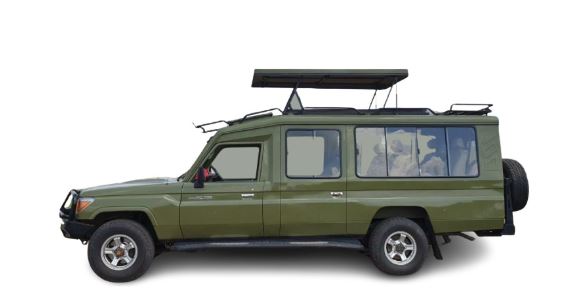
For game drives, a Land Cruiser Safari with a pop-up roof gives you the best viewing height. A Prado or RAV4 works well if you mainly stick to the main circuits in the dry season.
Timing, Seasons and Gate Hours
Animals are most active in the early morning and late afternoon. So, aim to be at the gate when it opens and plan to exit before it closes. Check current gate times and entry fees with the park, as they are set by the park authorities and can change.
Season matters too. From June to September, tracks are dry and dusty, and animals gather near water. From March to May and in October and November, rain can turn black-cotton soil into deep mud. In the wet months, ask rangers at the gate which loops are passable that day.
Don’t plan to drive inside a park after dark. Night driving is restricted, and potholes and animals are hard to see. If you want to stay longer, book a lodge or campsite inside or near the park.
Self-Drive or Driver-Guide?
Many visitors handle Akagera on their own and love it. However, a local guide can double what you see. In Akagera, you can usually hire a guide at the gate to ride with you for the day; confirm availability when you arrive.
If you would rather keep your eyes on the animals, consider car hire with a driver. Your driver knows the tracks, reads animal behaviour and handles the mud. For independent travellers, our self drive Rwanda option includes a route briefing before you set off.
Planning a short trip? The 2 days Akagera safari gives you a sunset drive, a full morning circuit and time for a boat trip on Lake Ihema.
Frequently Asked Questions
Can I self-drive in all Rwanda national parks?
You can drive yourself in Akagera and on the public road through Nyungwe. In Volcanoes, you drive to the park office and trailheads, but gorilla trekking is always on foot with rangers.
What should I do if my car gets stuck in Akagera?
Stay in the vehicle, engage four-wheel drive and try reversing gently along your own tracks. If that fails, call the park and your rental team, and wait for help inside the car.
Is it safe to stop for photos next to animals?
Yes, as long as you stay in the vehicle and keep a respectful distance. Switch off the engine only when you are sure the animals are calm and you have a clear exit.
Do I need a 4×4 for Nyungwe?
The main road through Nyungwe is paved, so a 4×4 is not essential there. However, a 4×4 is helpful for side roads to lodges and trailheads, especially in the rainy season.
Book Your Safari Vehicle
Tell us which parks you plan to visit and when, and we will match you with the right 4×4 and a route briefing. WhatsApp or call +250 725 074659, or email info@4x4carrentalrwanda.com.