
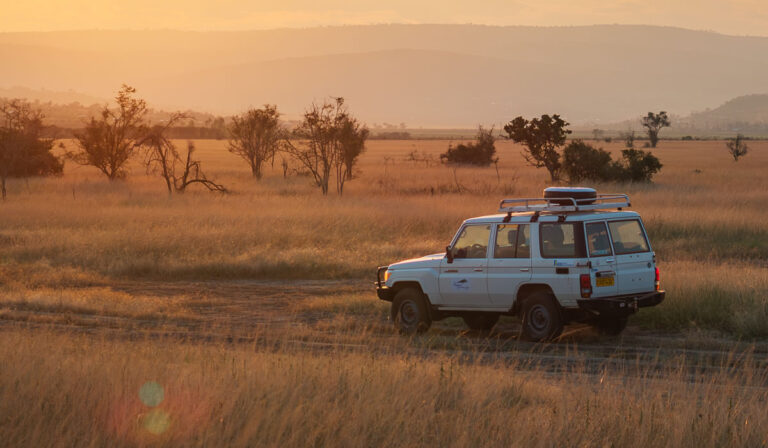
Every week or so, someone stands at our counter in Kigali holding a set of keys and asks a question they didn’t quite mean to ask out loud: “Wait, am I actually supposed to drive this myself?” It’s a fair question. Rwanda isn’t a country most people have driven in before, and the idea of navigating unfamiliar roads on your first morning in a new country can feel like a lot. But here’s the thing — plenty of first-time visitors self-drive here without any trouble at all, and plenty of experienced travelers still prefer to hand the wheel to someone else. Neither choice is the “right” one. It depends entirely on what kind of trip you’re actually trying to have.
What Self-Drive Actually Involves in Rwanda
Rwanda’s road network is genuinely one of the better-maintained in the region — the main routes connecting Kigali to Musanze, Huye, and the western lakeshore are paved, well-signed, and free of the kind of chaos you might be picturing. Self-driving means you set the pace: stop for photos when the terraced hills look particularly good, linger an extra hour at a market, change your plans on a whim if the weather turns. It also means you’re the one reading the map, handling the odd police checkpoint, and making the call on where to park in Kigali’s compact but occasionally confusing downtown streets. None of it is hard. It’s just yours to manage.
What You Get With a Chauffeur-Driven Rental
A driver-guide changes the equation, not because self-driving is difficult, but because it frees up your attention. Instead of watching the road, you’re watching the country go by. A good driver also comes with local knowledge that doesn’t show up on any map — which stretch of the Cyanika crossing tends to back up, what time to leave Musanze to beat the tour buses to the park gate, which roadside stall actually has good brochettes. If your trip involves a lot of early starts, long driving days, or a border crossing you’ve never handled before, a driver-guide takes a genuine amount of thinking off your plate.
Five Questions Worth Asking Yourself
- Have you driven on unfamiliar roads abroad before, and did you enjoy it or dread it?
- Is your itinerary crossing into Uganda, where you’ll need to switch from right-hand to left-hand traffic mid-trip?
- Are you traveling solo, or is there someone to share the driving on longer days?
- Do you want the experience of actually navigating a new country, or do you just want to see it?
- How many early-morning starts does your itinerary actually have?
If you answered “dread it,” “yes, crossing the border,” “solo,” or “just want to see it” to most of those, a driver-guide is probably the better fit. If you’re an experienced traveler who genuinely likes the challenge of a new road system, self-drive will likely be the more rewarding option of the two.
The Cost Difference, Honestly
Self-drive is cheaper, full stop — you’re not paying for a second person’s time, meals, and accommodation along the route. But “cheaper” doesn’t always mean “better value.” If a driver-guide means you spend less mental energy on logistics and more of it actually being present at Volcanoes National Park or the Kazinga Channel, that’s worth something too, even if it doesn’t show up on the invoice.
Our Honest Take
If this is your first trip to East Africa, your itinerary includes a border crossing, or you’re traveling with a group who’d rather relax than co-pilot, book the driver-guide. If you’ve road-tripped abroad before and a new set of roads sounds more exciting than exhausting, self-drive is genuinely one of the better ways to see Rwanda — you’ll notice things a bus window would have hidden from you. Either way, the vehicle is the same, the insurance is the same, and you can add or drop the driver a few days before you travel if your plans change.