
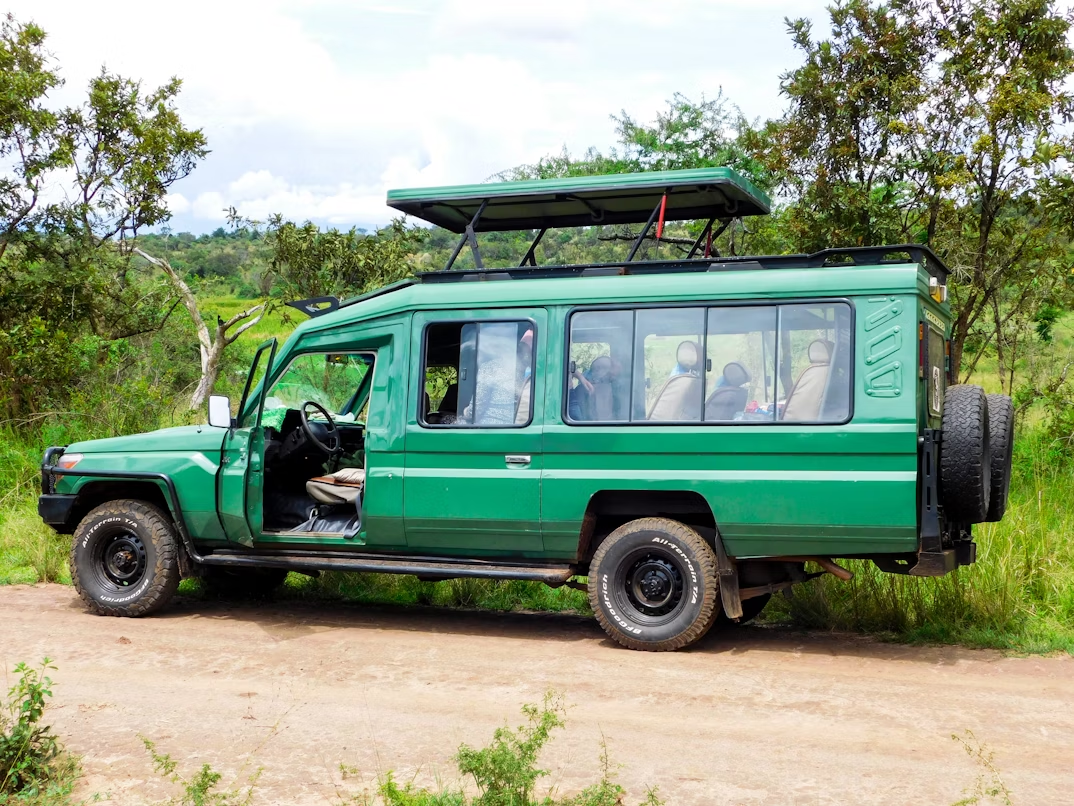
The road through Nyungwe is one of the most beautiful drives in Africa, and one of the most demanding in Rwanda. It climbs through dense rainforest, twists around hundreds of bends and often disappears into mist. This Nyungwe driving guide explains the route, the road conditions and how to prepare your vehicle and yourself for the forest.
Nyungwe Driving Guide: The Route From Kigali
Most drivers reach Nyungwe from Kigali via Muhanga and Huye. The road is paved the whole way, and the journey takes 5 to 6 hours. After Huye, the land rises and the forest begins at the eastern park boundary.
The main road then crosses the park from east to west, ending near Rusizi on the shore of Lake Kivu. Lodges, the visitor centre and trailheads sit along or just off this road. For park details, see our Nyungwe National Park page.
Key points on the way
| Stop | What to do there |
|---|---|
| Muhanga | Fuel, coffee and a short break |
| Nyanza (short detour) | King’s Palace Museum |
| Huye | Last major town; fuel, cash and supplies |
| Eastern park boundary | Forest begins; slow down |
| Uwinka area | Visitor centre, canopy walk and trailheads |
| Gisakura | Tea estates and lodges on the western side |
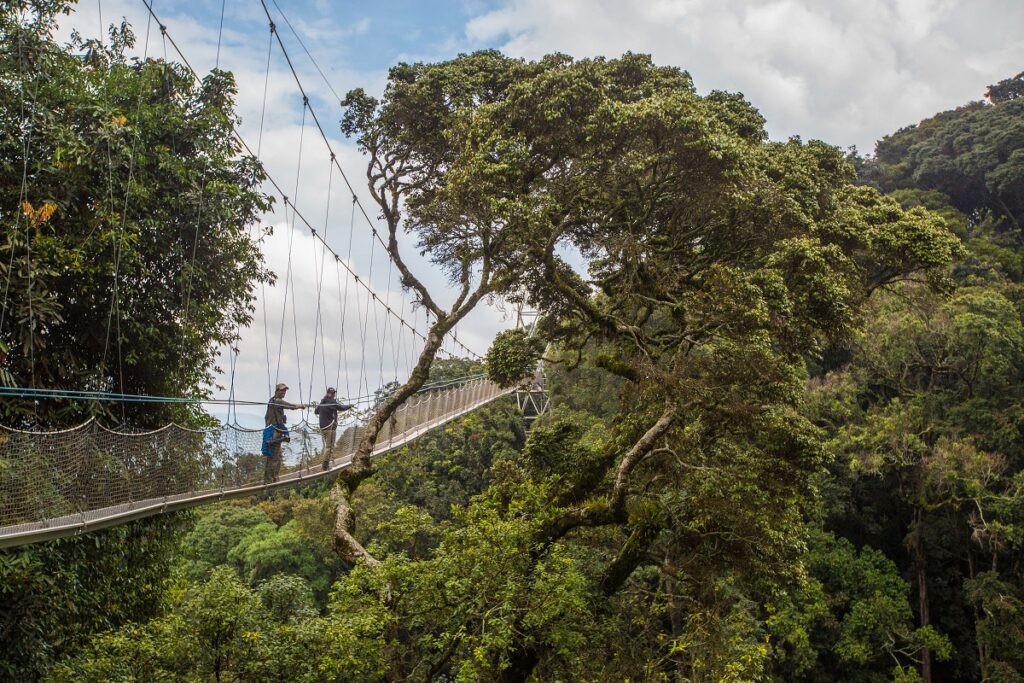
What the Forest Road Is Really Like
The tarmac through Nyungwe is generally good. However, the road is narrow in places, with tight hairpins and steep drops. There are no towns inside the forest stretch, and mobile signal can come and go.
Mist and rain
Nyungwe is one of the wettest places in Rwanda. Rain can fall in any month, and thick mist often settles on the higher sections. Visibility can drop to a few metres with little warning.
Wildlife on the road
Monkeys, especially L’Hoest’s monkeys and baboons, often sit by the roadside or cross in front of cars. Slow down when you see them, and never feed them. Also watch for pedestrians and cyclists near the forest edges.
Heavy vehicles
Trucks use this road as a route to Rusizi and the border. Climbing trucks are slow, so be patient and overtake only where you can see well ahead.
Preparing Your Vehicle Before You Leave
A quick check in Kigali or Huye saves trouble in the forest, where help can be far away.
- Fuel: fill up completely in Huye. There is no fuel inside the forest section.
- Tyres: check pressures and tread, plus the spare, jack and wheel brace.
- Lights: make sure headlights, fog lights and indicators all work.
- Wipers: good blades and full washer fluid are essential in the rain.
- Brakes: the long descents test them, so report any concerns before you set off.
A capable 4×4 such as a Land Cruiser Prado is ideal. It gives you clearance for lodge driveways and trailhead tracks, plus a reassuring feel on wet tarmac.
Driving Techniques for Forest Roads
Forest driving rewards patience. These techniques help you stay in control.
- Keep speed low, especially entering bends you cannot see around.
- Use a lower gear on long descents to save your brakes.
- Switch on headlights in mist, even during the day.
- Leave a big gap behind trucks so you can see the road ahead.
- Pull over fully at safe spots for photos, never on a bend.
- Drive in daylight only; aim to arrive before sunset around 6 pm.
Remember that Rwanda drives on the right. If you are coming from Uganda or Kenya, take care at junctions and when overtaking.
Nyungwe Driving Guide by Season
Conditions change through the year, so adjust your plans to the season. The drier months, roughly June to August, bring the best visibility and firmer tracks to trailheads. Even then, carry rain gear, because showers still pass through the forest.
The wetter months, especially March to May and October to November, bring heavier rain and more frequent mist. Landslides can occasionally affect the road after storms. Therefore, check conditions with your lodge or with us before setting off, and allow extra time.
Planning Your Activities Around the Drive
Chimpanzee tracking starts very early, so stay at a lodge near the meeting point the night before. The canopy walkway and forest hikes are easier to fit in, but they still need permits. Fees are set by the park and change, so check current rates when you book.
Many travellers arrive in Nyungwe from Lake Kivu instead of Kigali. That route follows the lake south to Rusizi before climbing into the forest from the west. Either way, plan at least two nights so you are not driving and trekking on the same tiring day.
A sample three-day visit
- Day 1: Drive Kigali to Nyungwe via Huye, arriving mid-afternoon.
- Day 2: Early chimp tracking, then the canopy walk.
- Day 3: Morning forest hike, then drive west to Lake Kivu or back to Kigali.
What to Pack in the Car
- Rain jackets and a warm layer, as the forest is cool and damp.
- Drinking water and snacks for the long stretch without shops.
- Offline maps, a power bank and a car charger.
- A small first-aid kit and a torch.
- Permits, passports and vehicle papers in a waterproof pouch.
Prefer not to drive the forest yourself? Our car hire with driver option puts a local driver who knows every bend behind the wheel.
Nyungwe Road FAQs
Do I need a 4×4 for Nyungwe?
The main road is paved, so it is not strictly required. However, a 4×4 is safer in heavy rain and handles lodge and trailhead tracks much better.
How long does it take to cross the forest?
Allow two to three hours to cross the park itself, longer if you stop for viewpoints or monkeys.
Is it safe to drive through Nyungwe at night?
Night driving is not recommended. Mist, bends and wildlife make it much riskier after dark.
Where should I refuel?
Fill up in Huye from the east or Rusizi from the west.
Book a Forest-Ready 4×4
Tell us your dates and route, and we will prepare a vehicle suited to Nyungwe’s roads. Message us on WhatsApp at +250 725 074659 or email info@4x4carrentalrwanda.com.