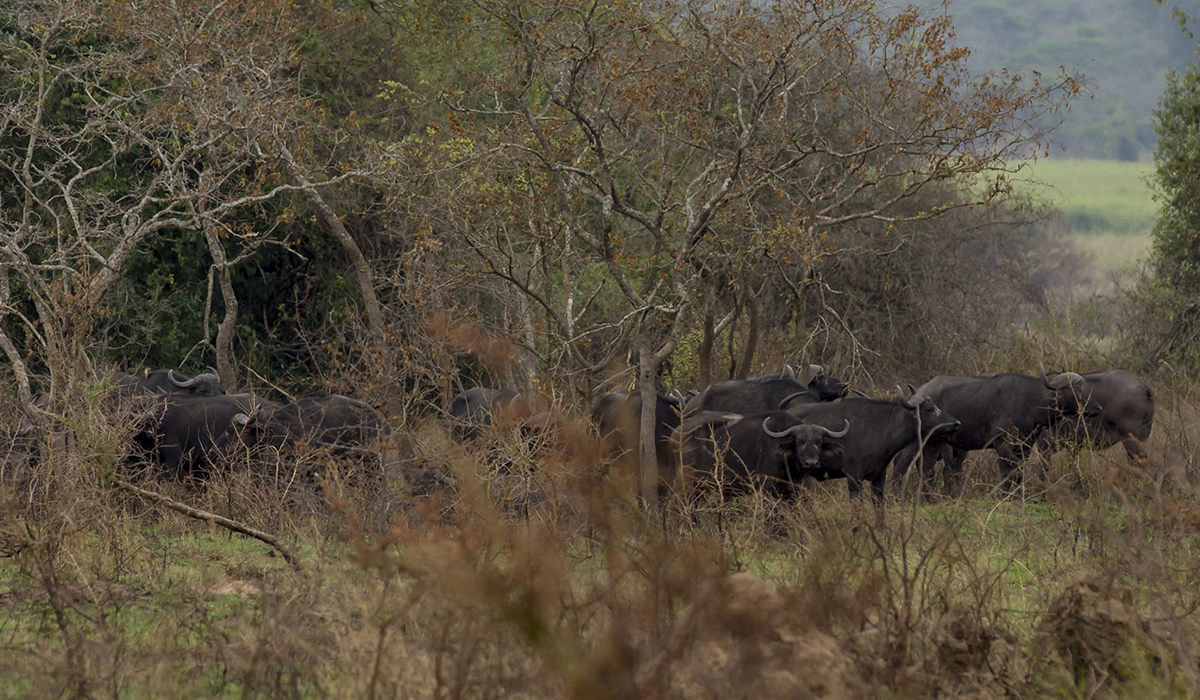
The last lion disappeared in 2001. Nobody made a ceremony of it. There was no…
A Solo Traveller’s Guide to Volcanoes National Park
Rwanda’s ancient volcanic highlands hold creatures found nowhere else on earth — and you don’t need a travel companion to find them.
The alarm goes off at 4:45 a.m. and the air inside the banda is cold enough to make you question every decision that led you here. Then you remember: today is gorilla day. You pull on your layers, lace up your boots, and step outside into the dark, where the silhouette of the Virunga volcanoes cuts a jagged line against a sky still thick with stars. Doubt evaporates. You are exactly where you are supposed to be.
Volcanoes National Park sits in Rwanda’s northwest corner, pressed against the borders of Uganda and the Democratic Republic of Congo. It protects a chain of eight ancient volcanoes draped in montane forest, bamboo thickets, and afroalpine moorland — a landscape so improbable it looks like someone stacked Africa on top of Scotland. For solo travellers who crave genuine wilderness encounters without the noise of a large group, it is close to perfect.
Getting There and Setting Up Base
Musanze (formerly Ruhengeri) is the gateway town, roughly two hours by road from Kigali. The drive itself is a pleasure — Rwanda’s famous thousand hills rolling past your window in gradients of green, terraced farms stitching the slopes all the way to the ridgeline. Buses and shared taxis run regularly from Kigali’s Nyabugogo terminal, but many solo travellers prefer to hire a private car or join a shuttle, since you’ll want flexibility on the mornings of your treks.
Accommodation ranges from budget guesthouses in Musanze town to mid-range lodges and high-end volcanic-view retreats near the park boundary. As a solo traveller, the lodges clustered around Kinigi — the small community closest to the park headquarters — put you in the best position logistically. Most offer single-occupancy rooms without a brutal single supplement if you book directly, and the staff are used to independent travellers arriving with big packs and bigger questions.
Permits are non-negotiable and must be booked in advance through the Rwanda Development Board. At $1,500 USD for a gorilla trekking permit, it is the single largest expense of the trip — but it funds conservation directly, and that knowledge sits differently when you are standing ten metres from a silverback.
The Gorilla Trek: What Nobody Quite Prepares You For
Briefings begin at the park headquarters by 7 a.m. You’ll be assigned to a habituated gorilla family — there are over a dozen — based on your fitness level and the trackers’ morning radio reports of where each group slept. Solo travellers often find themselves slotted into groups with other independent adventurers, which makes for surprisingly good company on the trail.
The trek itself can last anywhere from thirty minutes to six hours depending on where the gorillas have moved. A lead guide cuts through the vegetation with a machete while trackers radio ahead, triangulating the family’s position. You follow single file, ducking under hagenia branches, scrambling over root systems, pushing through dense stands of stinging nettles that even the thickest gloves cannot fully defeat. The forest smells of wet earth and wild garlic.
Then — without announcement — the guide stops, holds up a fist, and whispers: “They are here.”
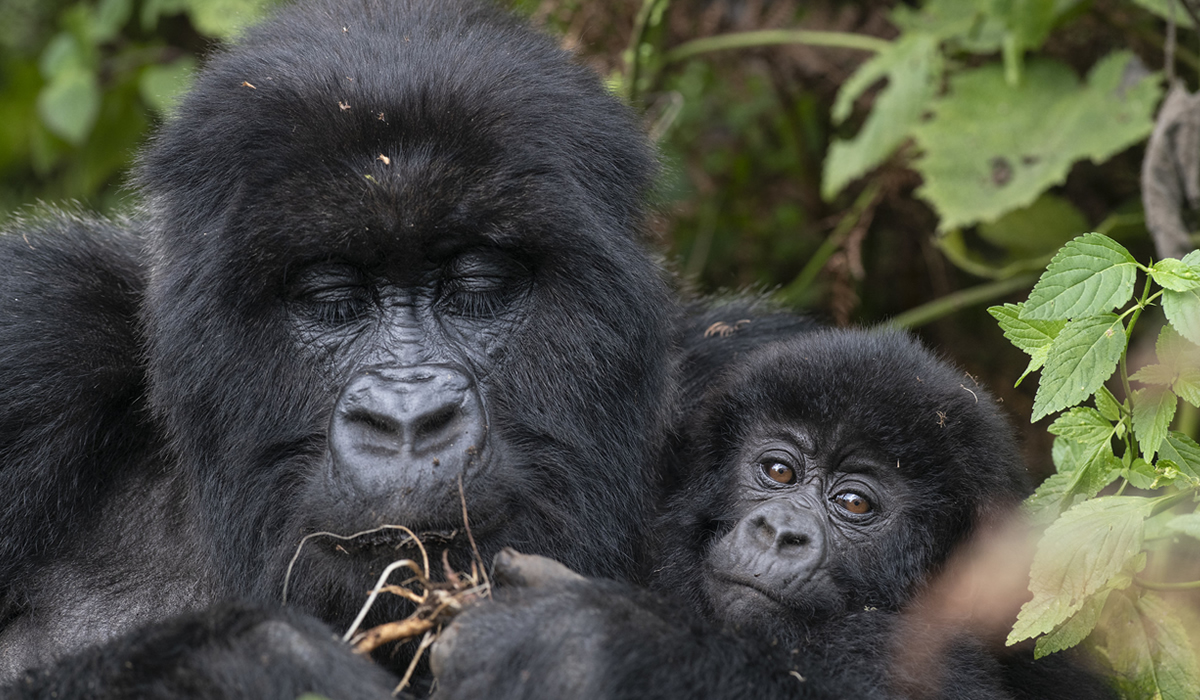
Nothing in wildlife television prepares you for the reality of a mountain gorilla in person. The sheer scale of an adult silverback, the absolute stillness of an infant clinging to its mother’s back, the disquieting intelligence in the eyes of a juvenile who has decided to stare back at you — it lands somewhere between awe and mild existential crisis. You have one hour with the family. It passes in approximately four minutes, subjectively speaking.
As a solo traveller, you have an advantage here that couples and groups sometimes miss: you can position yourself freely within the viewing area, crouch low, move quietly, and absorb the experience on your own terms without negotiating angles with a partner or waiting for someone else’s camera.
Golden Monkeys: The Trek That Flies Under the Radar
Most visitors arrive for gorillas and leave without knowing that Volcanoes National Park also protects a healthy population of golden monkeys — and that a dedicated golden monkey trek is available for a fraction of the gorilla permit cost.
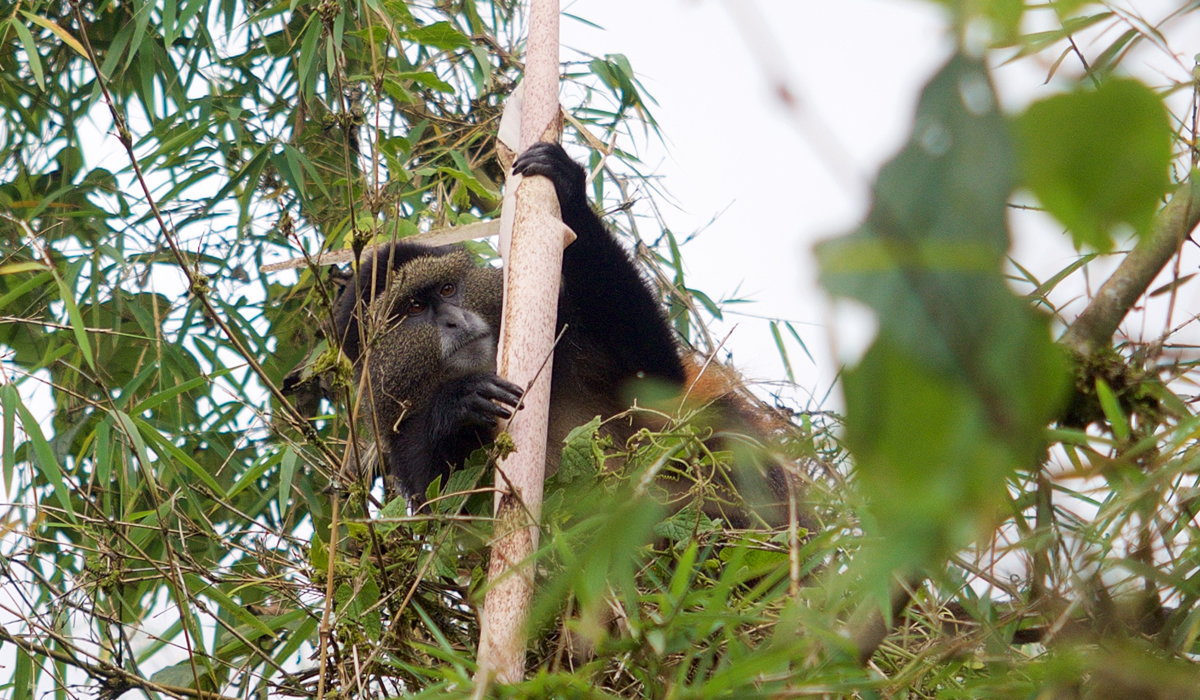
These creatures are endemic to the Virunga Massif and found nowhere else on the planet. They travel in large, boisterous troops through the bamboo zone of the lower slopes, their burnt-orange and black colouring almost too vivid to seem real against the green bamboo light. Where gorillas carry gravitas, golden monkeys carry chaos: they leap, squabble, chase each other through canopy gaps, and occasionally drop bamboo shoots on your head.
The golden monkey trek is shorter and less strenuous than the gorilla trek, making it an ideal day if you are spacing out your activities, recovering from altitude, or simply want a different pace. It is also, frankly, more fun — loud, frenetic, and shot through with laughter from every member of the group. As a solo traveller looking to meet other people on the road, golden monkey morning is the social event of the park itinerary.
Birding the Volcanoes: A Parallel Universe
Volcanoes National Park sits within the Albertine Rift, one of Africa’s most important birding zones. Over 200 species have been recorded within the park, and a significant number are Albertine Rift endemics — birds found in no other region of the world.
You don’t need to be a dedicated birder to appreciate them. On any gorilla or golden monkey trek, you’ll likely encounter Rwenzori turacos flashing their crimson wing panels between the trees, Handsome Francolins rustling through the undergrowth, and — if you are paying attention at dawn — the exquisite call of the African hill mynah drifting down from the canopy. The vermiculated fishing owl haunts streams near the forest edge, and the strange, prehistoric-looking great blue turaco moves through the upper bamboo with the urgency of a bird that has somewhere important to be.
For those who want to birding as a primary activity, local guides with specialist knowledge can be arranged through operators in Musanze. A dawn walk along the forest edge — before the main trekking groups set out — offers the quietest and most productive window.
Hiking the Volcanoes: Going Higher
The park’s eight volcanoes are not merely backdrop. Four of them — Karisimbi, Bisoke, Muhavura, and Sabyinyo — are open to hikers, and each offers a distinct experience.
Mount Bisoke (3,711m) is the most accessible full-day summit hike, leading through forest zones rich with wildlife before emerging onto the rim of a beautiful crater lake. On a clear morning, the view across into the DRC is extraordinary — a reminder that you are standing at the edge of central Africa’s great geological drama.
Mount Karisimbi (4,507m), the highest peak in the Virungas, is a two-day climb requiring overnight camping just below the summit. It is cold, demanding, and spectacular. For a solo traveller comfortable with altitude and physical effort, Karisimbi offers a kind of solitude that feels genuinely earned.
Sabyinyo (3,645m) is a ridge scramble along the triple border of Rwanda, Uganda, and the DRC — a ridge where you can stand in three countries simultaneously, which has a certain appeal to the solo travel mindset.
All volcano hikes must be arranged through the park office and require a guide. Permits are less costly than primate trekking and can often be booked a day or two in advance.
Practical Notes for Solo Travellers
Best time to visit: The dry seasons — June to September and December to February — offer the easiest trekking conditions, though the park is accessible year-round. The short rains bring lush greenery and fewer crowds.
Altitude: The park sits between 2,400m and 4,507m. Give yourself a day to acclimatise in Musanze before undertaking strenuous activity.
What to pack: Layered clothing is essential — mornings are cold, midday can be warm, and the forest is always wet. Waterproof trousers, gaiters, and long gloves for the nettles are not optional. A good pair of broken-in hiking boots matters more than almost anything else.
Solo safety: The park is extremely well managed, with experienced guides and trackers on every outing. Solo travellers face no particular safety concerns beyond standard wilderness awareness.
Budget: Beyond the gorilla permit, daily costs in the Musanze area are modest. A guesthouse room, meals, and local transport can be managed comfortably for $40–70 per day. The golden monkey permit currently costs $100 USD and volcano hike permits range from $75 to $100 per peak.
The Morning You Leave
You will pack your bag in the dark again, as you unpacked it. The volcanoes will be there in the window — Karisimbi with its frequent cap of cloud, Bisoke’s clean cone catching the first light. You’ll think about the silverback who looked through you as if you were made of glass, the golden monkey that landed on a branch three feet from your face and blinked, the turaco’s crimson flash.
Solo travel earns its rewards in moments of unmediated encounter. Volcanoes National Park offers them in abundance — not just one headline species, but an entire layered world of creatures, landscapes, and improbable mornings that belong entirely to you.
Entry permits and trek bookings for Volcanoes National Park are managed by the Rwanda Development Board. Most Kigali-based tour operators can assist with logistics for independent travellers.
Related Posts