The ranger's voice was barely a whisper. "Do not run. Do not make direct eye…
The Return of the Big Five in Akagera National Park
The last lion disappeared in 2001. Nobody made a ceremony of it. There was no obituary, no vigil at the park gates. A farmer somewhere near Akagera National Park likely found another carcass — a cow, a goat, a source of his family’s income — and reached again for the poison that had become the quiet weapon of a desperate, grinding war between wildlife and the people trying to survive alongside it. And just like that, one of Africa’s most iconic predators was gone from Rwanda, erased not by trophy hunters or shadowy cartels, but by ordinary men protecting ordinary livelihoods.
Six years later, in 2007, the rhinos were gone too. Poached to extinction within the park’s boundaries, their horns worth more per kilogram than gold on the black market, they vanished into the same silence that had swallowed the lions. Akagera, once one of Africa’s largest and most celebrated savanna parks, had been reduced — through civil war, refugee resettlement, illegal grazing, and retaliatory killing — to a shadow of itself.
What happened next is not just a conservation story. It is, in the truest sense of the word, a resurrection.
The Collapse
To understand how far Akagera fell, you have to understand the 1990s. The Rwandan genocide of 1994 did not only destroy human lives — it shattered the country’s infrastructure, its institutions, and its relationship with its own land. In the years that followed, roughly half of Akagera’s territory was de-gazetted to accommodate returning refugees who needed farmland. The park shrank from over 2,500 square kilometres to around 1,100. Poaching surged. Wildlife that had once roamed freely was now hemmed in, hunted, and, in the case of lions, actively poisoned when it preyed on livestock.
The lions didn’t mean to start a war. They were doing what lions do. But for farmers already surviving on the margins, a lion killing cattle was not a wildlife encounter — it was an economic catastrophe. And when the government couldn’t compensate them fast enough or reliably enough, they found their own solution. By 2001, the solution had worked. The lions were gone.
The rhinos followed a different but equally grim trajectory. Black and white rhinos had existed in Akagera, but under the pressure of commercial poaching — feeding insatiable demand in Asia for horn used in traditional medicine and status goods — they couldn’t hold on. One by one, they were taken until none remained. By 2007, Akagera was a Big Five park with, technically, none of the Big Five.
The Turnaround
In 2009, Rwanda National Parks entered into a partnership with African Parks, a nonprofit conservation organization that takes on long-term management of protected areas across the continent. It was a bet — on both sides. Rwanda was betting that professional management could restore what decades of instability had destroyed. African Parks was betting that Akagera, despite everything, still had the bones of something extraordinary.
They were both right.
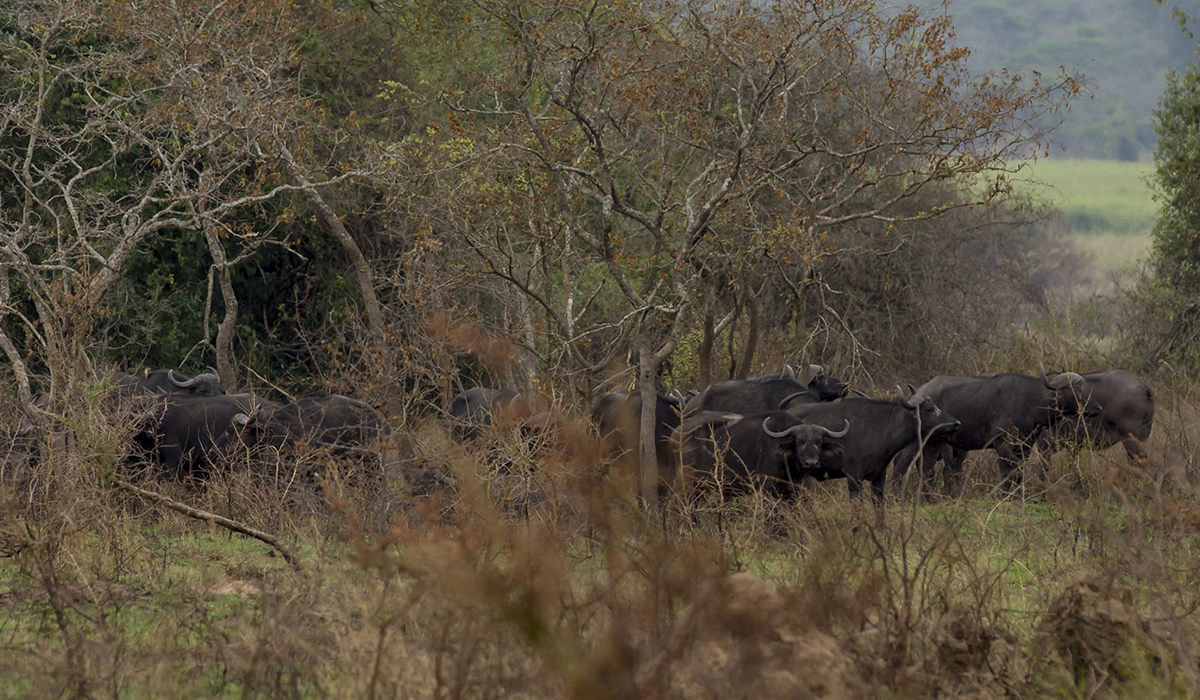
The first decade of the partnership focused on fundamentals: securing the park’s boundaries with a 120-kilometre electric fence that effectively ended illegal grazing and poaching incursions. Anti-poaching units were trained and equipped. Community engagement programs began working with the villages surrounding the park — offering revenue sharing, employment, and the kind of sustained dialogue that turns neighbours into allies rather than adversaries. The wildlife that remained — buffalo, hippo, zebra, giraffe, topi, elephants — began to recover, no longer haemorrhaging to snares and spears.
Then came the moment to attempt the impossible: bring back what had been lost entirely.
The Lions Return
In June 2015, seven lions — five females and two males — were loaded into crates in South Africa and flown to Rwanda. It was a logistical operation that required months of coordination, veterinary preparation, and political will. The lions were fitted with GPS tracking collars. Holding pens had been constructed. Staff had been trained not just in lion monitoring, but in the community protocols that would be essential if — when — the lions ranged beyond the park’s boundaries.
The park held its breath.
The lions survived. They bred. Cub by cub, the population grew, bolstered by careful monitoring, rapid-response teams ready to address any conflict with nearby communities, and a compensation mechanism that meant farmers who lost livestock now had somewhere to turn other than the poison bottle. The formula wasn’t just biological — it was social. Conservation, the team at Akagera had learned, doesn’t fail in the bush. It fails in the village.
Today, Akagera has 72 lions. From seven to seventy-two in a decade.
The Rhino Gamble
If the lion reintroduction was audacious, the rhino programme was breathtaking in its ambition.
In 2017, eighteen eastern black rhinos arrived from European zoos — animals that were, in many ways, ambassadors from captivity being asked to remember something wild. They adapted. They calmed. They slowly, tentatively began to behave like wild rhinos again. The population grew, but slowly — rhinos reproduce at a glacial pace, with females typically producing a single calf every two to four years.
What happened in June 2025 changed the scale of everything.
Seventy southern white rhinos — the largest single rhino translocation ever recorded in history — arrived at Akagera. The operation required military-level coordination: aircraft, veterinary teams, ground crews, and the extraordinary logistical challenge of moving animals that weigh up to two tonnes each across international borders. It was a statement, not just about Akagera, but about what is possible when governments, conservation organisations, and private donors align behind a shared vision.
With 183 rhinos now in the park, Akagera has become one of the most significant rhino sanctuaries on the continent.
The Elephants’ Quiet Comeback
The elephant story is different in character — quieter, less dramatic in its logistics, but no less moving. Akagera’s 176 elephants did not need to be flown in. They were always here, surviving even through the worst years, enduring, waiting. What they needed was space, security, and time. The fencing, the anti-poaching operations, and the gradual restoration of the park’s habitat gave them all three.
Watching a herd of Akagera elephants move through the papyrus marshes at dusk is to witness something that nearly didn’t survive. They carry no tracking collars to indicate their brush with oblivion. They simply move, enormous and unhurried, through a landscape that has learned, slowly and painstakingly, to hold them again.
What Akagera Means Now
In 2026, National Geographic named Akagera National Park one of the Best Places in the World to Travel. It is a designation that would have seemed absurd — cruel, even — twenty years ago, when the park’s most famous residents were gone and the land itself seemed to be losing its argument for existence.
The recognition matters not just for tourism revenue, though that revenue is real and significant: a substantial portion flows directly to surrounding communities, funding schools, health clinics, and infrastructure in the villages that once sent their men to poison lions. It matters because it signals something larger — that a country which suffered one of the worst atrocities of the twentieth century has chosen, with remarkable deliberateness, to be a place where life returns.
Rwanda’s conservation story is inseparable from its broader national story. The same governmental seriousness that has driven economic development, infrastructure investment, and institutional reform has been applied to its wild places. Akagera is not an accident. It is a policy.
A Thriller Without a Final Chapter
Conservation stories are often told in the past tense, as if the work is done. Akagera’s is still being written. Lions still occasionally move beyond the park’s boundaries. The rhino population, though growing, remains fragile relative to the scale of global demand for horn. Climate change is altering rainfall patterns across the region, with consequences for the wetlands and grasslands that support everything from hippos to migratory birds.
But here is what is true right now, in this moment: where there were no lions, there are seventy-two. Where there were no rhinos, there are one hundred and eighty-three. The elephants that endured are thriving. The communities that once poisoned predators now profit from their presence. And a small, landlocked country in the heart of Africa has demonstrated something that the world desperately needs to believe — that what has been broken can, with enough will and enough time, be made whole again.
The last lion was seen in 2001. The next generation of Akagera’s lions will likely never know what absence means.
That is the point.
Related Posts