The last lion disappeared in 2001. Nobody made a ceremony of it. There was no…
Rwanda Safari vs Uganda Safari: Which Should You Choose?
If you’re planning an East African safari with gorilla trekking on the agenda, two destinations will keep coming up: Rwanda and Uganda. Both countries shelter critically endangered mountain gorillas in misty highland forests. Both offer genuinely life-changing wildlife encounters. And both are, frankly, extraordinary places to travel.
But they are not the same experience — and the differences matter depending on who you are, how much time you have, and what kind of trip you’re looking for. Here’s an honest, detailed comparison to help you decide.
The Core Difference: Accessibility vs. Adventure
The single most important distinction between a Rwanda safari and a Uganda safari is how easy each one is to reach and navigate.
Rwanda is built for accessibility. Kigali International Airport receives direct flights from major hubs including London, Brussels, Nairobi, and Dubai. From the airport, the drive to Volcanoes National Park — the heart of Rwanda’s gorilla country — takes roughly two to three hours on well-maintained roads. The journey is scenic, the signage is clear, and the infrastructure is reliable. For a first-time African safari traveler, or anyone who doesn’t want logistics to be the main event, Rwanda removes almost all the friction.
Uganda requires more commitment. Bwindi Impenetrable National Park, home to roughly half the world’s remaining mountain gorillas, sits in the remote southwestern corner of the country. Flights into Entebbe are plentiful, but getting to Bwindi means either a long overland drive of six to eight hours — with road quality varying considerably — or a domestic charter flight to an airstrip near the park. Neither option is difficult for an experienced traveler, but it adds planning complexity, cost, and time.
This accessibility gap is why Rwanda has become the go-to recommendation for first-timers, and it’s a genuinely important selling point, not just a marketing line. When you’re crossing a continent to see gorillas, the last thing you want is to arrive exhausted, uncertain, or delayed.
Gorilla Trekking: Rwanda’s Volcanoes vs. Uganda’s Bwindi
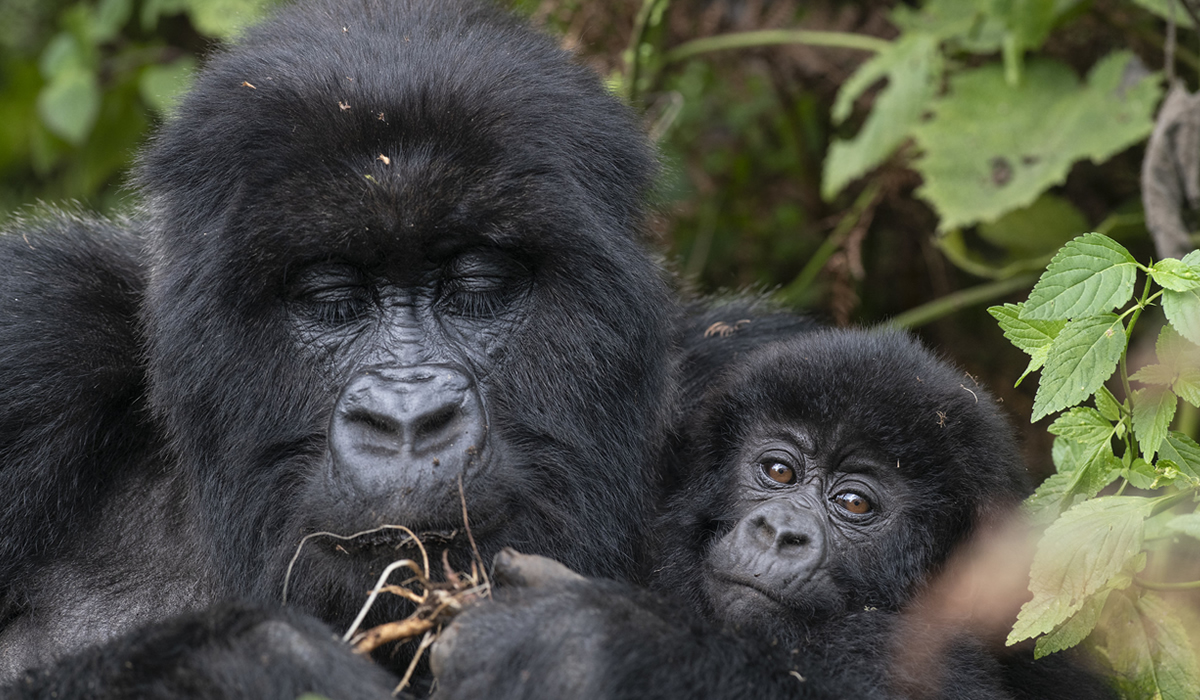
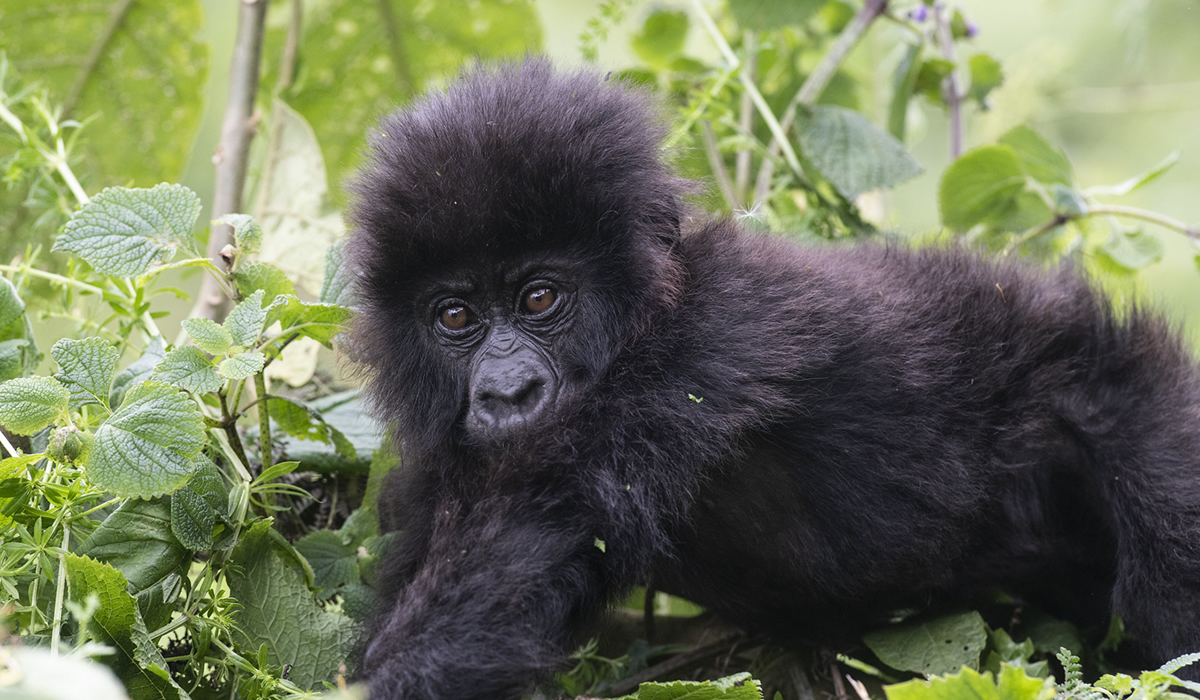
Both countries protect mountain gorillas under the same international conservation framework, and both offer permit-based trekking experiences with a maximum of one hour in the presence of a habituated gorilla family. The gorillas themselves — the same subspecies, Gorilla beringeiberingei — are equally magnificent on either side of the border.
That said, the trekking experience differs.
In Rwanda’s Volcanoes National Park, the terrain is challenging but manageable. The volcanoes rise steeply, and treks can involve altitude (up to around 3,000 metres), but the park is relatively compact and the trails are well-established. Most treks last between two and five hours depending on where the gorilla families have moved overnight. Rwanda’s guides and park rangers are highly professional, and the experience is polished. There are currently 12 habituated gorilla families available for tourism in Rwanda.
In Uganda’s Bwindi Impenetrable Forest, the terrain lives up to its name. The forest is dense, the trails are often muddy, steep, and genuinely demanding, and treks can run from one hour to a full day depending on the family and the terrain. For many travelers, this adds to the sense of adventure and wildness — you feel like you’ve truly earned the encounter. Bwindi has more habituated gorilla families than Rwanda (over 20 available for tourism), which means slightly more permit availability and, in theory, a wider variety of trekking experiences.
Gorilla permit costs are a decisive factor for many travelers. Rwanda currently charges $1,500 USD per permit, making it among the most expensive wildlife experiences in the world. Uganda’s permits are $700 USD per person — still significant, but considerably more affordable, especially for couples or small groups.
If budget is a major consideration, Uganda wins on gorilla permit pricing alone. If you want a shorter, more reliable logistics chain and a high-end, streamlined experience, Rwanda is worth the premium.
Beyond the Gorillas: Wildlife and Safari Diversity
Gorilla trekking tends to dominate the conversation, but a safari is rarely just one experience — and this is where Rwanda and Uganda diverge meaningfully.
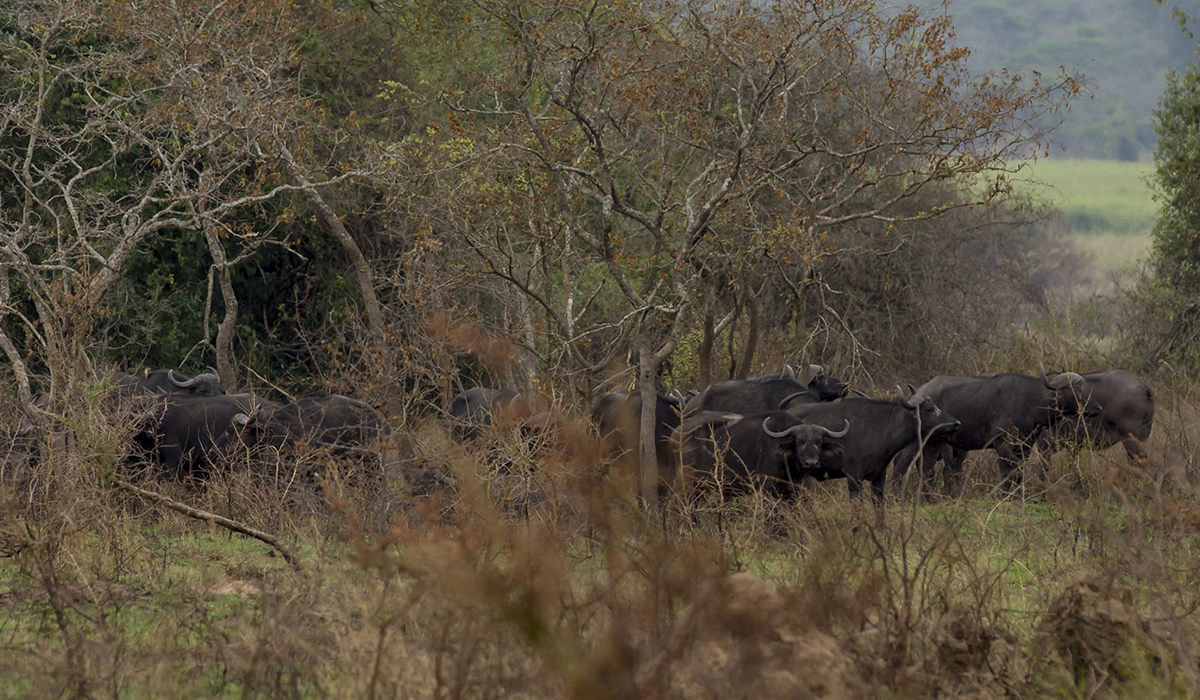
Rwanda’s broader safari offering is centred on a relatively small number of parks. Akagera National Park in the east is a genuine Big Five destination — lions were reintroduced in 2015, and the park now holds elephants, buffalo, hippos, leopards, and black and white rhinos. It’s a compact, well-managed reserve that pairs beautifully with Volcanoes. Nyungwe Forest National Park in the southwest offers exceptional chimpanzee trekking and canopy walks. Rwanda can be covered in a tight itinerary — even a week gives you gorillas, chimps, and a classic savannah safari.
Uganda’s safari landscape is larger and more varied. Queen Elizabeth National Park offers tree-climbing lions in the Ishasha sector, boat safaris on the Kazinga Channel, and outstanding birdwatching. Murchison Falls National Park — one of Africa’s great safari parks — sits in the northwest and features dramatic Nile landscapes, enormous hippo and crocodile populations, and the world’s most powerful waterfall. Kibale Forest is considered the best destination in Africa for chimpanzee trekking. For serious wildlife enthusiasts, Uganda offers more layers, more habitats, and more species diversity than Rwanda can match within a similar timeframe.
If you’re a dedicated safari traveler who wants to spend 10 to 14 days and see as much wildlife diversity as possible, Uganda offers exceptional value and breadth. If you want a premium, focused experience in seven to ten days without logistical complexity, Rwanda is the stronger choice.
The Experience of Each Country
Beyond the wildlife, the countries themselves are part of the journey.
Rwanda is one of the most remarkable stories in recent African history. Kigali is clean, safe, efficiently run, and increasingly cosmopolitan — it’s a genuinely pleasant city to spend a day or two in before or after a safari. The country has invested heavily in eco-tourism and conservation, and that ethos is visible in how the parks are managed. Rwanda has a calm, orderly feel that many travelers find reassuring.
Uganda has a warmer, more exuberant energy. The landscapes are extraordinarily lush — it’s called the Pearl of Africa for a reason — and the warmth of Ugandan hospitality is something most travelers mention unprompted. It’s a less polished destination than Rwanda in infrastructural terms, but that comes with authenticity and a sense of discovery. Kampala is chaotic and vibrant in a way Kigali isn’t.
Accommodation
Both countries have excellent high-end lodge options near their key gorilla trekking areas.
In Rwanda, lodges like SingitaKwitonda, One&Only Gorilla’s Nest, and Bisate Lodge have set a global standard for luxury conservation lodging. You are paying premium prices — but the product is genuinely exceptional.
Uganda has strong luxury options too, including Bwindi Lodge and Sanctuary Gorilla Forest Camp, but also a wider range of mid-range and budget options that make gorilla trekking more accessible for travelers who aren’t looking to spend $1,000+ per night on accommodation on top of permits.
Rwanda vs Uganda: A Quick Comparison
| Factor | Rwanda | Uganda |
| Gorilla permit cost | $1,500 USD | $700 USD |
| Logistics | Simple, short transfers | More complex, longer drives |
| Trekking terrain | Moderate | Challenging |
| Gorilla families | 12 for tourism | 20+ for tourism |
| Other wildlife | Good (Big Five in Akagera) | Exceptional (Queen Elizabeth, Murchison) |
| Chimp trekking | Nyungwe Forest | Kibale (world-class) |
| Ideal trip length | 7–10 days | 10–14 days |
| Best for | First-timers, luxury travelers | Adventurers, wildlife enthusiasts |
| Luxury lodges | Outstanding | Very good |
| Budget options | Limited | Available |
So, Which Should You Choose?
Choose Rwanda if:
- This is your first African safari and you want a seamless, well-organised experience
- You have 7–10 days and want to combine gorillas with a Big Five park and chimps in one trip
- You’re willing to pay a premium for ease, polish, and exceptional lodge experiences
- You’re travelling with someone who may find very remote or rough travel stressful
Choose Uganda if:
- You’re an experienced safari traveler looking for depth, diversity, and value
- Budget is a meaningful consideration — lower permits, more mid-range lodge options
- You want to spend 10–14 days and explore multiple ecosystems
- The sense of adventure and wildness of Bwindi appeals to you more than a polished experience
- You want to combine gorilla trekking with Murchison Falls or Queen Elizabeth National Park
Can You Do Both?
Yes — and if time and budget allow, doing both is not as unusual as it sounds. Rwanda and Uganda share a border, and some travelers fly into Kigali, trek gorillas in Volcanoes, cross overland to Uganda to trek in Bwindi, then continue to Queen Elizabeth or fly home from Entebbe. It’s a two-week itinerary that delivers one of the greatest wildlife journeys on earth.
But if you have to pick one, the honest answer for most first-timers is Rwanda. The accessibility, the infrastructure, and the streamlined experience lower the barriers to an encounter that will stay with you for the rest of your life. Once you’ve been bitten by the gorilla trekking bug — and you will be — Uganda will be waiting.
Related Posts