The last lion disappeared in 2001. Nobody made a ceremony of it. There was no…
Rwanda in 10 Days: Gorillas, Chimps, the Big Five, and Lake Kivu
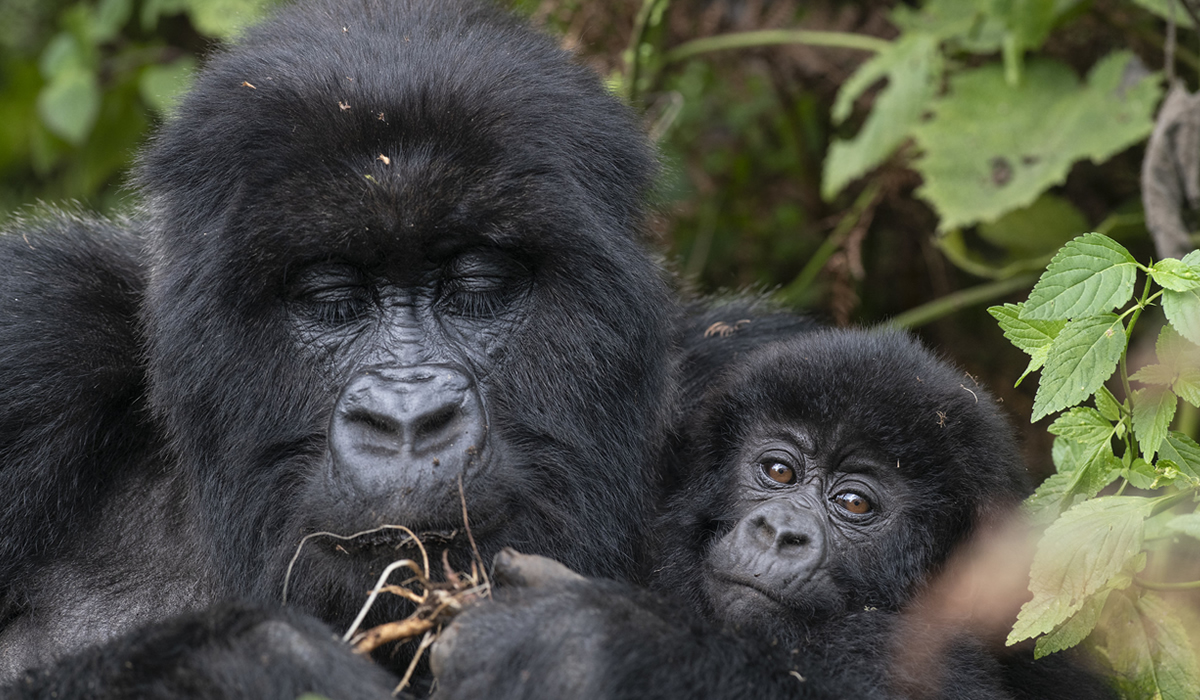
There is a moment, somewhere deep in the bamboo thickets of Volcanoes National Park, when a silverback mountain gorilla turns and looks directly at you — not through you, not past you, but at you — and the entire premise of travel is suddenly justified. Rwanda offers that moment. It also offers a great deal more: the mist-draped canopies of Nyungwe Forest, the sweeping savannahs of Akagera, and the glittering blue expanse of Lake Kivu shimmering along the Congo border. In ten days, a well-paced itinerary puts all of it within reach.
Why Ten Days?
Rwanda is small — about the size of Maryland — but its wildlife areas are spread across dramatically different landscapes, and each deserves more than a single rushed night. Seven days is the absolute minimum to cover the three major wildlife destinations. Ten days lets you breathe: to absorb the gorilla encounter without immediately sprinting to the next thing, to spend a genuine afternoon on Lake Kivu with a cold Primus beer and nowhere to be, and to do justice to Akagera, which is a far more serious game park than most first-time visitors expect.
Days 1–2: Kigali — Arrival and Orientation
Land at Kigali International Airport and let the city recalibrate your expectations of East Africa. Kigali is clean, orderly, and surprisingly cosmopolitan. The plastic bag ban has been in force since 2008 — remember to pack accordingly, as customs is not lenient on this point.
Use your first day to visit the Kigali Genocide Memorial, a sobering but essential introduction to the country’s recent history and its remarkable trajectory since 1994. The following morning, explore the Kimironko market and the Inema Arts Center before an afternoon briefing with your safari operator. Gorilla and chimpanzee permits must be secured well in advance — sometimes six months or more — so confirm all bookings before you arrive.
Stay: Kigali offers everything from boutique guesthouses in Nyamirambo to the polished Hotel des Mille Collines. Either way, budget a full evening for dinner; the restaurant scene has improved dramatically in recent years.
Days 3–4: Volcanoes National Park — Mountain Gorillas
The drive from Kigali to Musanze (the gateway town for Volcanoes National Park) takes roughly two and a half hours through a landscape of terraced hillsides that explains Rwanda’s nickname, Le Pays des Mille Collines — the Land of a Thousand Hills.
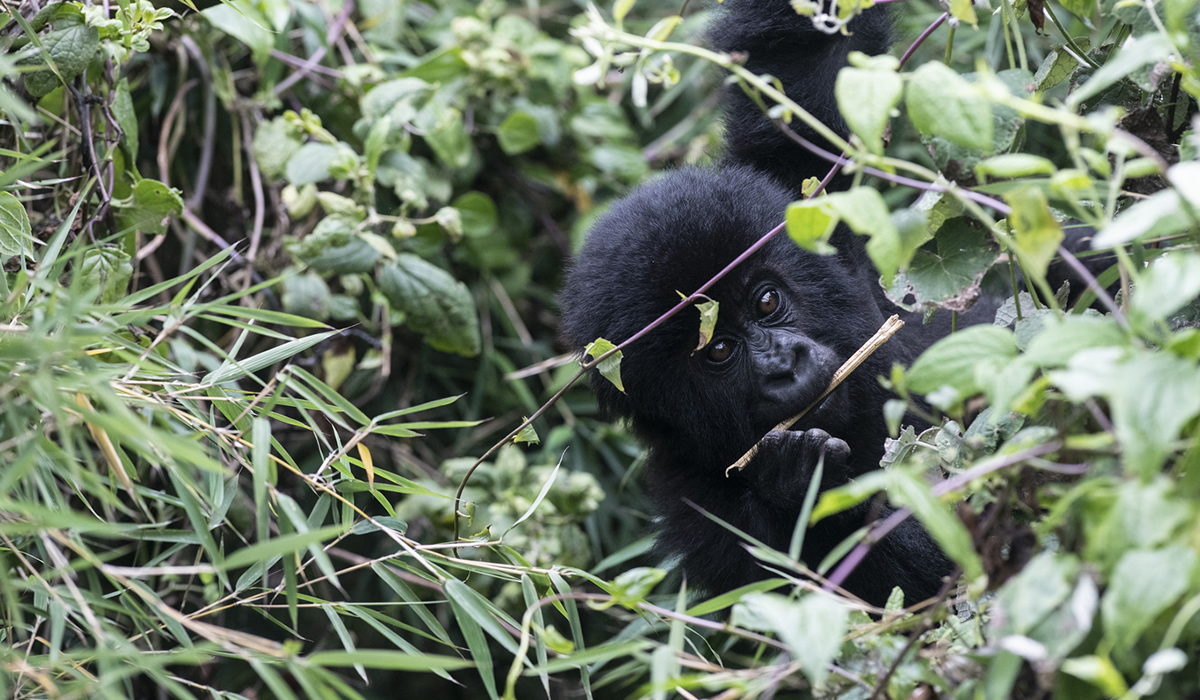
Gorilla trekking begins with a 7 a.m. briefing at park headquarters. Groups of eight are assigned to a specific gorilla family, and trackers — who have often been out since dawn — radio in the family’s location. The hike can be anything from forty minutes to four hours depending on where the gorillas have decided to sleep. When you find them, you have exactly one hour. Use it slowly. Watch the juveniles wrestle. Watch a mother nurse her infant. Watch the silverback do very little, with immense authority.
The permit currently costs $1,500 per person — a figure that funds both conservation and local community programs. It is, for most visitors, worth every dollar.
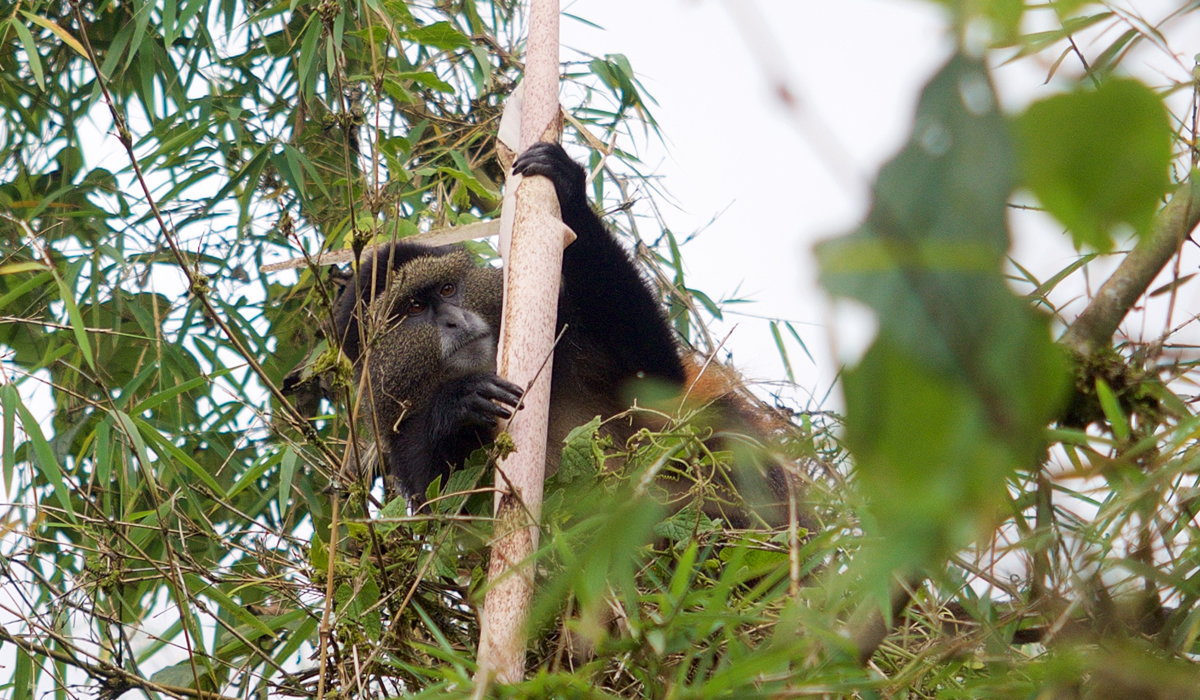
On your second day in the Volcanoes area, consider a golden monkey trek (a fraction of the price and genuinely delightful), or hike to the Dian Fossey research station for context on the decades of conservation work that made today’s gorilla population of over 1,000 individuals possible.
Stay: Several lodges sit on the park’s edge, from the high-end Bisate Lodge (with views directly into the volcanic peaks) to more affordable options in Musanze town.
Days 5–6: Lake Kivu — Rest and Reset
Before the intensity of Nyungwe, Lake Kivu earns its place in the itinerary as a genuine destination rather than a logistical stopover. The drive south from Musanze to Gisenyi (or further along to Kibuye or Karongi) follows the Congolese border through some of the most visually dramatic scenery in the country.
Lake Kivu is one of Africa’s Great Lakes — deep, blue, and studded with small islands. Kayak between fishing villages, take a boat to Napoleon Island to watch thousands of fruit bats spiral into the evening sky, or simply sit on a terrace and do nothing productive whatsoever. The lake’s towns — Rubavu, Karongi, Cyangugu — are unhurried and genuinely welcoming.
This interlude is not indulgence; it is strategy. Nyungwe’s chimpanzee trekking is physically demanding, and arriving there rested makes a meaningful difference.
Days 7–8: Nyungwe Forest — Chimpanzees and Canopy
Nyungwe National Park is one of the oldest and largest montane rainforests in Africa, covering over 1,000 square kilometres of the country’s southwestern corner. It is home to thirteen primate species, including around 500 chimpanzees, as well as colobus monkeys, L’Hoest’s monkeys, and Ruwenzori black-and-white colobus that travel in troops so large they sound like a weather system moving through the trees.
Chimpanzee tracking here operates on similar principles to gorilla trekking — an early start, a guided group, and a one-hour window with a habituated community — but the experience has a different character. Chimpanzees move fast, climb high, and make an extraordinary amount of noise. Keeping up is the challenge. When you find them, particularly at a fruiting tree, the energy is almost overwhelming.
On your second Nyungwe day, walk the canopy walkway — a 200-metre suspension bridge strung between the forest giants at 50 metres above the forest floor. It is, for those who are comfortable with heights, one of the more extraordinary perspectives available anywhere on the continent.
Stay: The One&Only Nyungwe House sits on a working tea estate at the forest’s edge and is exceptional. Budget travellers have solid options in Uwinka.
Days 9–10: Akagera National Park — The Big Five
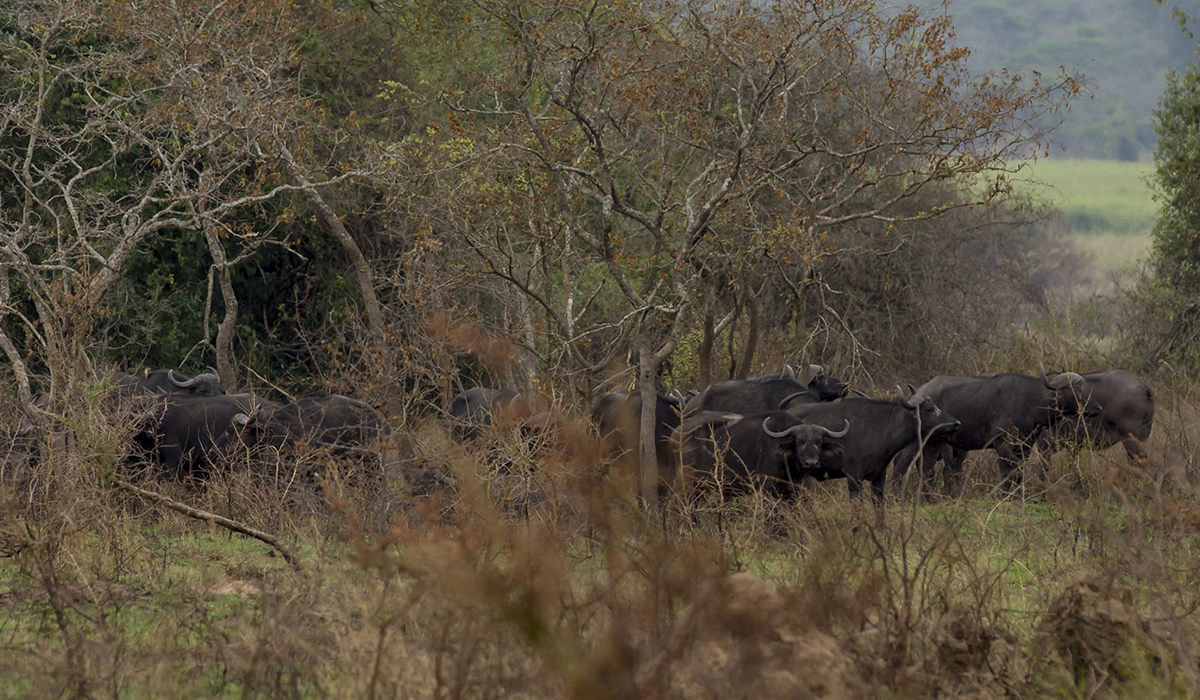
Rwanda’s best-kept safari secret sits in the east, along the Tanzanian border. Akagera National Park was badly degraded during the 1990s, but a partnership with African Parks from 2010 onwards has transformed it into one of the continent’s great conservation comeback stories. Lions were reintroduced in 2015. Black rhinos followed in 2017 and again in 2019. Elephants, buffalo, leopard, hippo, and a spectacular array of antelope were already present.
Today, Akagera’s Big Five are all there, in a park that combines open savannah, woodland, swamp, and a chain of lakes — the Kagera lakes — that attract extraordinary concentrations of waterbirds. Game drives here feel genuinely wild. You are unlikely to share a sighting with more than one or two other vehicles.
Spend your first afternoon on a boat safari along Lake Ihema. Hippos cluster in the shallows in numbers that seem improbable, and Nile crocodiles slide off banks with the leisurely confidence of animals that have not needed to hurry for 200 million years. The following morning, head out before dawn for the best chance of lion and leopard. If you are travelling between June and October, the dry season concentrates animals around remaining water sources and makes sightings considerably more reliable.
From Akagera, it is roughly a three-hour drive back to Kigali for your departure flight.
Practical Notes
Permits and booking: Gorilla permits through the Rwanda Development Board must be booked in advance. Chimpanzee permits in Nyungwe are easier to secure but still warrant advance notice in peak season (June–September, December–January).
Getting around: Most visitors hire a private vehicle with driver-guide for the duration. Self-driving is technically possible but the time spent navigating is rarely worth it given Rwanda’s compact geography and excellent road infrastructure.
Health and entry: Yellow fever vaccination is required for most visitors. Malaria prophylaxis is recommended for Akagera. Rwanda currently operates a visa-on-arrival system for most nationalities, though policies change — verify the current situation before travel.
Best time: June to September is the long dry season and generally considered peak season for wildlife. February to March offers a shorter dry window with fewer visitors. The long rains run April to May; gorilla trekking continues year-round regardless of weather, though the forest is muddier and the hike harder.
Ten days in Rwanda is not quite enough to shake the feeling that you’ve only begun to understand the place. That is, arguably, the sign of a destination worth returning to. The gorillas will be there. The chimps will be there. And somewhere on Lake Kivu, the fishing boats will still be pushing out at dawn, exactly as they always have.
Permit prices and visa requirements are subject to change. Verify current details with the Rwanda Development Board and your country’s foreign affairs department before travel.
Related Posts