Kigali priority car hire help desks established for special guests represent a major upgrade for…
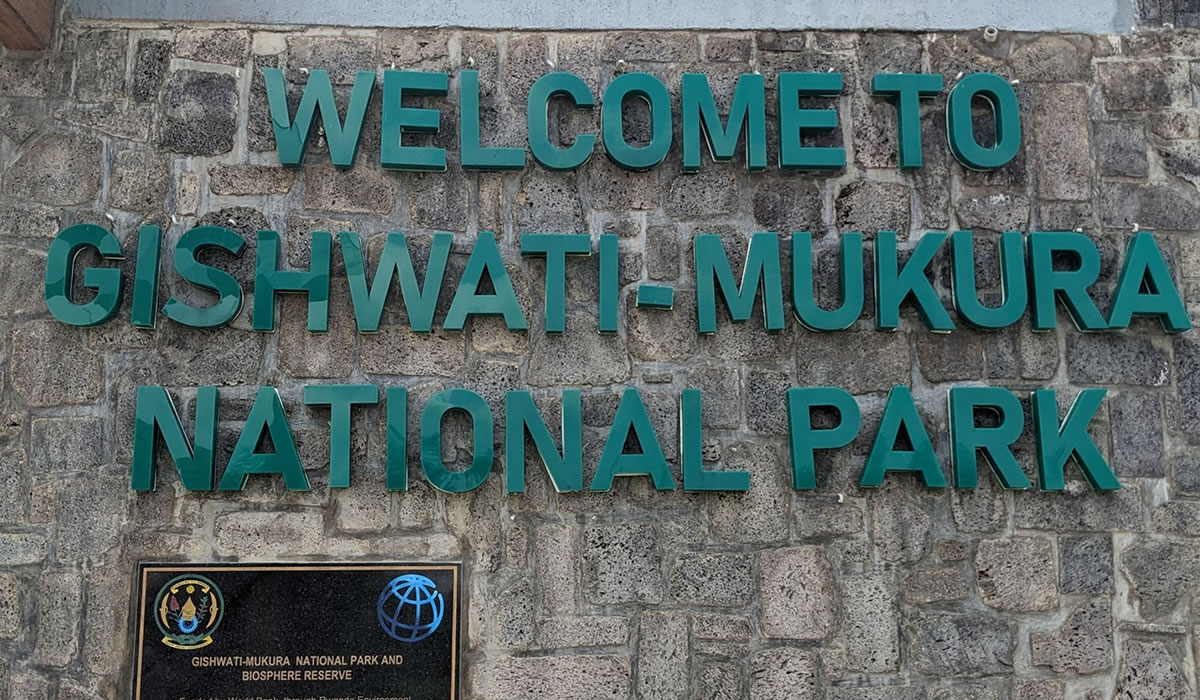
Gishwati-Mukura National Park | Rwanda’s Hidden Wildlife Gem
Tucked into the mist-draped hills of western Rwanda, straddling the great Congo-Nile Divide, lies a park unlike any other in East Africa. Gishwati-Mukura National Park is not a pristine wilderness that has existed undisturbed for centuries. It is something rarer and, in many ways, more remarkable — a forest that nearly disappeared entirely, and came back.
The park comprises two separate montane rainforest blocks: the larger Gishwati Forest in the north, closer to Volcanoes National Park, and the smaller Mukura Forest about 50 kilometres to the south-east, near the town of Karongi on Lake Kivu’s northern shore. Together, they cover approximately 34 to 72 square kilometres — a fraction of the vast Afro-montane rainforest that once blanketed the entire Congo-Nile ridge from the DRC through Rwanda and south into Burundi, a chain that still includes Nyungwe Forest in Rwanda and Kibira National Park in Burundi.
During the latter decades of the twentieth century, Gishwati and Mukura were devastated. Logging, agricultural encroachment, and population pressure following Rwanda’s 1994 genocide stripped the forests to a shadow of their former selves. Gishwati, which once spread over 250,000 hectares, was reduced to fewer than 600 hectares of viable forest. Wildlife vanished. Rivers silted. The land, stripped of its canopy, began to erode. Then the restoration began.
The Rwanda Development Board, working alongside conservation organisations including the Forest of Hope Association and Wilderness Safaris, launched one of Central Africa’s most ambitious reforestation programmes. Native tree species were reintroduced. Buffer zones were established. Wildlife crept back. In 2015, Rwanda’s parliament passed legislation formally gazetted the combined forests as the country’s fourth national park, and in December 2020, Gishwati-Mukura officially opened its gates to visitors. Today, the Gishwati forest has grown by over a thousand acres and continues to expand.
Into the Forest: What You Will Find
Arriving at Gishwati, the first thing that strikes you is the silence — the deep, layered quiet of a living forest, broken only by the distant shriek of a bird or the rustle of something moving in the canopy above. The trails here feel genuinely wild. Unlike the well-worn paths of Volcanoes or the polished boardwalks of some East African parks, Gishwati retains an unscripted, exploratory quality that more famous destinations have long since lost.
The Primates
The park’s greatest draw, without question, is its primate population. Gishwati-Mukura is home to over 20 chimpanzee groups — the Eastern chimpanzee, listed as Endangered on the IUCN Red List — which were brought back from near-local extinction through the park’s restoration efforts. Roughly 35 individuals roam the Gishwati sector. Because they are only semi-habituated to humans, encounters are raw and unpredictable in the best possible way. Guides recommend heading out before dawn to locate the chimps at their overnight nesting sites, watching them wake, stretch, call out across the treetops, and begin their day. It is one of the most intimate primate experiences available anywhere in Africa.
Golden monkeys — the same vivid, copper-furred species made famous at Volcanoes — inhabit the park too, and golden monkey trekking has been developed as a visitor activity. Playful and intensely curious, these primates were previously found in Rwanda only at Volcanoes National Park; Gishwati-Mukura represents a crucial second stronghold for the species. Joining them in the canopy are L’Hoest’s monkeys, blue monkeys, vervet monkeys, baboons, and black-and-white colobus monkeys — a primate diversity few forests of this size can match.
Birds of the Albertine Rift
Birders who make it to Gishwati-Mukura tend to leave in a state of quiet disbelief. The park has recorded over 230 bird species across its two forest blocks — more than 232 in Gishwati alone and around 163 in Mukura — with at least 10 to 20 species endemic to the Albertine Rift, one of Africa’s most important avian biodiversity zones.
Look up and you might find the Rwenzori turaco blazing through the mid-canopy in a flash of red and green, or catch the metallic glint of a regal sunbird perched in a shaft of morning light. The Grauer’s warbler, the purple-breasted sunbird, the Rwenzori batis, the dusky crimsonwing — species that serious birders travel continents to see — are all documented residents. Raptors including martial eagles and crowned eagles patrol the forest edge. The Mukura sector in particular, less visited and less disturbed, is considered exceptional for forest birding, even though formal trails there are still being developed.
Other Wildlife
Beyond the primates and birds, the forest shelters a supporting cast of smaller but fascinating creatures. Black-fronted duikers and bushbucks move quietly through the undergrowth. Giant forest hogs, river hogs, and tree hyraxes inhabit the denser sections of the park. Serval cats and side-striped jackals have been spotted by lucky visitors on early morning walks, and larger mammals including elephants and buffalo have occasionally been reported — indicators of the park’s growing ecological connectivity with the broader western Rwanda wilderness corridor.
Activities and Experiences
Gishwati is the accessible sector for now. Well-maintained hiking trails wind through bamboo groves, alongside waterfalls, and up into secondary forest with sweeping views across the layered hills of Rwanda’s western province. All visits to Gishwati must be arranged through the park office, and stays at the community-owned Forest of Hope Guest House are currently required for access to guided activities — a stipulation that keeps visitor numbers low and the experience intimate.
Activities available include chimpanzee trekking, golden monkey tracking, guided birding walks, and general nature hikes. Cultural experiences can also be arranged in the surrounding communities: visits to tea plantations that carpet the hillsides around the park, traditional dance performances, craft-making workshops with local women’s cooperatives, and sessions with traditional healers who use the forest’s plant species in age-old medicinal practice. The Forest of Hope Association has deliberately built these community programmes to ensure that people living adjacent to the park benefit economically from its existence — a model of conservation that is increasingly recognised as essential for long-term success.
Getting There and When to Go
The park is accessible by road from Kigali, with the Gishwati sector lying approximately 85 kilometres from the capital — a drive of three to four hours through some of Rwanda’s most beautiful scenery: terraced hillsides, tea estates, and the rolling valleys of the Kivu Belt. The park sits along the main road between Rubavu (Gisenyi) and Karongi, making it a natural stopover for travellers exploring western Rwanda.
The best time to visit is during the dry seasons: June to September, and December to February. During these months, the hiking and trekking trails are at their most passable, wildlife is easier to track as vegetation is less dense, and the risk of being caught in heavy rainfall on a forest path is significantly reduced. That said, the park’s tropical highland climate — generally cool, with daytime temperatures hovering around 19°C — makes it a comfortable destination year-round. The rainy season months from October to May can actually be excellent for forest birding, when many species are most vocal and active.
Why This Park Matters — and Why You Should Visit
In a continent where conservation often battles against impossible odds, Gishwati-Mukura tells a different kind of story. It is proof that forests, given protection and time, can recover. That chimpanzees pulled back from local extinction can thrive again. That communities living alongside a protected area can become its most committed guardians when they share meaningfully in its future.
For the traveller, the park offers something increasingly difficult to find: an authentic, uncrowded encounter with wild Africa. There are no coach tours here, no queues for primate permits stretching down the road, no resort bubble insulating you from the forest. There is just the trail, the guide, the mist rising off the canopy at first light, and the electric possibility that a chimpanzee is watching you from the branches overhead.
Rwanda has long marketed itself, rightly, as a gorilla destination. But it is so much more than that. Gishwati-Mukura is the country’s quiet argument that great conservation and great travel experiences do not require the world’s most famous animal — they only require the willingness to look beyond the obvious, and step into a forest that is, against all odds, still growing.
Related Posts