Kigali priority car hire help desks established for special guests represent a major upgrade for…
Rwanda Safari Packing List | What to Wear and Bring for Wildlife Trekking
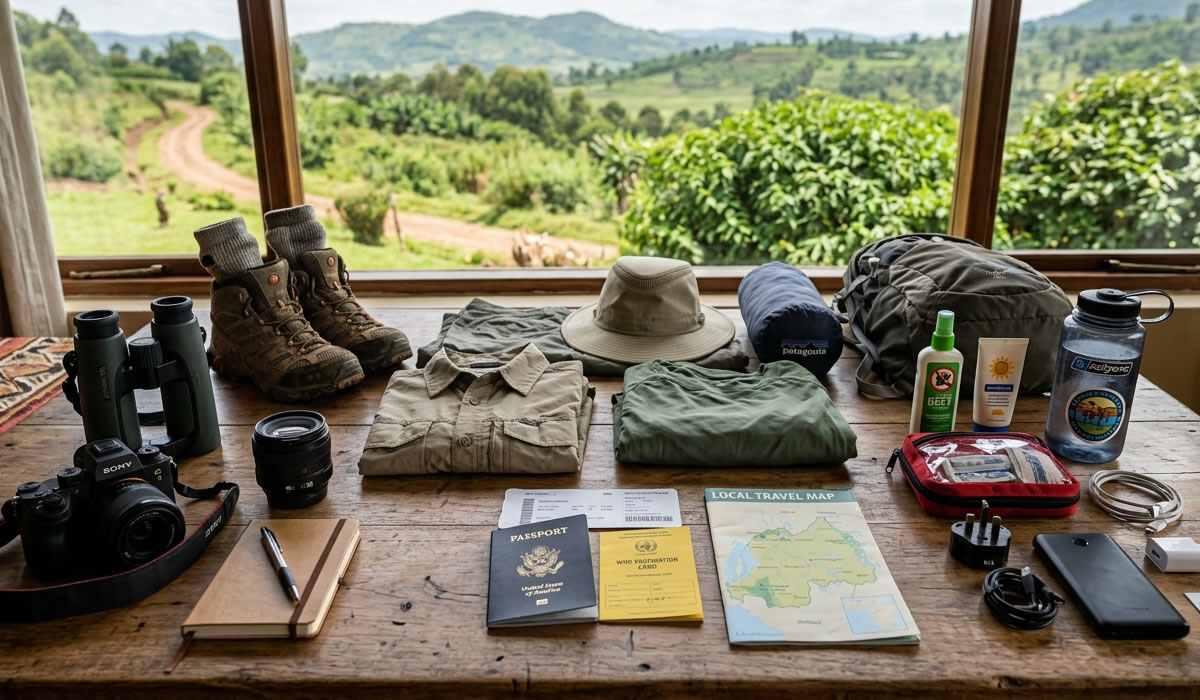
Rwanda is one of Africa’s most extraordinary destinations — a land of mist-draped volcanoes, ancient rainforests, and some of the world’s last wild mountain gorillas. Whether you’re heading into Volcanoes National Park to track a gorilla family, navigating the papyrus swamps of Akagera in search of the Big Five, or exploring the canopy trails of Nyungwe Forest for chimpanzees and colobus monkeys, what you pack can make or break your experience. The terrain is rugged, the weather is unpredictable, and the wildlife doesn’t wait for you to rummage through a poorly organized bag. This Rwanda Safari Packing List guide walks you through everything you need to wear and bring for wildlife trekking in Rwanda — thoughtfully, practically, and without overpacking.
Understanding Rwanda’s Climate Before You Pack
Rwanda sits just south of the equator at high altitude, earning it the nickname “Land of a Thousand Hills.” Temperatures in the Volcanoes region hover between 7°C and 18°C (45°F–65°F), often dropping sharply at night and during rain. Nyungwe Forest is similarly cool and wet. Akagera National Park in the east is warmer and drier, with daytime temperatures reaching 30°C (86°F).
Rwanda has two rainy seasons — March to May and October to November — and two drier seasons in between. However, rain can fall at any time, particularly in the highland parks. Packing for layers and waterproofing is non-negotiable, no matter when you travel.
Clothing: The Foundation of a Successful Trek
Long-Sleeved Shirts and Base Layers
Pack at least four to five lightweight, moisture-wicking long-sleeved shirts. These protect your arms from stinging nettles, insect bites, and sun exposure while keeping you comfortable as temperatures shift. Merino wool and synthetic blends like polyester or nylon are excellent choices — they dry quickly, resist odour, and regulate temperature well. Avoid cotton, which absorbs sweat and moisture and takes forever to dry on the trail.
Neutral-Coloured Clothing
Wildlife trekking in Rwanda is not the place for bright colours or bold prints. Opt for earth tones — khaki, olive green, tan, brown, and grey. Neutral colours help you blend into the forest environment, reduce the chance of startling wildlife, and show less dirt after a muddy trek. Avoid blue and black, which are known to attract tsetse flies in game park regions.
Waterproof Hiking Trousers
A good pair of waterproof or water-resistant hiking trousers is one of the smartest investments you can make for this trip. Gorilla trekking involves pushing through wet vegetation, kneeling in muddy soil, and sometimes sitting on the forest floor. Look for trousers with reinforced knees and multiple pockets. Zip-off trousers that convert to shorts are useful for Akagera National Park, where it’s warmer.
A Fleece or Mid-Layer Jacket
Mornings in the Volcanoes region are genuinely cold, particularly at the trailhead briefing before your trek begins at 7 a.m. A mid-weight fleece or down jacket is essential for early starts and high-altitude ridges. It can be tied around your waist once you warm up on the trail.
A Quality Waterproof Jacket
A breathable, waterproof outer shell is non-negotiable. Look for jackets with taped seams and underarm vents to manage moisture from both rain and exertion. Gore-Tex or similar membranes perform best. A hood is important — an umbrella is impractical on the forest floor.
Hiking Socks
Bring five to six pairs of moisture-wicking hiking socks. Wool-blend socks provide cushioning, reduce blisters, and regulate temperature. Avoid thin cotton socks that offer no support. Some trekkers also carry a pair of camp socks — light and dry — for evenings at the lodge.
Waterproof Hiking Boots
Your boots are arguably the most important item in your bag. Choose a pair of mid-cut or high-cut waterproof hiking boots with strong ankle support and grippy soles. The trails in Volcanoes and Nyungwe can be steep, slippery, and uneven. Break your boots in thoroughly before departure — blisters at 2,500 metres are nobody’s idea of adventure. Gaiters that fit over your boots are also highly recommended to keep mud and debris out.
Lightweight Gloves
A pair of lightweight liner gloves or gardening gloves provides much-needed protection when you’re gripping vegetation and pushing through dense undergrowth. Gorilla trek guides will often remind you to grab onto bamboo for balance, and bare hands fare poorly in that environment.
Sun Hat and Warm Hat
Pack both. A wide-brimmed hat with UV protection is useful in open areas and during game drives in Akagera. A warm beanie or knitted cap is essential for cold mornings and high-altitude trekking. Some hikers also wear a buff or neck gaiter, which doubles as a face covering and head warmer.
Gaiters
Lightweight gaiters that cover the ankle and lower leg keep mud, insects, and plant matter from working their way into your boots. They’re small, lightweight, and worth every gram.
Footwear Beyond the Trail
Pack a pair of comfortable sandals or lightweight shoes for lodge evenings, airport transfers, and days off. Flip-flops are useful for lodge showers but inadequate for uneven terrain.
Gear and Equipment
Daypack (25–35 Litres)
Your day pack carries everything you need on the trail without burdening your back. Look for one with a rain cover, padded straps, and a hip belt for weight distribution. You should be able to fit your rain jacket, water, snacks, camera, first aid kit, and personal items comfortably.
Trekking Poles
Many seasoned trekkers consider poles indispensable in Rwanda. The volcanic slopes are steep and slick, and descending with tired legs is far easier with poles to lean on. Collapsible aluminium or carbon fibre poles pack down small and can be hired at the trailhead if you’d rather not carry them internationally.
Water and Hydration
Carry at least two litres of water per day on the trail. A reusable water bottle or hydration bladder works well. Most lodges provide filtered water for refills. Electrolyte tablets are useful for longer or more strenuous treks.
High-Energy Snacks
Pack trail mix, energy bars, dried fruit, nuts, and chocolate for trekking days. Gorilla trekking can last anywhere from one to eight hours depending on where the gorilla family has moved, and you don’t want to run low on energy mid-forest.
Sunscreen and Insect Repellent
High-altitude UV exposure is intense even on cloudy days. Use a broad-spectrum SPF 50 sunscreen on any exposed skin. For insect repellent, choose a product with at least 30–50% DEET or a picaridin-based alternative. Apply it to skin and clothing on the forest edges, though inside the dense canopy the mosquito risk is lower.
First Aid Kit
A personal first aid kit should include blister plasters, antiseptic wipes, antihistamine cream, pain relief tablets, and any prescription medication you require. Anti-malarial medication should be discussed with your doctor before travel — Rwanda’s highland parks are low-risk, but Akagera sits in a malaria zone.
Camera and Binoculars
Wildlife photography in Rwanda is spectacular. A DSLR or mirrorless camera with a zoom lens (at least 200–400mm) is ideal for Akagera game drives. For gorilla trekking, note that flash photography is strictly prohibited as it disturbs the animals — a camera with good low-light performance is invaluable in the dim forest. Binoculars are essential for Nyungwe’s primate walks, where animals move quickly through high canopies.
Pack extra batteries, fully charged power banks, and enough memory cards. Power cuts are occasional in remote areas, so carrying portable charging capacity is wise.
Documents, Money, and Essentials
Keep a waterproof document pouch containing your passport, gorilla or chimpanzee trekking permits, travel insurance documents, and vaccination certificate. Your yellow fever vaccination card is a legal requirement for entry into Rwanda.
Carry US dollars in small denominations — Rwanda’s local currency, the Rwandan Franc, is widely available at ATMs in Kigali, but remote areas are cash-only. Tips for guides and porters are customary and appreciated.
What to Leave Behind
Avoid packing camouflage clothing, which is illegal in Rwanda. Leave behind bright colours, heavy fragrances (perfume and strong-smelling products can disturb wildlife), and anything you’d be heartbroken to lose to mud, rain, or a curious juvenile gorilla. Keep your luggage light — most lodges offer laundry services, and you’ll spend most of your time in a small rotation of tried-and-tested layers.
Final Thoughts
A Rwanda wildlife safari is a genuinely transformative experience, and being well-prepared allows you to stay present for every extraordinary moment — the thunderous chest-beat of a silverback, the screech of a chimpanzee overhead, or a lion emerging at dawn from the Akagera grasslands. Your packing list won’t just keep you comfortable; it will keep you safe, respectful of the environment, and free to be fully absorbed in one of Africa’s greatest wildlife encounters.
Pack smart, travel light, and let Rwanda do the rest.
Related Posts