Kigali priority car hire help desks established for special guests represent a major upgrade for…
Rwanda Wildlife Safari on a Budget | Car Hire, Permits & Accommodation Tips
Rwanda is one of Africa’s most extraordinary wildlife destinations — a small, landlocked country that punches well above its weight when it comes to biodiversity and raw natural drama. Best known for the mountain gorillas of Volcanoes National Park, the country also harbours golden monkeys, chimpanzees, hippos, lions, and over 700 bird species across a patchwork of parks and forests. The only catch? Rwanda has historically carried a premium price tag. But with the right planning, a genuinely unforgettable Rwanda Wildlife Safari on a Budget is far more achievable than most travellers expect. Here is how to do it without emptying your bank account.
Understanding the Rwanda Safari Landscape
Before diving into costs, it helps to know where you are going. Rwanda’s main wildlife areas include:
- Volcanoes National Park (northwest) — the headline gorilla and golden monkey trekking destination
- Nyungwe Forest National Park (southwest) — one of Africa’s oldest rainforests, home to chimpanzees and colobus monkeys
- Akagera National Park (east) — a classic savannah park with the Big Five
- Gishwati-Mukura National Park — a smaller but emerging chimpanzee destination
Each park has its own permit structure and budget considerations. Planning your itinerary around two or three of these parks, rather than rushing through all four, saves significantly on transport and accommodation costs.
Car Hire: Getting Around for Less
Transport is one of the biggest variables in a Rwanda safari budget. Flying into Kigali International Airport, most visitors either book an expensive package with a private driver-guide or rent their own vehicle. There is a middle path that many budget travellers overlook.
Self-Drive Car Hire
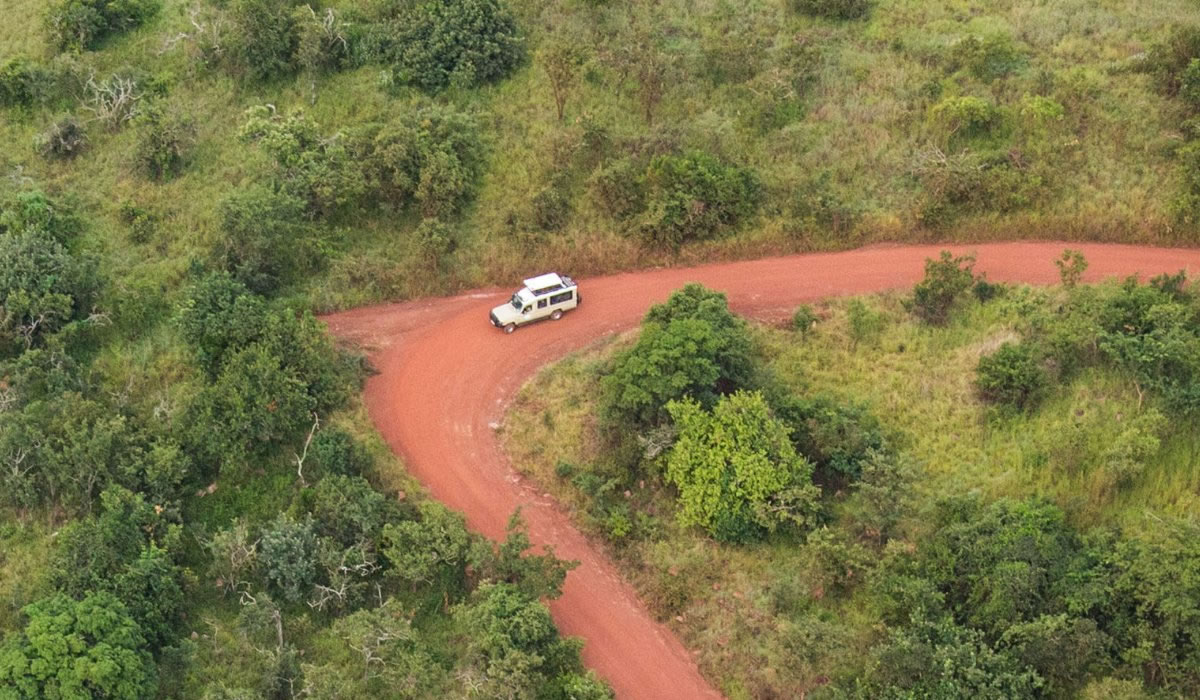
Self-driving in Rwanda is genuinely viable. Roads are among the best-maintained in East Africa, signage is reliable, and the country is small enough that even Akagera — the furthest park from Kigali — is only about two and a half hours away. A compact 4WD or a sturdy saloon car from a local Kigali rental agency starts at around $40–$70 per day, compared to $150–$250 per day for a vehicle with a guide. For gorilla trekking in Volcanoes, however, you still need a Rwanda Development Board ranger inside the park, so you are not missing out on expert guidance where it matters most.
Shared Shuttles and Minibuses
For those who would rather not drive, Rwanda’s public minibuses (matatus) and shared shuttles are inexpensive and surprisingly well connected. A seat from Kigali to Musanze (gateway to Volcanoes NP) runs roughly $3–$5. Shuttles to Nyungwe cost around $10–$15. This works brilliantly if you are comfortable with flexible timing and modest stops along the way.
Budget Driver-Guides
The sweet spot for many travellers is hiring a local driver-guide through smaller, independently-run tour operators rather than the large international agencies. Rates can drop to $80–$120 per day all-in, especially for groups of three or four who split the cost. Negotiate politely, book directly, and always read recent traveller reviews.
Permits: The Biggest Cost — and How to Manage It
Permits are unavoidable in Rwanda, and for gorilla trekking, they are expensive no matter how you slice it. Here is the current breakdown:
Gorilla Trekking Permits
A gorilla trekking permit in Volcanoes National Park costs $1,500 per person for foreign non-residents. This is a fixed government rate set by the Rwanda Development Board and is non-negotiable. What you get in return is extraordinary — a full hour with a habituated gorilla family in their natural habitat, accompanied by armed rangers and expert trackers. For many people, it is worth every dollar.
To save money here, consider:
- Booking directly through the Rwanda Development Board website (rwandatourism.rdb.rw) rather than via third-party operators who add a service fee
- Visiting in the low season (March–May, November) when tour packages are cheaper overall, though permit prices remain fixed
- Splitting costs in a group — this does not reduce the permit price per person, but combining it with shared transport and accommodation makes the trip far more cost-effective per traveller
Golden Monkey Permits
Often overlooked but genuinely magical, golden monkey trekking in Volcanoes costs $100 per person. These vivid, acrobatic primates move through bamboo forests at speed, and groups are smaller and less crowded than gorilla treks. Adding this to your Volcanoes itinerary is one of the best value-adds in Rwandan wildlife tourism.
Chimpanzee Permits
Tracking chimpanzees in Nyungwe Forest costs $150 per person. For primate lovers who cannot stretch to gorilla permits, this is a superb alternative — and the surrounding forest canopy walkway ($60) gives you a birder’s-eye view of one of Africa’s most biodiverse ecosystems.
Akagera Park Entry
Entry to Akagera National Park costs $40 per person per day for non-residents, making it the most budget-accessible of Rwanda’s major parks. No trekking permits are required — you simply self-drive or join a guided game drive to spot lions, elephants, buffaloes, hippos, and leopards.
Accommodation: From Luxury Lodges to Smart Budget Stays
Rwanda’s reputation as an upscale destination has long been shaped by lodges like Bisate and One&Only Gorilla’s Nest, where rates run to $1,000+ per night. But a growing ecosystem of mid-range and budget options now makes it possible to sleep well for far less.
Budget Guesthouses Near Volcanoes NP
The town of Musanze (Ruhengeri) is the staging ground for gorilla trekking and is packed with clean, friendly guesthouses. Options like La Piscine, Muhabura Hotel, and various family-run B&Bs offer rooms between $25–$60 per night, including breakfast. This is your base for an early-morning trek briefing without the lodge surcharge.
Nyungwe Nziza Ecolodge
For Nyungwe, the Nyungwe Nziza Ecolodge offers community-run accommodation at very reasonable rates (around $50–$80 per night), giving you both value and the satisfaction of putting money directly into local conservation efforts.
Camping in Akagera
Akagera National Park operates its own campsite on the shores of Lake Ihema. A pitch costs roughly $30–$40 per person per night and places you inside the park, waking up to hippo sounds and morning bird calls. It is one of the great underrated safari camping experiences in East Africa. Bring your own equipment or rent basic gear in Kigali.
Kigali’s Budget Scene
Kigali is a modern, safe, and walkable city with a booming hospitality sector. For arrival and departure nights, look at hostels and mid-range guesthouses in the Kimironko and Kacyiru neighbourhoods. Beds in shared dorms start around $12–$18, while clean private rooms run $35–$55. Many include reliable Wi-Fi and breakfast — important when you are doing logistics before an early departure.
Practical Money-Saving Tips
A few additional strategies make a meaningful difference to the overall budget:
Eat local. Rwanda’s inzoga (sorghum beer) and plates of isombe (cassava leaves with beans) or grilled tilapia from roadside restaurants cost a fraction of tourist restaurant prices and are genuinely delicious.
Book permits early. Gorilla permits sell out months in advance, especially in high season (June–September, December–January). Booking late often forces travellers into pricier packaged deals simply because direct slots are gone.
Combine parks strategically. Route your trip so that Volcanoes and Nyungwe sit at the start and end of a circuit, with Akagera in the middle — this avoids backtracking to Kigali and reduces driving time and fuel costs.
Travel in a small group. Almost every cost in Rwanda — transport, accommodation, guides, and even cooking — becomes more manageable per person when shared across three or four travellers.
Use the RDB app and website. The Rwanda Development Board has invested in digital booking infrastructure. Using it directly skips intermediary fees on park entries and some permits.
Is a Budget Rwanda Safari Really Possible?
Honestly, yes — with an asterisk. If gorilla trekking is on your list, no amount of clever budgeting removes the $1,500 permit cost. But everything around it — transport, accommodation, food, and the other parks — can be done smartly and affordably. A week-long trip covering Kigali, Volcanoes, and Akagera, including one gorilla permit, is achievable for under $2,500 per person if you plan independently, travel in a group, sleep in guesthouses, and eat locally.
Rwanda rewards travellers who do their homework. The conservation fees that feel steep at the ticket window translate directly into one of the most successful wildlife recovery stories on the continent — where mountain gorilla populations have actually grown, not shrunk. Spending thoughtfully here means the wildlife will be waiting for the next generation of budget-conscious adventurers too.
Related Posts